@[Toc]
一、MyBatis-Plus简介
MyBatis-Plus (简称 MP)是一个 MyBatis 的增强工具,在 MyBatis 的基础上只做增强不做改变,为简化开发、提高效率而生。
MyBatis-Plus具有如下特性:
- 无侵入:只做增强不做改变,引入它不会对现有工程产生影响,如丝般顺滑
- 损耗小:启动即会自动注入基本 CURD,性能基本无损耗,直接面向对象操作
强大的 CRUD 操作:内置通用 Mapper、通用 Service,仅仅通过少量配置即可实现单表大部分 CRUD 操作,更有强大的条件构造器,满足各类使用需求
-支持 Lambda 形式调用:通过 Lambda 表达式,方便的编写各类查询条件,无需再担心字段写错-
- 支持主键自动生成:支持多达 4 种主键策略(内含分布式唯一 ID 生成器 - Sequence),可自由配置,完美解决主键问题
支持 ActiveRecord 模式:支持 ActiveRecord 形式调用,实体类只需继承 Model 类即可进行强大的 CRUD 操作
- 支持自定义全局通用操作:支持全局通用方法注入( Write once, use anywhere )
- 内置代码生成器:采用代码或者 Maven 插件可快速生成 Mapper 、 Model 、 Service 、 Controller 层代码,支持模板引擎,更有超多自定义配置等您来使用
- 内置分页插件:基于 MyBatis 物理分页,开发者无需关心具体操作,配置好插件之后,写分页等同于普通 List 查询
- 分页插件支持多种数据库:支持 MySQL、MariaDB、Oracle、DB2、H2、HSQL、SQLite、Postgre、SQLServer 等多种数据库
- 内置性能分析插件:可输出 Sql 语句以及其执行时间,建议开发测试时启用该功能,能快速揪出慢查询
- 内置全局拦截插件:提供全表 delete 、 update 操作智能分析阻断,也可自定义拦截规则,预防误操作
官网地址: https://baomidou.com/
二、基本用法
1、准备数据
我们这里使用MySQL数据库,先准备好相关数据
表结构:其中种类和产品是一对多的关系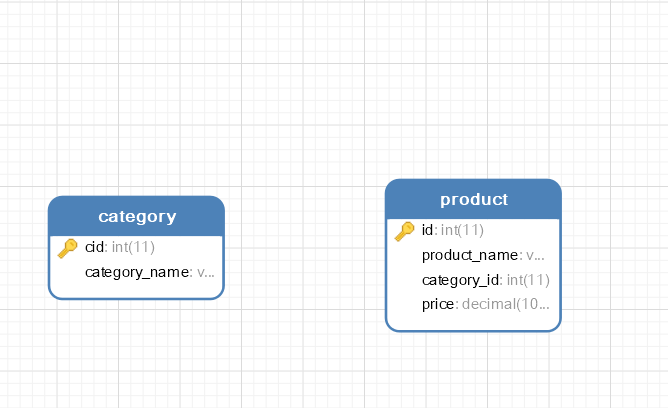
建表语句:
DROP TABLE IF EXISTS `category`;
CREATE TABLE `category`  (
  `cid` int(11) NOT NULL AUTO_INCREMENT,
  `category_name` varchar(50) CHARACTER SET utf8 COLLATE utf8_general_ci NULL DEFAULT NULL,
  PRIMARY KEY (`id`) USING BTREE
) ENGINE = InnoDB AUTO_INCREMENT = 1 CHARACTER SET = utf8 COLLATE = utf8_general_ci COMMENT = '种类表' ROW_FORMAT = Dynamic;

-- ----------------------------
-- Table structure for product
-- ----------------------------
DROP TABLE IF EXISTS `product`;
CREATE TABLE `product`  (
  `pid` int(11) NOT NULL AUTO_INCREMENT,
  `product_name` varchar(50) CHARACTER SET utf8 COLLATE utf8_general_ci NOT NULL,
  `category_id` int(11) NOT NULL,
  `price` decimal(10, 2) NULL DEFAULT NULL,
  PRIMARY KEY (`id`) USING BTREE
) ENGINE = InnoDB AUTO_INCREMENT = 2 CHARACTER SET = utf8 COLLATE = utf8_general_ci ROW_FORMAT = Dynamic;
2、引入依赖
通过开发工具创建一个SpringBoot项目(版本为2.4.0),引入以下依赖:
        <!--mybatis-plus依赖-->
        <dependency>
            <groupId>com.baomidou</groupId>
            <artifactId>mybatis-plus-boot-starter</artifactId>
            <version>3.4.1</version>
        </dependency>
        <!--mysql驱动-->
        <dependency>
            <groupId>mysql</groupId>
            <artifactId>mysql-connector-java</artifactId>
            <scope>runtime</scope>
        </dependency>
2、配置
在配置文件里写入相关配置:
spring.datasource.driver-class-name=com.mysql.cj.jdbc.Driver
spring.datasource.url=jdbc:mysql://localhost:3306/mp-demo?characterEncoding=utf-8&allowMultiQueries=true&serverTimezone=GMT%2B8
spring.datasource.username=root
spring.datasource.password=root
在 Spring Boot 启动类中添加 @MapperScan 注解,扫描 Mapper 文件夹:
@SpringBootApplication
@MapperScan("cn.fighter3.mapper")
public class SpringbootMybatisPlusApplication {

    public static void main(String[] args) {
        SpringApplication.run(SpringbootMybatisPlusApplication.class, args);
    }

}
3、代码
- 实体类
/**
 * @Author 三分恶
 * @Date 2020/11/14
 * @Description 产品实体类
 */
@TableName(value = "product")
public class Product {
    @TableId(type = IdType.AUTO)
    private Long pid;
    private String productName;
    private Long categoryId;
    private Double price;
    //省略getter、setter
}- Mapper接口:继承BaseMapper即可
/**
 * @Author 三分恶
 * @Date 2020/11/14
 * @Description
 */
public interface ProductMapper extends BaseMapper<Product> {
}
4、测试
- 添加测试类
@SpringBootTest
class SpringbootMybatisPlusApplicationTests {
}- 插入
    @Test
    @DisplayName("插入数据")
    public void testInsert(){
        Product product=new Product();
        product.setProductName("小米10");
        product.setCategoryId(1l);
        product.setPrice(3020.56);
        Integer id=productMapper.insert(product);
        System.out.println(id);
}- 根据id查找
    @Test
    @DisplayName("根据id查找")
    public void testSelectById(){
        Product product=productMapper.selectById(1l);
        System.out.println(product.toString());
}- 查找所有
    @Test
    @DisplayName("查找所有")
    public void testSelect(){
       List productList=productMapper.selectObjs(null);
        System.out.println(productList);
}- 更新
    @Test
    @DisplayName("更新")
    public void testUpdate(){
        Product product=new Product();
        product.setPid(1l);
        product.setPrice(3688.00);
        productMapper.updateById(product);
}- 删除
    @Test
    @DisplayName("删除")
    public void testDelete(){
        productMapper.deleteById(1l);
    }
三、自定义SQL
使用MyBatis的主要原因是因为MyBatis的灵活,mp既然是只对MyBatis增强,那么自然也是支持以Mybatis的方式自定义sql的。
- 修改pom.xml,在 \<build>中添加:
    <build>
        <resources>
            <resource>
                <directory>src/main/java</directory>
                <includes>
                    <include>**/*.xml</include>
                </includes>
                <filtering>true</filtering>
            </resource>
            <resource>
                <directory>src/main/resources</directory>
            </resource>
        </resources>
</build>- 配置文件:添加mapper扫描路径及实体类别名包
mybatis.mapper-locations=classpath:cn/fighter3/mapper/*.xml
mybatis.type-aliases-package=cn.fighter3.model
1、自定义批量插入
批量插入是比较常用的插入,BaseMapper中并没有默认实现,在com.baomidou.mybatisplus.service.IService中虽然实现了,但是是一个循环的插入。
所以用Mybatis的方式自定义一个:
- 在ProductMapper同级路径下新建ProductMapper:
<?xml version="1.0" encoding="UTF-8"?>
<!DOCTYPE mapper PUBLIC "-//mybatis.org//DTD Mapper 3.0//EN" "http://mybatis.org/dtd/mybatis-3-mapper.dtd">
<mapper namespace="cn.fighter3.mapper.ProductMapper">

</mapper>- 在接口里定义批量插入方法
public interface ProductMapper extends BaseMapper<Product> {
    void batchInsert(@Param("productList") List<Product> productList);
}- 编写批量插入xml脚本
    <insert id="batchInsert">
        insert into product (product_name,category_id,price)
        values
        <foreach collection="productList" item="product" separator=",">
            (#{product.productName},#{product.categoryId},#{product.price})
        </foreach>
</insert>- 测试
    @Test
    public void testBatchInsert(){
        List<Product> productList=new ArrayList<>();
        productList.add(new Product("小米10",1l,3020.56));
        productList.add(new Product("Apple iPhone 11",1l,4999.00));
        productList.add(new Product("Redmi 8A",1l,699.00));
        productList.add(new Product("华为 HUAWEI nova 5z",1l,1599.00));
        productList.add(new Product("OPPO A52",1l,1399.00));
        productMapper.batchInsert(productList);
    }
2、自定义查询
基本的Mybatis方式的查询这里就不再展示了,参照Mybatis的即可。
MP提供了一种比较方便的查询参数返回和查询条件参数传入的机制。
2.1、自定义返回结果
Mybatis Plus接口里定义的查询是可以直接以map的形式返回。
- 定义:定义了一个方法,返回用的是map
    /**
     * 返回带分类的产品
     * @return
     */
List<Map> selectProductWithCategory();- 查询脚本:查询字段有pid、product_name、category_name、price
    <select id="selectProductWithCategory" resultType="map">
      select p.pid,p.product_name,c.category_name,p.price from product p left  join  category c on  p.category_id=c.cid
</select>- 测试:
    @Test
    @DisplayName("自定义返回结果")
    public void testsSlectProductWithCategory(){
        List<Map> productList=productMapper.selectProductWithCategory();
        productList.stream().forEach(item->{
            System.out.println(item.toString());
        });
}- 结果:

2.2、自定义查询条件参数
除了返回结果可以使用map,查询用的参数同样可以用map来传入。
- 定义:
List<Map> selectProductWithCategoryByMap(Map<String,Object> map);- 查询脚本:
    <select id="selectProductWithCategoryByMap" resultType="map" parameterType="map">
      select p.pid,p.product_name,c.category_name,p.price from product p left  join  category c on  p.category_id=c.cid
      <where>
          <if test="categoryId !=null and categoryId !=''">
              and p.category_id=#{categoryId}
          </if>
          <if test="pid !=null and pid !=''">
              and p.pid=#{pid}
          </if>
      </where>
</select>- 测试:
    @Test
    @DisplayName("自定义返回结果有入参")
    public void testSelectProductWithCategoryByMap(){
        Map<String,Object> params=new HashMap<>(4);
        params.put("categoryId",1l);
        params.put("pid",5);
        List<Map> productList=productMapper.selectProductWithCategoryByMap(params);
        productList.stream().forEach(item->{
            System.out.println(item.toString());
        });
}- 结果:

2.3、map转驼峰
上面查询结果可以看到,返回的确实是map,没有问题,但java类中的驼峰没有转回来呀,这样就不友好了。
只需要一个配置就能解决这个问题。
创建 MybatisPlusConfig.java 配置类,添加上下面配置即可实现map转驼峰功能。
/**
 * @Author 三分恶
 * @Date 2020/11/16
 * @Description
 */
@Configuration
@MapperScan("cn.fighter.mapper")
public class MybatisPlusConfig {
    @Bean("mybatisSqlSession")
    public SqlSessionFactory sqlSessionFactory(@Qualifier("dataSource") DataSource dataSource) throws Exception {
        MybatisSqlSessionFactoryBean sqlSessionFactory = new MybatisSqlSessionFactoryBean();
        MybatisConfiguration configuration = new MybatisConfiguration();
        configuration.setDefaultScriptingLanguage(MybatisXMLLanguageDriver.class);
        configuration.setJdbcTypeForNull(JdbcType.NULL);
        //*注册Map 下划线转驼峰*
        configuration.setObjectWrapperFactory(new MybatisMapWrapperFactory());

        // 添加数据源
        sqlSessionFactory.setDataSource(dataSource);

        sqlSessionFactory.setConfiguration(configuration);

        return sqlSessionFactory.getObject();
    }
}
再次运行之前的单元测试,结果:

OK,下划线已经转驼峰了。
3、自定义一对多查询
在实际应用中我们常常需要用到级联查询等查询,可以采用Mybatis的方式来实现。
3.1、 Category相关
category和product是一对多的关系,我们这里先把category表相关的基本实体、接口等编写出来。
- Category.java
/**
 * @Author 三分恶
 * @Date 2020/11/15
 * @Description
 */
@TableName(value = "category")
public class Category {
    @TableId(type = IdType.AUTO)
    private Long id;
    private String categoryName;
    private List<Product> productList;
    //省略getter、setter等
}- CategoryMapper.java
/**
 * @Author 三分恶
 * @Date 2020/11/15
 * @Description
 */
public interface CategoryMapper extends BaseMapper<Category> {
}- CategoryMapper.xml
<?xml version="1.0" encoding="UTF-8"?>
<!DOCTYPE mapper PUBLIC "-//mybatis.org//DTD Mapper 3.0//EN" "http://mybatis.org/dtd/mybatis-3-mapper.dtd">
<mapper namespace="cn.fighter3.mapper.CategoryMapper">

</mapper>
直接向数据库中插入数据:
INSERT into category(category_name) VALUE ('手机');3.2、自定义返回结果
自定义返回结果map:
    <!--自定义返回列-->
    <resultMap id="categoryAndProduct" type="cn.fighter3.model.Category">
        <id column="cid" property="cid" />
        <result column="category_name" property="categoryName" />
        <!--一对多关系-->
        <!-- property: 指的是集合属性的值, ofType:指的是集合中元素的类型 -->
        <collection property="productList" ofType="cn.fighter3.model.Product">
            <id column="pid" property="pid" />
            <result column="product_name" property="productName" />
            <result column="category_id" property="categoryId" />
            <result column="price" property="price" />
        </collection>
    </resultMap>
3.3、自定义一对多查询
- 先定义方法
public interface CategoryMapper extends BaseMapper<Category> {
    List<Category> selectCategoryAndProduct(Long id);
}- 查询脚本
    <!--查询分类下的产品-->
    <select id="selectCategoryAndProduct" resultMap="categoryAndProduct" parameterType="java.lang.Long">
       select c.*,p.* from category c left join product p on c.cid=p.category_id
       <if test="id !=null and id !=''">
           where c.cid=#{id}
       </if>
</select>- 测试
    @Test
    public void testSelectCategoryAndProduct(){
        List<Category> categoryList=categoryMapper.selectCategoryAndProduct(null);
        categoryList.stream().forEach(i->{
           i.getProductList().stream().forEach(product -> System.out.println(product.getProductName()));
        });
    }
Mybatis方式的一对多查询就完成了。多对一、多对多查询这里就不再展示,参照Mybatis即可。
4、 分页查询
mp的分页查询有两种方式,BaseMapper分页和自定义查询分页。
4.1、BaseMapper分页
直接调用方法即可:
    @Test
    @DisplayName("分页查询")
    public void testSelectPage(){
        QueryWrapper<Product> wrapper = new QueryWrapper<>();
        IPage<Product> productIPage=new Page<>(0, 3);
        productIPage=productMapper.selectPage(productIPage,wrapper);
        System.out.println(productIPage.getRecords().toString());
    }
4.2、自定义分页查询
- 在前面写的MybatisPlusConfig.java 配置类sqlSessionFactory方法中添加分页插件:
        //添加分页插件
        PaginationInterceptor paginationInterceptor = new PaginationInterceptor();
sqlSessionFactory.setPlugins(new Interceptor[]{paginationInterceptor});- 定义方法
IPage<Map> selectProductMapWithPage(IPage iPage);- 查询脚本
    <select id="selectProductMapWithPage" resultType="map">
      select p.pid,p.product_name,c.category_name,p.price from product p left  join  category c on  p.category_id=c.cid
</select>- 测试
    @Test
    @DisplayName("自定义分页查询")
    public void testSelectProductMapWithPage(){
        Integer pageNo=0;
        Integer pageSize=2;
        IPage<Map> iPage = new Page<>(pageNo, pageSize);
        iPage=productMapper.selectProductMapWithPage(iPage);
        iPage.getRecords().stream().forEach(item->{
            System.out.println(item.toString());
        });
}- 结果

这里有几点需要注意:
- 在xml文件里写的sql语句不要在最后带上;,因为有些分页查询会自动拼上 limit 0, 10; 这样的sql语句,如果你在定义sql的时候已经加上了 ;,调用这个查询的时候就会报错了
- 往xml文件里的查询方法里传参数要带上 @Param("") 注解,这样mybatis才认,否则会报错
- 分页中传的pageNo可以从0或者1开始,查询出的结果是一样的,这一点不像jpa里必须是从0开始才是第一页
四、代码生成器
相信用过Mybatis的开发应该都用过Mybatis Gernerator,这种代码自动生成插件大大减少了我等crud仔的重复工作。MP同样提供了代码生成器的功能。
AutoGenerator 是 MyBatis-Plus 的代码生成器,通过 AutoGenerator 可以快速生成 Entity、Mapper、Mapper XML、Service、Controller 等各个模块的代码,极大的提升了开发效率。
1、引入依赖
在原来项目的基础上,添加如下依赖。
- MyBatis-Plus 从 3.0.3 之后移除了代码生成器与模板引擎的默认依赖,需要手动添加相关依赖:
        <!--代码生成器依赖-->
        <dependency>
            <groupId>com.baomidou</groupId>
            <artifactId>mybatis-plus-generator</artifactId>
            <version>3.4.1</version>
</dependency>- 添加 模板引擎 依赖,MyBatis-Plus 支持 Velocity(默认)、Freemarker、Beetl,用户可以选择自己熟悉的模板引擎,如果都不满足要求,可以采用自定义模板引擎。
Velocity(默认):
        <!--模板引擎依赖,即使不需要生成模板,也需要引入-->
        <dependency>
            <groupId>org.apache.velocity</groupId>
            <artifactId>velocity-engine-core</artifactId>
            <version>2.2</version>
</dependency>- 其它依赖
        <!--会生成Controller层,所以引入-->
        <dependency>
            <groupId>org.springframework.boot</groupId>
            <artifactId>spring-boot-starter-web</artifactId>
        </dependency>
        <!--代码生成器中用到了工具类-->
        <dependency>
            <groupId>org.apache.commons</groupId>
            <artifactId>commons-lang3</artifactId>
            <version>3.11</version>
        </dependency>
2、代码生成
下面这个类是代码生成的一个示例。因为在前后端分离的趋势下,实际上我们已经很少用模板引擎了,所以这里没有做模板引擎生成的相关配置。
public class MySQLCodeGenerator {

    /**
     * <p>
     * 读取控制台内容
     * </p>
     */
    public static String scanner(String tip) {
        Scanner scanner = new Scanner(System.in);
        StringBuilder help = new StringBuilder();
        help.append("请输入" + tip + ":");
        System.out.println(help.toString());
        if (scanner.hasNext()) {
            String ipt = scanner.next();
            if (StringUtils.isNotBlank(ipt)) {
                return ipt;
            }
        }
        throw new MybatisPlusException("请输入正确的" + tip + "!");
    }

    public static void main(String[] args) {
        // 代码生成器
        AutoGenerator mpg = new AutoGenerator();

        // 全局配置
        GlobalConfig gc = new GlobalConfig();
        String projectPath = "D:\\IdeaProjects\\dairly-learn\\springboot-mybatis-plus";
        //输出目录
        gc.setOutputDir(projectPath + "/src/main/java");
        gc.setAuthor("三分恶");
        gc.setOpen(false);
        // gc.setSwagger2(true); 实体属性 Swagger2 注解
        mpg.setGlobalConfig(gc);

        // 数据源配置
        DataSourceConfig dsc = new DataSourceConfig();
        dsc.setUrl("jdbc:mysql://localhost:3306/mp-demo?characterEncoding=utf-8&allowMultiQueries=true&serverTimezone=GMT%2B8");
        dsc.setDriverName("com.mysql.cj.jdbc.Driver");
        dsc.setUsername("root");
        dsc.setPassword("root");
        mpg.setDataSource(dsc);

        //包配置
        PackageConfig pc = new PackageConfig();
        pc.setModuleName(scanner("模块名"));
        pc.setParent("cn.fighter3");
        mpg.setPackageInfo(pc);

        // 自定义配置
        InjectionConfig cfg = new InjectionConfig() {
            @Override
            public void initMap() {
                // to do nothing
            }
        };


        ///策略配置
        StrategyConfig strategy = new StrategyConfig();
        strategy.setNaming(NamingStrategy.underline_to_camel);
        strategy.setColumnNaming(NamingStrategy.underline_to_camel);
        //strategy.setSuperEntityClass("你自己的父类实体,没有就不用设置!");
        strategy.setEntityLombokModel(false);
        strategy.setRestControllerStyle(true);
        // 公共父类
        //strategy.setSuperControllerClass("你自己的父类控制器,没有就不用设置!");
        // 写于父类中的公共字段
        //strategy.setSuperEntityColumns("id");
        strategy.setInclude(scanner("表名,多个英文逗号分割").split(","));
        strategy.setControllerMappingHyphenStyle(true);
        strategy.setTablePrefix(pc.getModuleName() + "_");
        mpg.setStrategy(strategy);
        mpg.execute();
    }

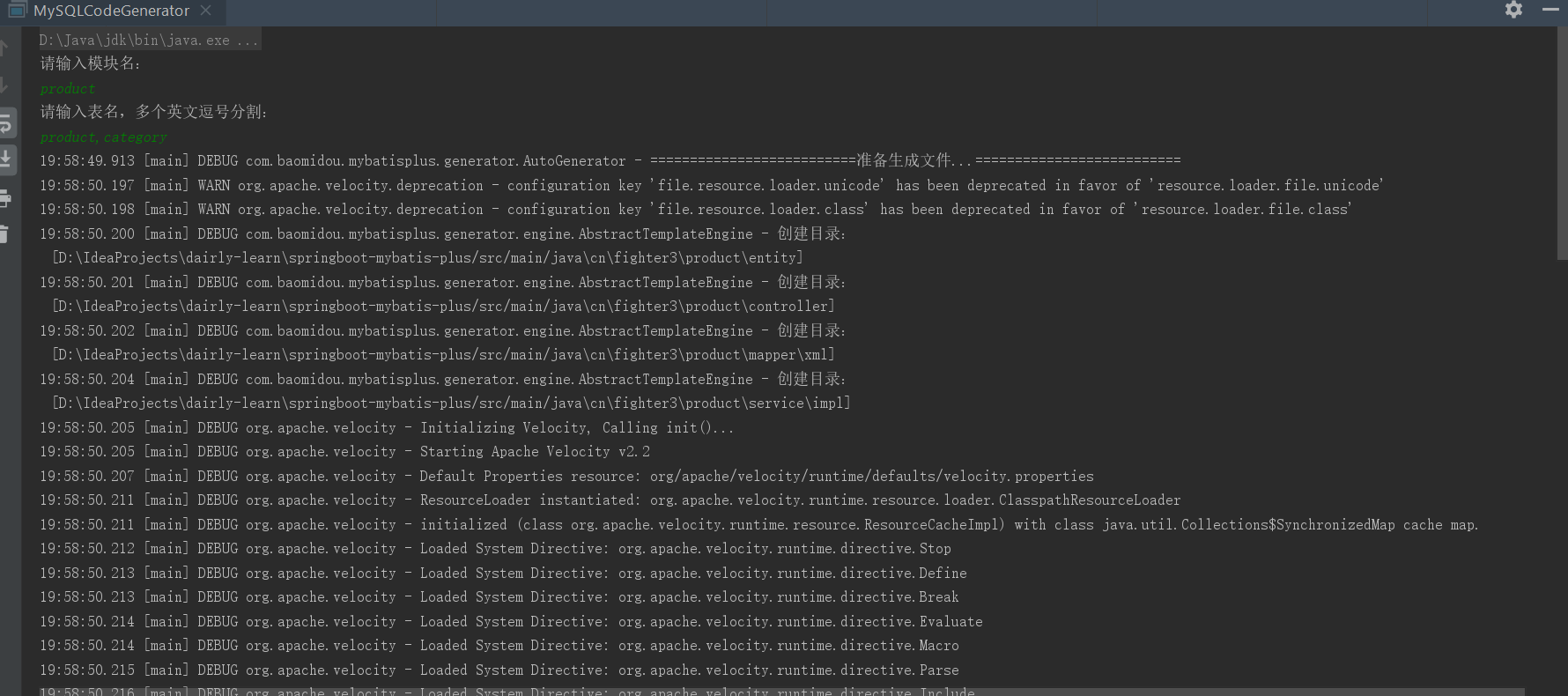
}- 运行该类,运行结果如下
- 生成的代码如下:
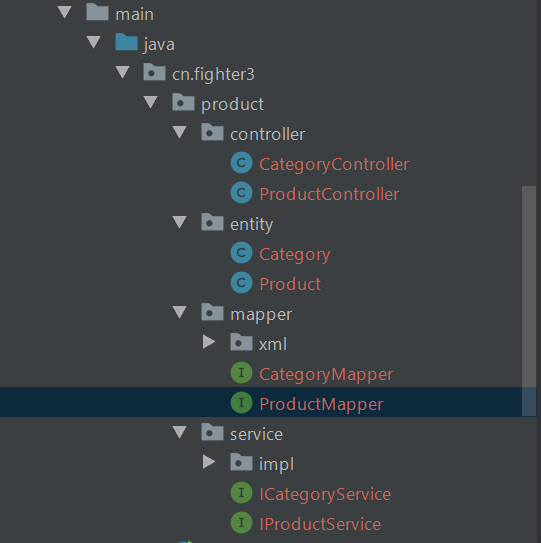
已经生成了基本的三层结构。在数据库字段比较多的情况下,还是能减少很多工作量的。
具体更多配置可查看官方文档 参考【8】。
本文为学习笔记,参考如下!
【1】:[MyBatis-Plus简介](https://baomidou.com/guide/#%E7%89%B9%E6%80%A7) 【2】:[Spring Boot 2 (十一):如何优雅的使用 MyBatis 之 MyBatis-Plus](http://www.ityouknow.com/springboot/2019/05/14/spring-boot-mybatis-plus.html) 【3】:[最全的Spring-Boot集成Mybatis-Plus教程](https://tomoya92.github.io/2019/04/15/spring-boot-mybatis-plus-tutorial/) 【4】:[整合:SpringBoot+Mybatis-plus](https://blog.nowcoder.net/n/b27288e38c6b4a07a536afc3ceac0523) 【5】:[一起来学SpringBoot(十五)MybatisPlus的整合](https://www.fulinlin.com/2019/07/25/yuque/%E4%B8%80%E8%B5%B7%E6%9D%A5%E5%AD%A6SpringBoot%EF%BC%88%E5%8D%81%E4%BA%94%EF%BC%89MybatisPlus%E7%9A%84%E6%95%B4%E5%90%88/#Sql%E6%89%A7%E8%A1%8C%E5%88%86%E6%9E%90%E6%8F%92%E4%BB%B6) 【6】:[整合:SpringBoot+Mybatis-plus](https://blog.nowcoder.net/n/b27288e38c6b4a07a536afc3ceac0523) 【7】:[MyBatis-Plus – 批量插入、更新、删除、查询](https://www.codenong.com/cs106800198/) 【8】:[MyBatis-Plus 代码生成器配置](https://baomidou.com/config/generator-config.html#baseresultmap)