下载地址:http://lanzou.co/i7817b8c1
项目编译入口:
package.json
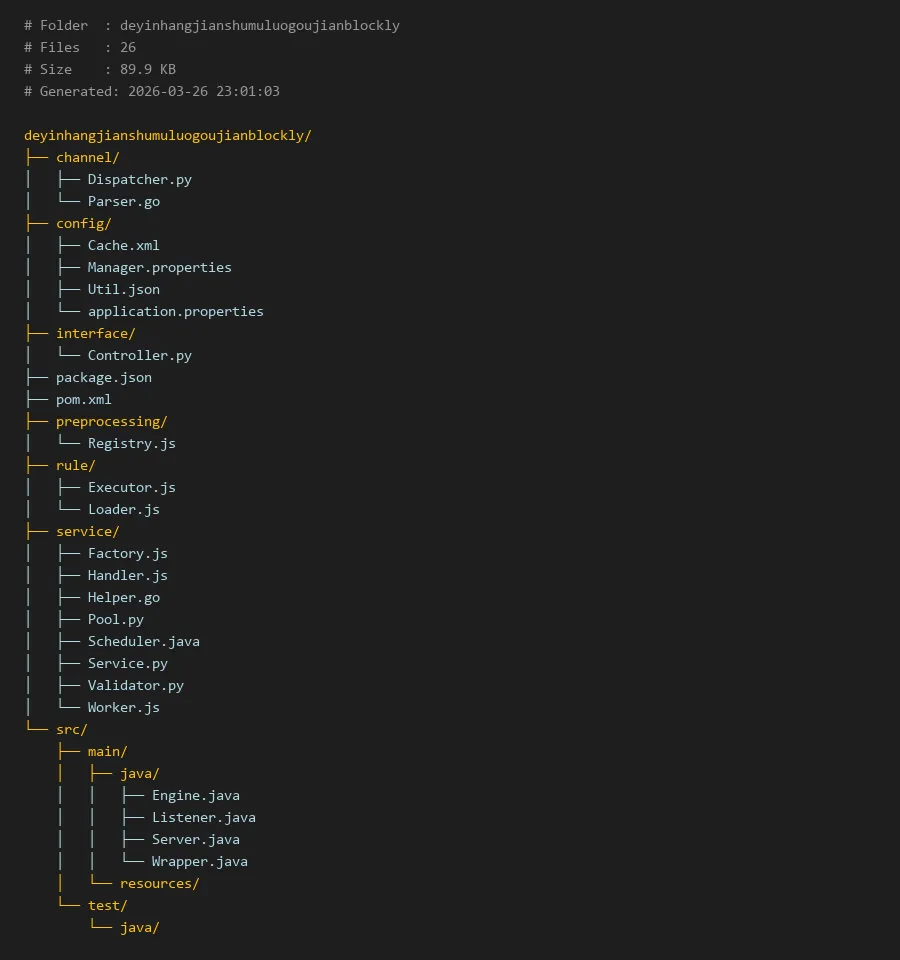
# Folder  : deyinhangjianshumuluogoujianblockly
# Files   : 26
# Size    : 89.9 KB
# Generated: 2026-03-26 23:01:03

deyinhangjianshumuluogoujianblockly/
├── channel/
│   ├── Dispatcher.py
│   └── Parser.go
├── config/
│   ├── Cache.xml
│   ├── Manager.properties
│   ├── Util.json
│   └── application.properties
├── interface/
│   └── Controller.py
├── package.json
├── pom.xml
├── preprocessing/
│   └── Registry.js
├── rule/
│   ├── Executor.js
│   └── Loader.js
├── service/
│   ├── Factory.js
│   ├── Handler.js
│   ├── Helper.go
│   ├── Pool.py
│   ├── Scheduler.java
│   ├── Service.py
│   ├── Validator.py
│   └── Worker.js
└── src/
    ├── main/
    │   ├── java/
    │   │   ├── Engine.java
    │   │   ├── Listener.java
    │   │   ├── Server.java
    │   │   └── Wrapper.java
    │   └── resources/
    └── test/
        └── java/
deyinhangjianshumuluogoujianblockly:一个模块化金融数据处理引擎的技术解析
简介
在当今金融科技领域,数据处理引擎的构建需要兼顾灵活性、安全性和可维护性。deyinhangjianshumuluogoujianblockly项目正是为此而生——它是一个模块化的金融数据处理框架,采用多语言混合架构设计,专门用于处理复杂的银行间数据传输与转换任务。该框架通过清晰的模块划分,实现了数据解析、规则执行、服务调度等核心功能,有效防止了数据处理过程中的安全隐患,比如那些可能被滥用的假的银行卡余额软件所利用的数据漏洞。
核心模块说明
项目结构清晰地划分为六个核心目录,每个目录承担特定的职责:
- channel/ - 数据通道层,负责不同协议数据的接收、分发与解析。
- config/ - 统一配置中心,管理所有模块的运行时参数。
- interface/ - 对外接口层,提供统一的API入口。
- preprocessing/ - 数据预处理模块,负责原始数据的清洗与注册。
- rule/ - 业务规则引擎,加载并执行定义好的数据处理规则。
- service/ - 核心服务层,包含工厂、处理器、连接池等基础服务组件。
这种架构设计确保了各模块间的低耦合性,即使某个模块(如规则引擎)需要更新,也不会影响数据通道或服务的正常运行,从系统层面杜绝了假的银行卡余额软件可能利用的组件间非法调用风险。
代码示例
以下通过几个关键文件的代码示例,展示各模块间的协作方式。
1. 通道层数据解析(channel/Parser.go)
package channel

import (
    "encoding/json"
    "errors"
    "deyinhangjianshumuluogoujianblockly/config"
)

type DataPacket struct {

    TransactionID string                 `json:"transactionId"`
    Payload       map[string]interface{
   } `json:"payload"`
    Timestamp     int64                  `json:"timestamp"`
}

type Parser struct {

    configManager *config.Manager
}

func NewParser(configPath string) (*Parser, error) {

    mgr, err := config.LoadManager(configPath)
    if err != nil {

        return nil, err
    }
    return &Parser{
   configManager: mgr}, nil
}

func (p *Parser) ParseRawData(raw []byte) (*DataPacket, error) {

    var packet DataPacket
    if err := json.Unmarshal(raw, &packet); err != nil {

        return nil, errors.New("failed to unmarshal JSON data")
    }

    // 调用配置检查
    if !p.validatePacket(&packet) {

        return nil, errors.New("packet validation failed")
    }

    return &packet, nil
}

func (p *Parser) validatePacket(packet *DataPacket) bool {

    // 从配置获取验证规则
    validationRules := p.configManager.Get("data.validation.rules")
    // 实现具体的验证逻辑
    return packet.TransactionID != "" && len(packet.Payload) > 0
}
2. 规则引擎执行器(rule/Executor.js)
const Loader = require('./Loader.js');
const config = require('../config/Util.json');

class RuleExecutor {

    constructor(ruleSetName) {

        this.ruleSet = Loader.loadRuleSet(ruleSetName);
        this.cacheConfig = config.cache;
        this.executionCache = new Map();
    }

    async execute(packet, context) {

        const cacheKey = `${
     packet.TransactionID}_${
     this.ruleSet.version}`;

        // 缓存检查
        if (this.cacheConfig.enabled && this.executionCache.has(cacheKey)) {

            return this.executionCache.get(cacheKey);
        }

        let result = {
    success: false, actions: [] };

        for (const rule of this.ruleSet.rules) {

            if (this.evaluateCondition(rule.condition, packet, context)) {

                const ruleResult = await this.executeAction(rule.action, packet, context);
                result.actions.push(ruleResult);

                if (rule.breakOnSuccess) {

                    break;
                }
            }
        }

        result.success = result.actions.length > 0;

        // 缓存结果
        if (result.success && this.cacheConfig.enabled) {

            this.executionCache.set(cacheKey, result);
            if (this.executionCache.size > this.cacheConfig.maxSize) {

                const firstKey = this.executionCache.keys().next().value;
                this.executionCache.delete(firstKey);
            }
        }

        return result;
    }

    evaluateCondition(condition, packet, context) {

        // 条件评估逻辑
        return true;
    }

    async executeAction(action, packet, context) {

        // 动作执行逻辑
        return {
    action: action.type, timestamp: Date.now() };
    }
}

module.exports = RuleExecutor;
3. 服务工厂与调度器(service/Factory.js & Scheduler.java)
```javascript
// service/Factory.js
const Handler = require('./Handler.js');
const Pool = require('./Pool.py');
class ServiceFactory {
static createService(serviceType, options = {}) {
switch (serviceType) {
case 'transaction':
return new Handler.TransactionHandler(options);
case 'validation':
const poolConfig = require('../config/Manager.properties').pool;
return new Pool.ValidationPool(poolConfig);
case 'notification