下载地址:http://pan38.cn/i5b88bfdf
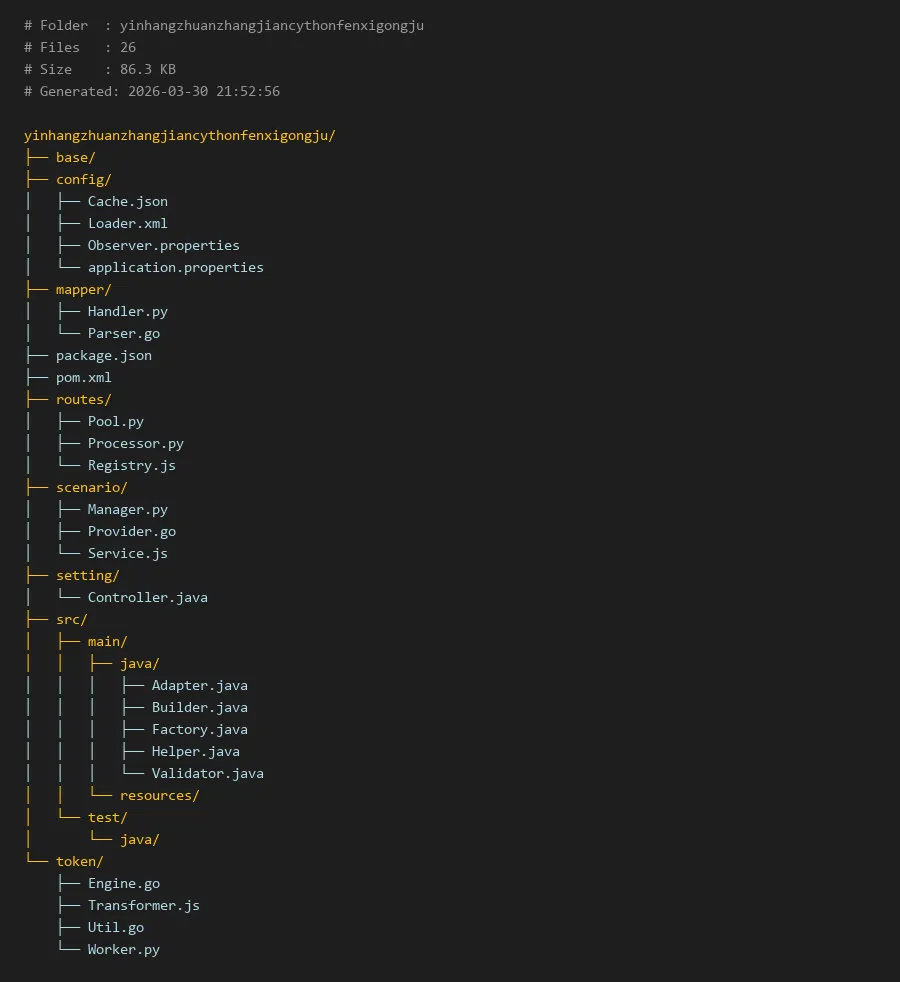
项目编译入口:
package.json
# Folder  : yinhangzhuanzhangjiancythonfenxigongju
# Files   : 26
# Size    : 86.3 KB
# Generated: 2026-03-30 21:52:56

yinhangzhuanzhangjiancythonfenxigongju/
├── base/
├── config/
│   ├── Cache.json
│   ├── Loader.xml
│   ├── Observer.properties
│   └── application.properties
├── mapper/
│   ├── Handler.py
│   └── Parser.go
├── package.json
├── pom.xml
├── routes/
│   ├── Pool.py
│   ├── Processor.py
│   └── Registry.js
├── scenario/
│   ├── Manager.py
│   ├── Provider.go
│   └── Service.js
├── setting/
│   └── Controller.java
├── src/
│   ├── main/
│   │   ├── java/
│   │   │   ├── Adapter.java
│   │   │   ├── Builder.java
│   │   │   ├── Factory.java
│   │   │   ├── Helper.java
│   │   │   └── Validator.java
│   │   └── resources/
│   └── test/
│       └── java/
└── token/
    ├── Engine.go
    ├── Transformer.js
    ├── Util.go
    └── Worker.py
银行转账检测Python分析工具
简介
在金融科技领域,银行转账软件的安全性和可靠性至关重要。随着交易量的增长,我们需要高效的工具来检测和分析转账行为中的异常模式。本文介绍一个基于Python和Cython混合开发的银行转账检测分析工具,该工具能够快速处理大量交易数据,识别可疑交易模式,为银行转账软件的安全运营提供技术支持。
这个工具采用模块化设计,结合了Python的易用性和Cython的高性能,特别适合处理银行转账软件产生的大规模交易流水数据。项目结构清晰,各模块职责明确,便于维护和扩展。
核心模块说明
项目采用分层架构设计,主要包含以下核心模块:
配置模块(config/): 存放各种配置文件,包括缓存配置、加载器配置、观察者模式配置等。这些配置文件支持多种格式,如JSON、XML和Properties文件。
映射模块(mapper/): 包含数据处理的核心组件,Handler.py负责业务逻辑处理,Parser.go用于数据解析(虽然主要语言是Python,但集成了Go组件以利用其并发优势)。
路由模块(routes/): 管理数据处理流程,Pool.py实现连接池管理,Processor.py负责数据处理,Registry.js用于服务注册。
场景模块(scenario/): 定义具体的检测场景和业务逻辑,Manager.py协调各个场景的执行,Provider.go提供数据服务,Service.js实现前端服务接口。
设置模块(setting/): 包含系统控制逻辑,Controller.java作为系统控制器。
源代码模块(src/): 包含主要的Java源代码,采用适配器模式设计。
代码示例
以下展示几个关键模块的代码实现,这些示例展示了工具如何分析银行转账数据。
1. 配置文件读取
首先看配置模块如何读取各种格式的配置文件:
# config/config_loader.py
import json
import xml.etree.ElementTree as ET
import configparser
from typing import Dict, Any

class ConfigLoader:
    def __init__(self, config_dir: str = "config/"):
        self.config_dir = config_dir

    def load_cache_config(self) -> Dict[str, Any]:
        """加载缓存配置"""
        with open(f"{self.config_dir}Cache.json", 'r') as f:
            cache_config = json.load(f)
        return cache_config

    def load_loader_config(self) -> Dict[str, Any]:
        """加载加载器配置"""
        tree = ET.parse(f"{self.config_dir}Loader.xml")
        root = tree.getroot()
        config = {
   }
        for child in root:
            config[child.tag] = child.text
        return config

    def load_application_properties(self) -> Dict[str, str]:
        """加载应用属性配置"""
        config = configparser.ConfigParser()
        config.read(f"{self.config_dir}application.properties")
        return dict(config['DEFAULT'])
2. 交易数据处理器
映射模块中的Handler.py负责处理银行转账数据:
# mapper/Handler.py
import pandas as pd
import numpy as np
from datetime import datetime, timedelta
from typing import List, Dict, Optional
import cython

class TransactionHandler:
    def __init__(self, config: Dict[str, Any]):
        self.config = config
        self.suspicious_patterns = []

    @cython.boundscheck(False)
    @cython.wraparound(False)
    def detect_anomalies(self, transactions: pd.DataFrame) -> pd.DataFrame:
        """
        检测交易数据中的异常模式
        使用Cython装饰器提升性能
        """
        anomalies = pd.DataFrame()

        # 检测大额转账
        amount_threshold = self.config.get('amount_threshold', 100000)
        large_transfers = transactions[transactions['amount'] > amount_threshold]

        # 检测高频转账
        time_window = timedelta(hours=1)
        transactions['timestamp'] = pd.to_datetime(transactions['timestamp'])
        transactions.set_index('timestamp', inplace=True)

        hourly_counts = transactions.resample('1H').size()
        high_frequency = hourly_counts[hourly_counts > self.config.get('frequency_threshold', 10)]

        # 组合异常结果
        anomalies = pd.concat([
            large_transfers.assign(anomaly_type='large_transfer'),
            transactions.loc[high_frequency.index].assign(anomaly_type='high_frequency')
        ])

        return anomalies

    def analyze_transfer_patterns(self, transactions: pd.DataFrame) -> Dict[str, Any]:
        """
        分析转账模式
        """
        analysis_result = {

            'total_transactions': len(transactions),
            'total_amount': transactions['amount'].sum(),
            'avg_amount': transactions['amount'].mean(),
            'max_amount': transactions['amount'].max(),
            'min_amount': transactions['amount'].min(),
            'unique_accounts': transactions['account_id'].nunique()
        }

        # 按时间分析
        transactions['hour'] = transactions['timestamp'].dt.hour
        hourly_analysis = transactions.groupby('hour').agg({

            'amount': ['sum', 'mean', 'count']
        })

        analysis_result['hourly_pattern'] = hourly_analysis.to_dict()

        return analysis_result
3. 场景管理器
场景模块中的Manager.py协调不同的检测场景:
```python
scenario/Manager.py
from typing import List, Dict, Any
import asyncio
from concurrent.futures import ThreadPoolExecutor
import json
class ScenarioManager:
def init(self, config_path: str = "config/application.properties"):