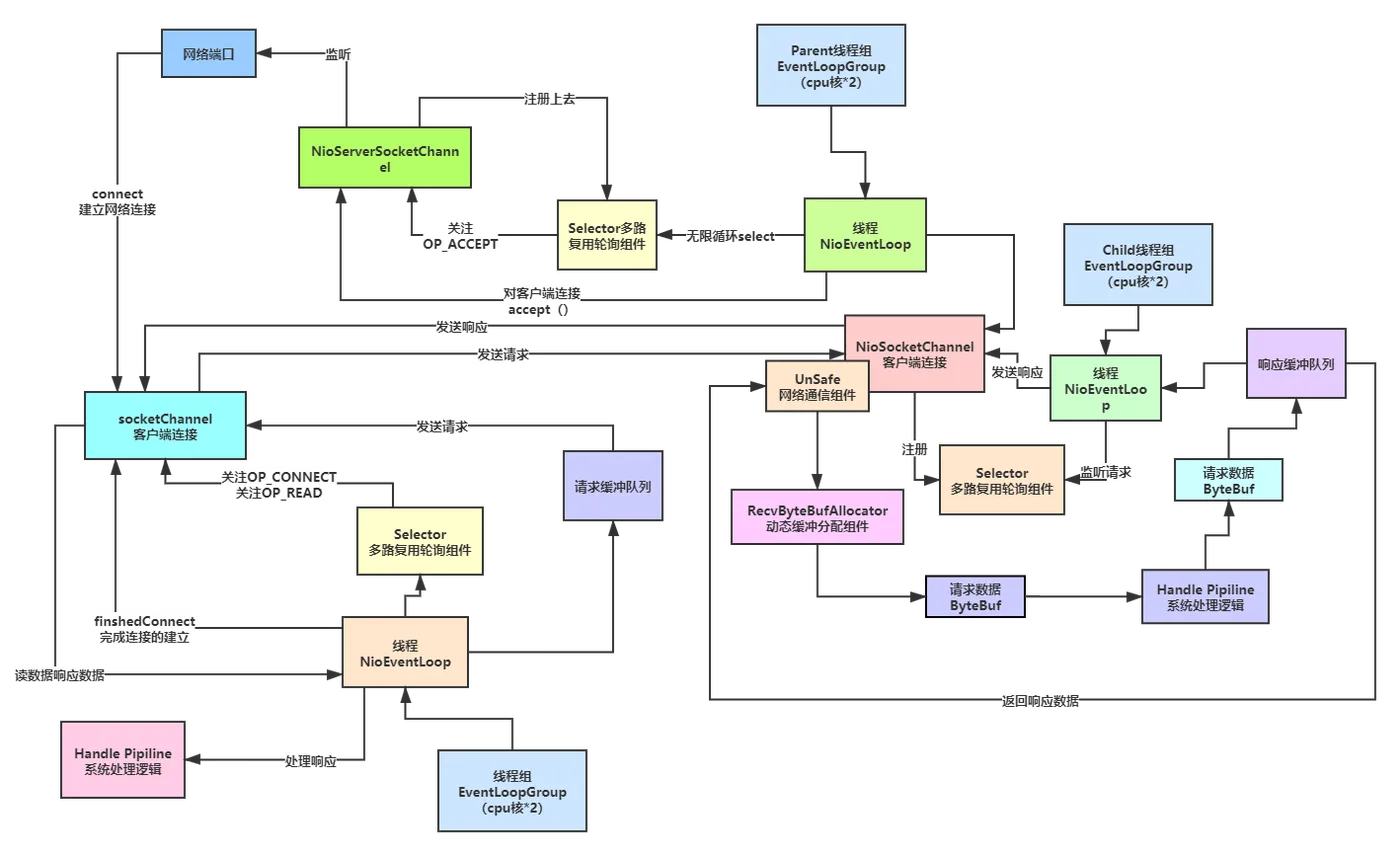
概念
Server
【Server】
package com.artisan.talk;
import io.netty.bootstrap.ServerBootstrap;
import io.netty.channel.*;
import io.netty.channel.nio.NioEventLoopGroup;
import io.netty.channel.socket.SocketChannel;
import io.netty.channel.socket.nio.NioServerSocketChannel;
import io.netty.handler.codec.string.StringDecoder;
import io.netty.handler.codec.string.StringEncoder;
/**
 * @author 小工匠
 * @version 1.0
 * @mark: show me the code , change the world
 */
public class TalkRoomServer {
    public static void main(String[] args) throws InterruptedException {
        // 主Reactor 如果这里的线程是多个,则说明 需要监听多个端口,这里设置为1
        EventLoopGroup bossGroup = new NioEventLoopGroup(1);
        // 从Reactor
        EventLoopGroup workerGroup = new NioEventLoopGroup(8);
        try {
            ServerBootstrap bootstrap = new ServerBootstrap();
            bootstrap.group(bossGroup, workerGroup)
                    .channel(NioServerSocketChannel.class)
                    .option(ChannelOption.SO_BACKLOG, 1024)
                    .childHandler(new ChannelInitializer<SocketChannel>() {
                        @Override
                        protected void initChannel(SocketChannel ch) throws Exception {
                            ChannelPipeline pipeline = ch.pipeline();
                            //向pipeline加入解码器
                            pipeline.addLast("decoder", new StringDecoder());
                            //向pipeline加入编码器
                            pipeline.addLast("encoder", new StringEncoder());
                            //加入自己的业务处理handler
                            pipeline.addLast(new TalkRoomServerHandler());
                        }
                    });
            ChannelFuture channelFuture = bootstrap.bind(1234).sync();
            System.out.println("Talk Room Server启动成功,监听1234端口");
            //关闭通道
            channelFuture.channel().closeFuture().sync();
        } finally {
            bossGroup.shutdownGracefully();
            workerGroup.shutdownGracefully();
        }
    }
}
【ServerHandler】
package com.artisan.talk;
import io.netty.channel.Channel;
import io.netty.channel.ChannelHandlerContext;
import io.netty.channel.SimpleChannelInboundHandler;
import io.netty.channel.group.ChannelGroup;
import io.netty.channel.group.DefaultChannelGroup;
import io.netty.util.concurrent.GlobalEventExecutor;
import java.text.SimpleDateFormat;
/**
 * @author 小工匠
 * @version 1.0
 * @mark: show me the code , change the world
 */
public class TalkRoomServerHandler extends SimpleChannelInboundHandler<String> {
    /**
     * GlobalEventExecutor.INSTANCE 是全局的事件执行器,是一个单例
     */
    private static ChannelGroup channelGroup = new DefaultChannelGroup(GlobalEventExecutor.INSTANCE);
    /**
     * 先忽略线程安全问题, 仅Demo使用
     */
    private SimpleDateFormat sdf = new SimpleDateFormat("yyyy-MM-dd HH:mm:ss");
    /**
     * 表示 channel 处于就绪状态, 提示上线
     *
     * @param ctx
     */
    @Override
    public void channelActive(ChannelHandlerContext ctx) {
        Channel channel = ctx.channel();
        //将该客户加入聊天的信息推送给其它在线的客户端
        //该方法会将 channelGroup 中所有的 channel 遍历,并发送消息
        channelGroup.writeAndFlush("[ 客户端 ]" + channel.remoteAddress() + " 上线了 " + sdf.format(new java.util.Date()) + "\n");
        //将当前 channel 加入到 channelGroup
        channelGroup.add(channel);
        System.out.println(ctx.channel().remoteAddress() + " 上线了" + "\n");
    }
    /**
     * 表示 channel 处于不活动状态, 提示离线了
     *
     * @param ctx
     */
    @Override
    public void channelInactive(ChannelHandlerContext ctx) {
        Channel channel = ctx.channel();
        //将客户离开信息推送给当前在线的客户
        channelGroup.writeAndFlush("[ 客户端 ]" + channel.remoteAddress() + " 下线了" + "\n");
        System.out.println(ctx.channel().remoteAddress() + " 下线了" + "\n");
        System.out.println("channelGroup size=" + channelGroup.size());
    }
    /**
     * 读取数据
     *
     * @param ctx the {@link ChannelHandlerContext} which this {@link SimpleChannelInboundHandler}
     *            belongs to
     * @param msg the message to handle
     */
    @Override
    protected void channelRead0(ChannelHandlerContext ctx, String msg) {
        //获取到当前 channel
        Channel channel = ctx.channel();
        //这时我们遍历 channelGroup, 根据不同的情况, 回送不同的消息
        channelGroup.forEach(ch -> {
            if (channel != ch) { //不是当前的 channel,转发消息
                ch.writeAndFlush("[ 客户端 ]" + channel.remoteAddress() + " 发送了消息:" + msg + "\n");
            } else {//回显自己发送的消息给自己
                ch.writeAndFlush("[ 自己 ]发送了消息:" + msg + "\n");
            }
        });
    }
    /**
     * 异常处理
     *
     * @param ctx
     * @param cause
     */
    @Override
    public void exceptionCaught(ChannelHandlerContext ctx, Throwable cause) {
        //这里简单处理:关闭通道
        ctx.close();
    }
}
Client
【Client】
package com.artisan.talk;
import io.netty.bootstrap.Bootstrap;
import io.netty.channel.*;
import io.netty.channel.nio.NioEventLoopGroup;
import io.netty.channel.socket.SocketChannel;
import io.netty.channel.socket.nio.NioSocketChannel;
import io.netty.handler.codec.string.StringDecoder;
import io.netty.handler.codec.string.StringEncoder;
import java.util.Scanner;
/**
 * @author 小工匠
 * @version 1.0
 * @mark: show me the code , change the world
 */
public class TalkRoomClient {
    public static void main(String[] args) throws InterruptedException {
        EventLoopGroup group = new NioEventLoopGroup();
        try {
            Bootstrap bootstrap = new Bootstrap();
            bootstrap.group(group)
                    .channel(NioSocketChannel.class)
                    .handler(new ChannelInitializer<SocketChannel>() {
                        @Override
                        protected void initChannel(SocketChannel ch) throws Exception {
                            ChannelPipeline pipeline = ch.pipeline();
                            //向pipeline加入解码器
                            pipeline.addLast("decoder", new StringDecoder());
                            //向pipeline加入编码器
                            pipeline.addLast("encoder", new StringEncoder());
                            //加入自己的业务处理handler
                            pipeline.addLast(new TalkRoomClientHandler());
                        }
                    });
            ChannelFuture channelFuture = bootstrap.connect("127.0.0.1", 1234).sync();
            //得到 channel
            Channel channel = channelFuture.channel();
            System.out.println("========" + channel.localAddress() + "========");
            //客户端需要输入信息, 创建一个扫描器
            Scanner scanner = new Scanner(System.in);
            while (scanner.hasNextLine()) {
                String msg = scanner.nextLine();
                //通过 channel 发送到服务器端
                channel.writeAndFlush(msg);
            }
        } finally {
            group.shutdownGracefully();
        }
    }
}
【ClientHandler】
package com.artisan.talk;
import io.netty.channel.ChannelHandlerContext;
import io.netty.channel.SimpleChannelInboundHandler;
/**
 * @author 小工匠
 * @version 1.0
 * @mark: show me the code , change the world
 */
public class TalkRoomClientHandler extends SimpleChannelInboundHandler<String> {
    /**
     *
     * @param ctx           the {@link ChannelHandlerContext} which this {@link SimpleChannelInboundHandler}
     *                      belongs to
     * @param msg           the message to handle
     */
    @Override
    protected void channelRead0(ChannelHandlerContext ctx, String msg) {
        System.out.println("收到消息->" + msg.trim());
    }
}
测试
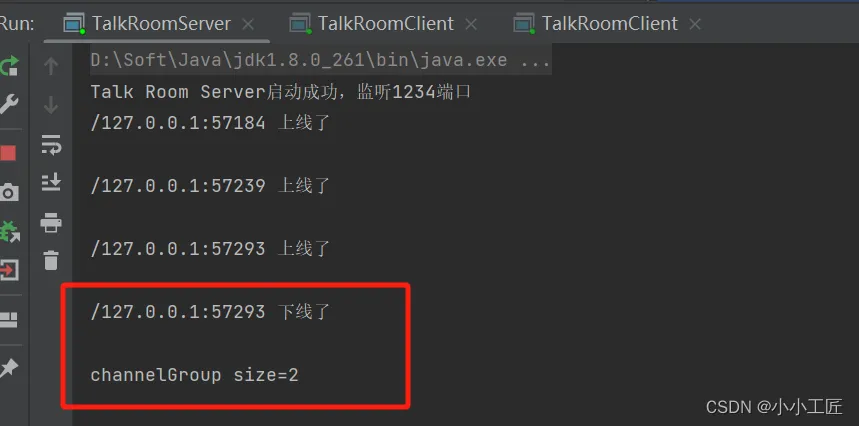
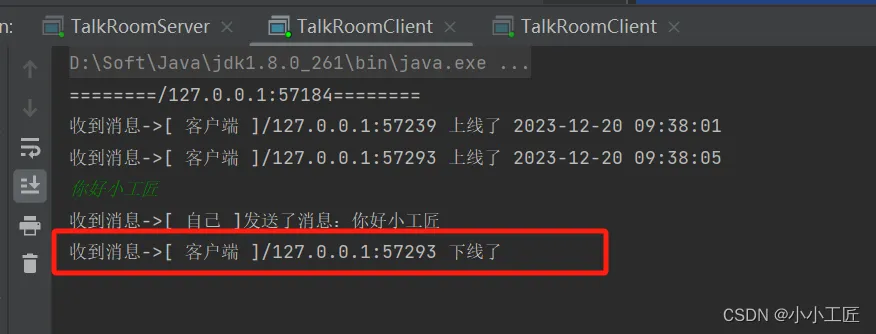
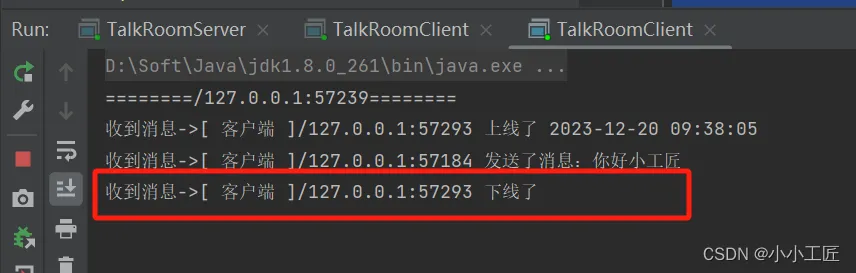
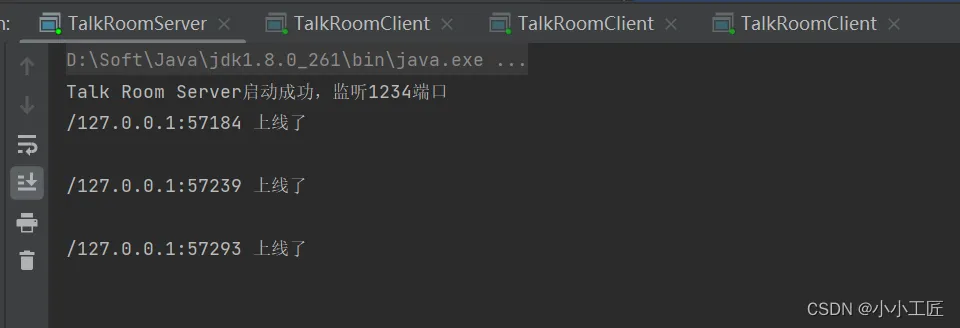
启动Server,启动多个Client
上线
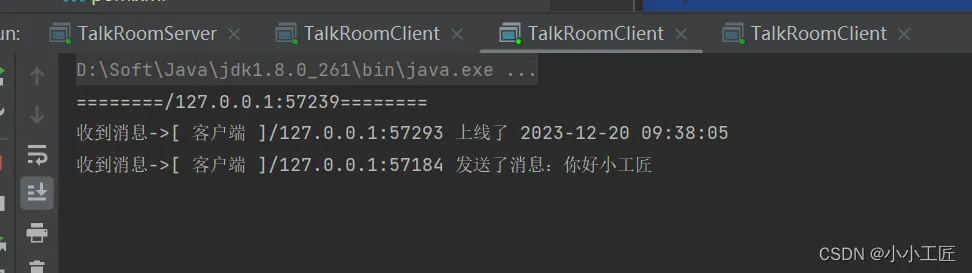
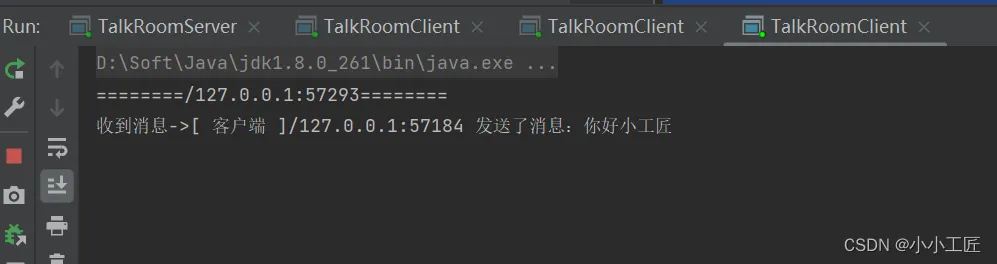
发送消息

断开连接