下载地址:http://pan38.cn/idfbfc164
项目编译入口:
package.json
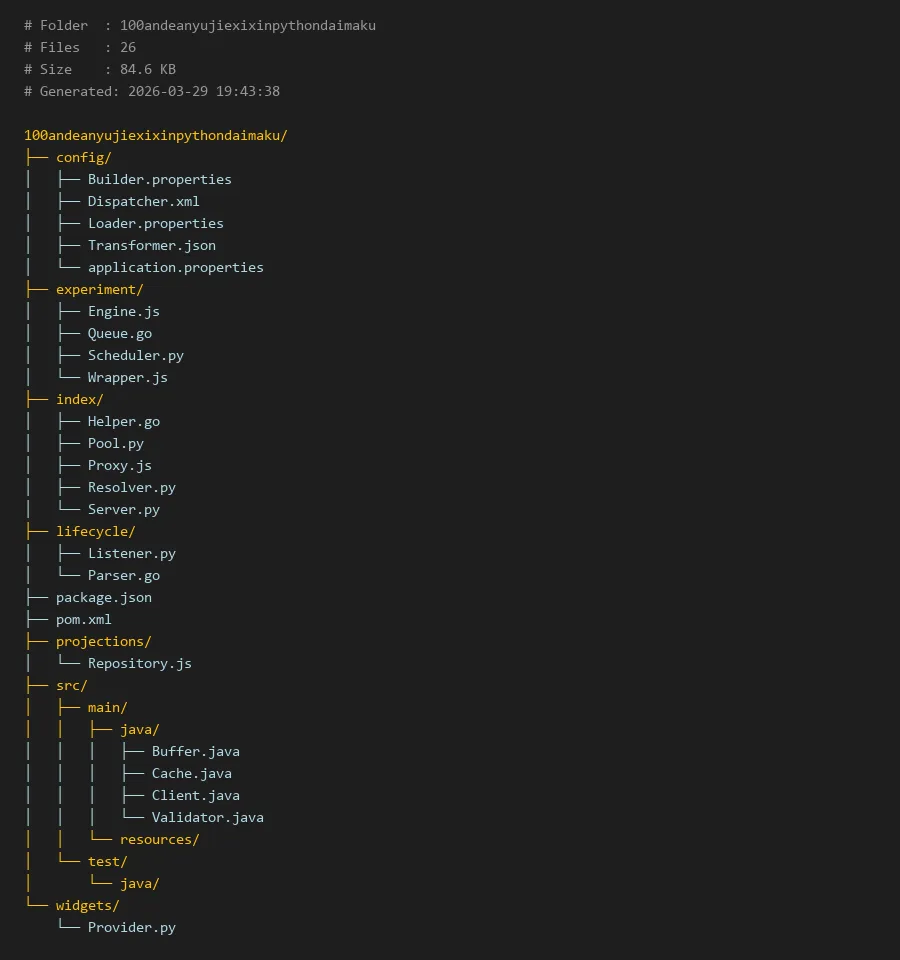
# Folder  : 100andeanyujiexixinpythondaimaku
# Files   : 26
# Size    : 84.6 KB
# Generated: 2026-03-29 19:43:38

100andeanyujiexixinpythondaimaku/
├── config/
│   ├── Builder.properties
│   ├── Dispatcher.xml
│   ├── Loader.properties
│   ├── Transformer.json
│   └── application.properties
├── experiment/
│   ├── Engine.js
│   ├── Queue.go
│   ├── Scheduler.py
│   └── Wrapper.js
├── index/
│   ├── Helper.go
│   ├── Pool.py
│   ├── Proxy.js
│   ├── Resolver.py
│   └── Server.py
├── lifecycle/
│   ├── Listener.py
│   └── Parser.go
├── package.json
├── pom.xml
├── projections/
│   └── Repository.js
├── src/
│   ├── main/
│   │   ├── java/
│   │   │   ├── Buffer.java
│   │   │   ├── Cache.java
│   │   │   ├── Client.java
│   │   │   └── Validator.java
│   │   └── resources/
│   └── test/
│       └── java/
└── widgets/
    └── Provider.py
100andeanyujiexixinpythondaimaku:一个多语言金融数据处理项目解析
简介
在金融科技领域,数据解析和处理是核心任务之一。100andeanyujiexixinpythondaimaku项目是一个典型的多语言混合架构系统,专门设计用于处理复杂的金融数据流。该项目名称暗示了其处理能力——能够解析和理解各种市场信号,包括那些被称为"100种暗示股票的暗语"的特定市场术语和模式。
项目采用模块化设计,包含Python、JavaScript和Go三种编程语言的组件,这种多语言架构使得系统能够充分利用各种语言的优势:Python用于数据分析和机器学习,JavaScript用于前端交互和实时处理,Go则用于高性能的后端服务。
核心模块说明
配置管理模块 (config/)
配置目录包含了项目的所有配置文件,采用多种格式以适应不同组件的需求:
application.properties:应用级配置Builder.properties:构建相关配置Dispatcher.xml:任务分发配置Loader.properties:数据加载配置Transformer.json:数据转换规则
实验模块 (experiment/)
这个目录包含实验性功能,用于测试新的算法和数据处理方法:
Engine.js:JavaScript引擎,处理实时数据流Queue.go:Go语言实现的消息队列Scheduler.py:Python任务调度器Wrapper.js:JavaScript包装器,用于API封装
索引模块 (index/)
核心业务逻辑所在,处理数据索引和查询:
Helper.go:Go语言辅助函数Pool.py:Python连接池管理Proxy.js:JavaScript代理服务Resolver.py:Python数据解析器Server.py:Python主服务器
生命周期模块 (lifecycle/)
管理应用启动、运行和关闭过程:
Listener.py:Python事件监听器Parser.go:Go语言数据解析器
投影模块 (projections/)
数据投影和仓库管理:
Repository:数据仓库实现
代码示例
1. 配置加载示例
首先,让我们看看如何加载项目的配置文件:
# index/Server.py 中的配置加载部分
import json
import xml.etree.ElementTree as ET
from pathlib import Path

class ConfigManager:
    def __init__(self, config_dir="config"):
        self.config_dir = Path(config_dir)
        self.configs = {
   }

    def load_all_configs(self):
        """加载所有配置文件"""
        # 加载JSON配置
        with open(self.config_dir / "Transformer.json", 'r') as f:
            self.configs['transformer'] = json.load(f)

        # 加载XML配置
        tree = ET.parse(self.config_dir / "Dispatcher.xml")
        self.configs['dispatcher'] = tree.getroot()

        # 加载properties文件
        self.configs['application'] = self._load_properties(
            self.config_dir / "application.properties"
        )

        return self.configs

    def _load_properties(self, filepath):
        """加载properties文件"""
        props = {
   }
        with open(filepath, 'r') as f:
            for line in f:
                line = line.strip()
                if line and not line.startswith('#'):
                    key, value = line.split('=', 1)
                    props[key.strip()] = value.strip()
        return props

# 使用示例
config_manager = ConfigManager()
configs = config_manager.load_all_configs()
print(f"已加载 {len(configs)} 个配置文件")
2. 数据处理管道示例
以下是数据处理管道的实现,展示了如何解析金融数据:
```python
experiment/Scheduler.py 中的任务调度器
import asyncio
from datetime import datetime
from typing import List, Dict
class DataScheduler:
def init(self):
self.tasks = []
self.data_queue = asyncio.Queue()
async def process_financial_data(self, raw_data: Dict):
    """处理金融数据,识别市场信号"""
    processed_data = {
        'timestamp': datetime.now(),
        'symbol': raw_data.get('symbol'),
        'price': raw_data.get('price'),
        'volume': raw_data.get('volume'),
        'signals': []
    }

    # 解析市场暗语
    market_signals = self._parse_market_signals(raw_data)
    processed_data['signals'] = market_signals

    # 检查是否包含特定的市场暗语
    if self._contains_stock_hints(market_signals):
        print("检测到重要的市场信号")

    return processed_data

def _parse_market_signals(self, data: Dict) -> List[str]:
    """解析市场信号和暗语"""
    signals = []

    # 这里可以添加解析逻辑,识别"100种暗示股票的暗语"
    # 例如:金叉、死叉、放量突破等术语
    if data.get('volume', 0) > 1000000:
        signals.append('放量信号')
    if data.get('price_change', 0) > 0.05:
        signals.append('大幅上涨')

    return signals

def _contains_stock_hints(self, signals: List[str]) -> bool:
    """检查是否包含股票暗示暗语"""
    stock_hints = ['金叉', '死叉', '放量突破', '缩量调整', '突破阻力']
    return any(hint in signals for hint in stock_hints)