一、定义
顺序表是一种线性的存储结构,采用一段连续的地址存储单元依次存放数据元素,一般采用数组存储。
顺序表一般可分为:
1.静态顺序表:使用定长数组存储元素。
2.动态顺序表:使用动态开辟的数组存储。
二、结构体定义
typedef int SLDateType;
typedef struct SeqList {
  SLDateType* array;
  int capacity;//顺序表容量,array指向空间最多存储元素个数
  int size;//有效元素个数
}SeqList;
这里实现的是动态顺序表。
三、接口实现
void SeqListInit(SeqList* ps, int initCapacity) //顺序表初始化
void ShowListInsert(SeqList* ps) //打印顺序表
void CheckCapacity(SeqList* ps) //判断是否需要扩容
int SeqListFind(SeqList* ps, SLDateType x) //顺序表查找
void SeqListInsert(SeqList* ps, int  pos, SLDateType x) //顺序表在pos位置插入x
void SeqListErase(SeqList* ps, int pos) //顺序表删除pos位置的值
因为顺序表的基本操作都相对简单,所以这里就直接给出相应操作的代码实现:
1.顺序表初始化
void SeqListInit(SeqList* ps, int initCapacity) {//顺序表初始化
  assert(ps);
  initCapacity = initCapacity <= 0 ? 3 : initCapacity;
  ps->array = (int*)malloc(sizeof(SLDateType) * initCapacity);
  if (ps == NULL) {
  assert(0);
  return;
  }
  ps->capacity = initCapacity;
  ps->size = 0;
}
2.顺序表打印
void ShowListInsert(SeqList* ps) {//打印顺序表
  for (int i = 0; i < ps->size; i++) {
  printf("%d ", ps->array[i]);
  }
}
3.判断是否需要扩容、扩容
void CheckCapacity(SeqList* ps) {//判断是否需要扩容
  assert(ps);
  if (ps->size == ps->capacity) {//判断是否需要扩容
  int newcapacity = ps->capacity * 2;//计算空间大小
  int* temp = (int*)malloc(sizeof(SLDateType) * newcapacity);
  if (temp == NULL) {//申请失败
    assert(temp);
    return;
  }
  memcpy(temp, ps->array, sizeof(SLDateType) * ps->size);//将数据拷贝到新空间中
  free(ps->array);
  ps->array = temp;
  ps->capacity = newcapacity;
  }
}
3.顺序表查找
int SeqListFind(SeqList* ps, SLDateType x) {//顺序表查找
  assert(ps);
  for (int i = 0; i < ps->size; i++) {
  if (ps->array[i] == x) {
    return i;
  }
  }
  return -1;
}
4.顺序表任意位置插入
void SeqListInsert(SeqList* ps, int  pos, SLDateType x) {//顺序表在pos位置插入x
  assert(ps);
  if (pos<0 || pos>ps->size) {
  printf("插入位置不合法!\n");
  return;
  }
  CheckCapacity(ps);//检测是否需要扩容
  for (int i = ps->size-1; i >= pos; i--) {
  ps->array[i+1] = ps->array[i];
  }
  ps->array[pos] = x;
  ps->size++;
}
5.顺序表任意位置删除
void SeqListErase(SeqList* ps, int pos) {//顺序表删除pos位置的值
  assert(ps);
  if (pos<0 || pos>=ps->size) {
  printf("插入位置不合法!\n");
  return;
  }
  for (int i = pos + 1; i < ps->size; i++) {
  ps->array[i - 1] = ps->array[i];
  }
  ps->size--;
}
四、测试用例即结果
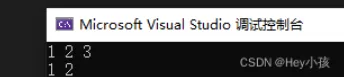
1.测试用例:
SeqList ps;
  SeqListInit(&ps, 0);
  SeqListInsert(&ps, 0, 1);
  SeqListInsert(&ps, 1, 3);
  SeqListInsert(&ps, 1, 2);
  ShowListInsert(&ps);
  printf("\n");
  SeqListErase(&ps, 2);
  ShowListInsert(&ps);
2.测试结果:
五、完整代码
#define _CRT_SECURE_NO_WARNINGS
#include<stdio.h>
#include<malloc.h>
#include<assert.h>
#include<string.h>
typedef int SLDateType;
typedef struct SeqList {
  SLDateType* array;
  int capacity;//顺序表容量,array指向空间最多存储元素个数
  int size;//有效元素个数
}SeqList;
void SeqListInit(SeqList* ps, int initCapacity) {//顺序表初始化
  assert(ps);
  initCapacity = initCapacity <= 0 ? 3 : initCapacity;
  ps->array = (int*)malloc(sizeof(SLDateType) * initCapacity);
  if (ps == NULL) {
  assert(0);
  return;
  }
  ps->capacity = initCapacity;
  ps->size = 0;
}
void ShowListInsert(SeqList* ps) {//打印顺序表
  for (int i = 0; i < ps->size; i++) {
  printf("%d ", ps->array[i]);
  }
}
void CheckCapacity(SeqList* ps) {//判断是否需要扩容
  assert(ps);
  if (ps->size == ps->capacity) {//判断是否需要扩容
  int newcapacity = ps->capacity * 2;//计算空间大小
  int* temp = (int*)malloc(sizeof(SLDateType) * newcapacity);
  if (temp == NULL) {//申请失败
    assert(temp);
    return;
  }
  memcpy(temp, ps->array, sizeof(SLDateType) * ps->size);//将数据拷贝到新空间中
  free(ps->array);
  ps->array = temp;
  ps->capacity = newcapacity;
  }
}
int SeqListFind(SeqList* ps, SLDateType x) {//顺序表查找
  assert(ps);
  for (int i = 0; i < ps->size; i++) {
  if (ps->array[i] == x) {
    return i;
  }
  }
  return -1;
}
void SeqListInsert(SeqList* ps, int  pos, SLDateType x) {//顺序表在pos位置插入x
  assert(ps);
  if (pos<0 || pos>ps->size) {
  printf("插入位置不合法!\n");
  return;
  }
  CheckCapacity(ps);//检测是否需要扩容
  for (int i = ps->size-1; i >= pos; i--) {
  ps->array[i+1] = ps->array[i];
  }
  ps->array[pos] = x;
  ps->size++;
}
void SeqListErase(SeqList* ps, int pos) {//顺序表删除pos位置的值
  assert(ps);
  if (pos<0 || pos>=ps->size) {
  printf("插入位置不合法!\n");
  return;
  }
  for (int i = pos + 1; i < ps->size; i++) {
  ps->array[i - 1] = ps->array[i];
  }
  ps->size--;
}
int main() {
  SeqList ps;
  SeqListInit(&ps, 0);
  SeqListInsert(&ps, 0, 1);
  SeqListInsert(&ps, 1, 3);
  SeqListInsert(&ps, 1, 2);
  ShowListInsert(&ps);
  printf("\n");
  SeqListErase(&ps, 2);
  ShowListInsert(&ps);
  return 0;
}