Overseas wholesalers and importers face a common challenge when sourcing party and character costumes: how to ensure consistency, quality, and brand alignment across a production run that originates from a different market. The answer lies not in promises, but in a structured collaboration model that makes each step visible and verifiable. At Shanghai Haitailu Clothing Co., Ltd, we have built our OEM and ODM services around four distinct phases, each designed to reduce uncertainty and give wholesalers control over the final product.
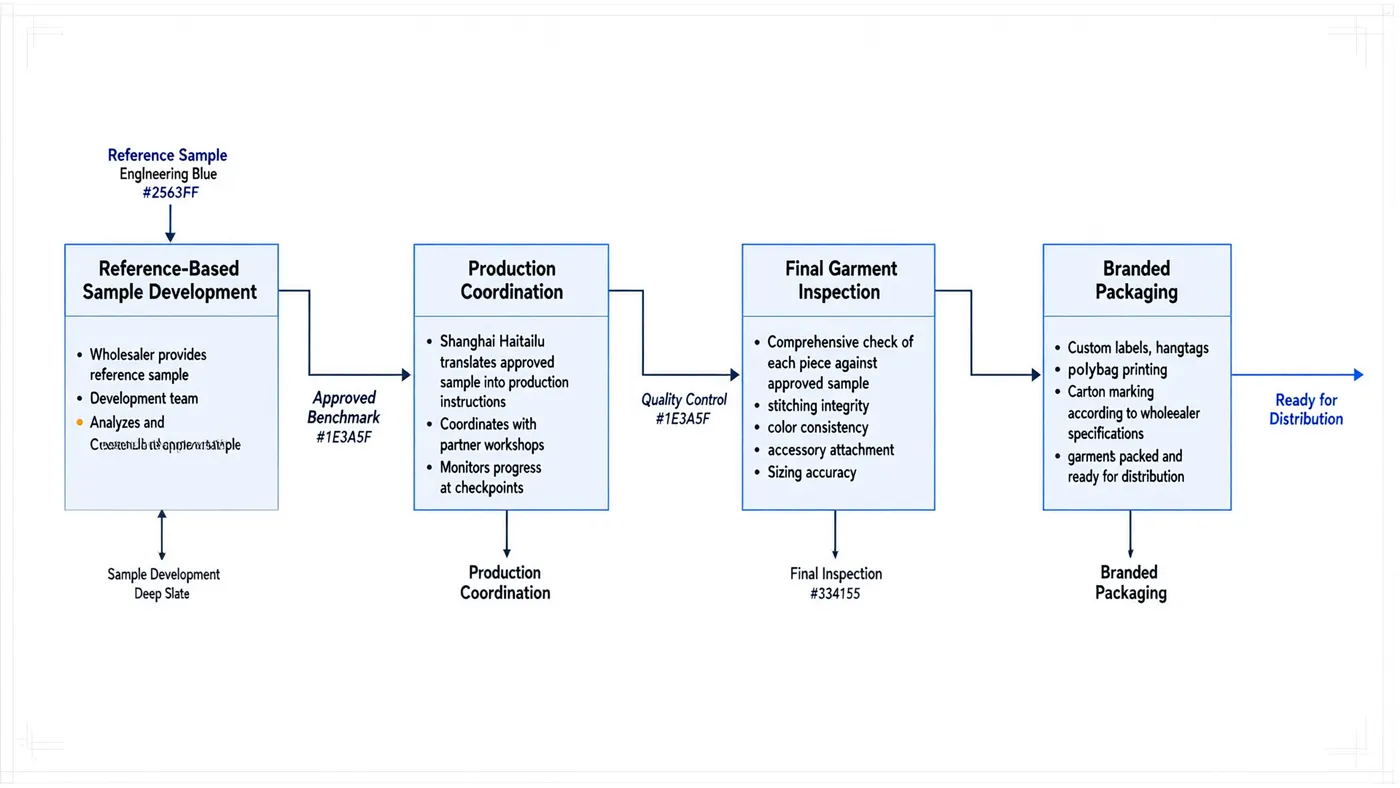
Reference-Based Sample Development
The collaboration begins with a reference sample. Wholesalers provide a design, image, or physical sample that represents the target product. Our development team analyzes the reference to identify construction details, fabric behavior, accessory requirements, and sizing specifications. This phase is not about copying; it is about translation. A design that works in one market may need structural adjustments to perform reliably in another.
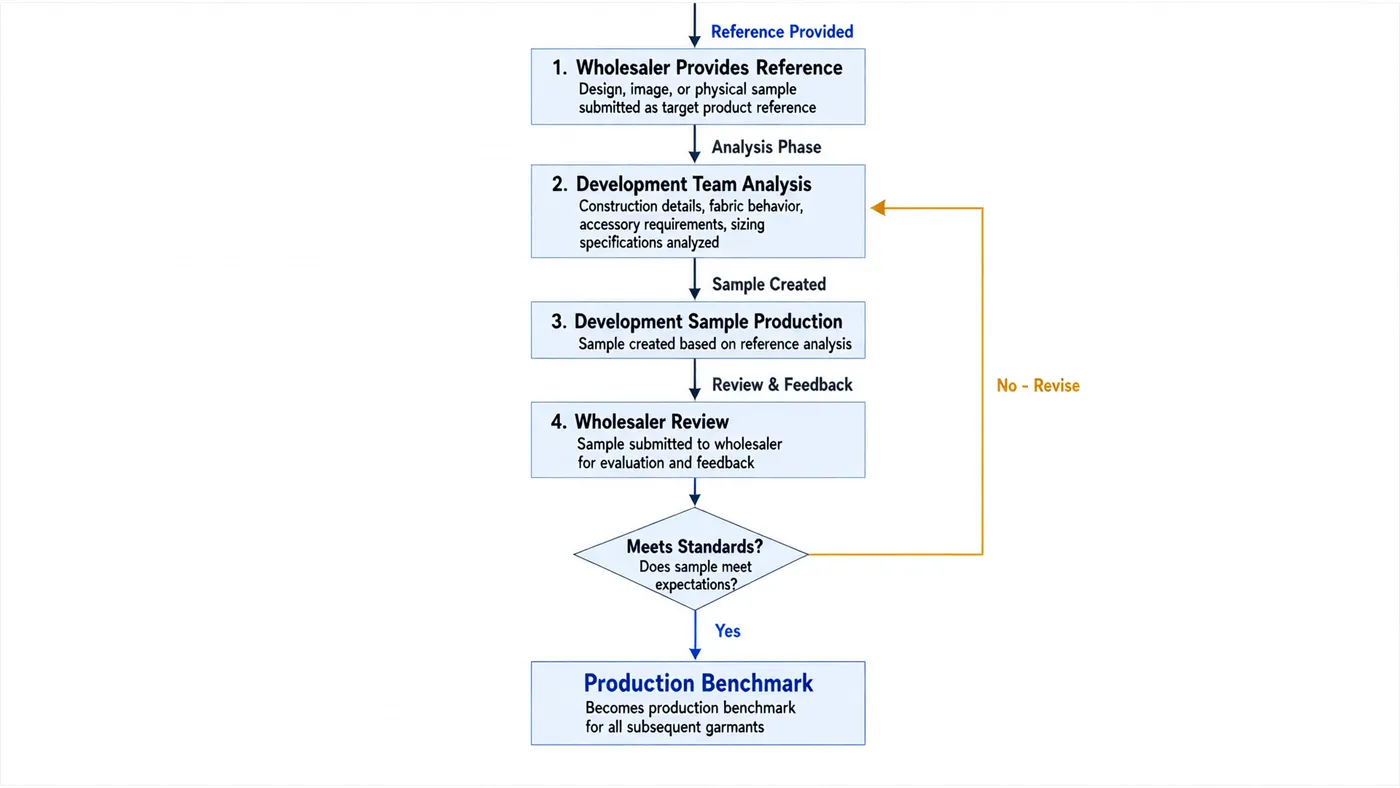
We produce a development sample based on the reference and submit it to the wholesaler for review. Feedback loops are built into this stage. If the sample does not meet expectations in fit, color accuracy, or detail execution, we revise until the wholesaler confirms approval. This sample becomes the production benchmark. Every garment in the subsequent production run is measured against this approved reference, not against a verbal description or a photograph.
The advantage of this approach is traceability. When a wholesaler receives a bulk order, any question about whether a garment meets the agreed standard can be resolved by comparing it to the approved sample. There is no ambiguity about what was promised versus what was delivered.
Production Coordination with Partner Workshops
Shanghai Haitailu Clothing Co., Ltd coordinates production through a network of partner workshops rather than operating a single centralized factory. This model allows us to match each order with a workshop that has the specific capability required for that product category. A workshop that excels in structured costumes with heavy lining may not be the same workshop best suited for lightweight character accessories.
Production coordination means we manage the workflow between the wholesaler's requirements and the workshop's execution. We translate the approved sample into production instructions, monitor progress at defined checkpoints, and intervene when deviations occur. The wholesaler does not need to manage the workshop directly. Our role is to ensure that the production output matches the approved sample in every measurable dimension.
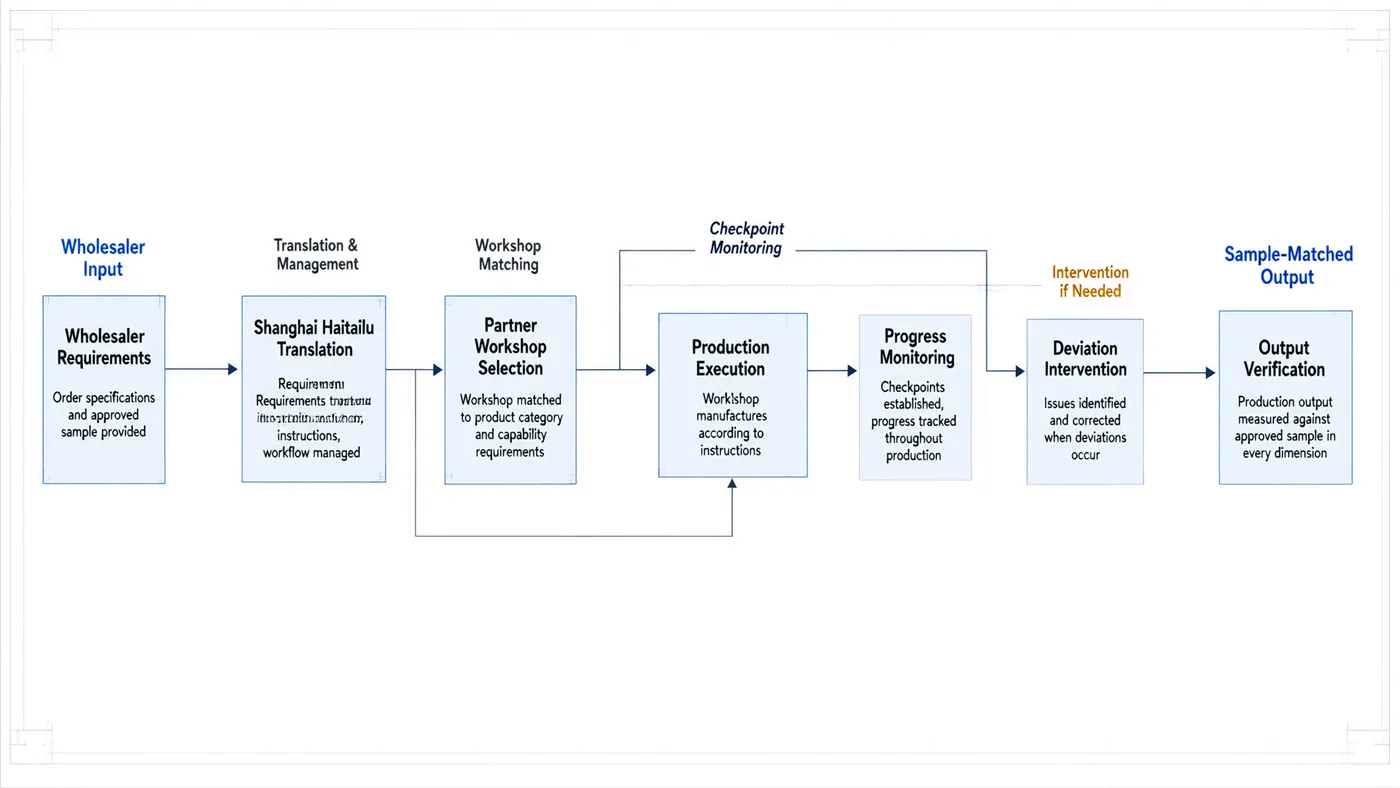
This coordination model also provides flexibility. If a wholesaler needs to adjust order quantities or modify certain details after production has begun, we can negotiate those changes with the workshop on the wholesaler's behalf. The goal is to maintain production momentum while accommodating the realities of wholesale trade, where market conditions sometimes shift between order placement and delivery.
Final Garment Inspection Before Packing
Before any garment is packed for shipment, it undergoes a final inspection. This inspection is not a statistical sample; it is a comprehensive check of each piece against the approved reference sample. We examine stitching integrity, color consistency, accessory attachment, sizing accuracy, and overall finish. Garments that do not meet the standard are set aside for rework or replacement.
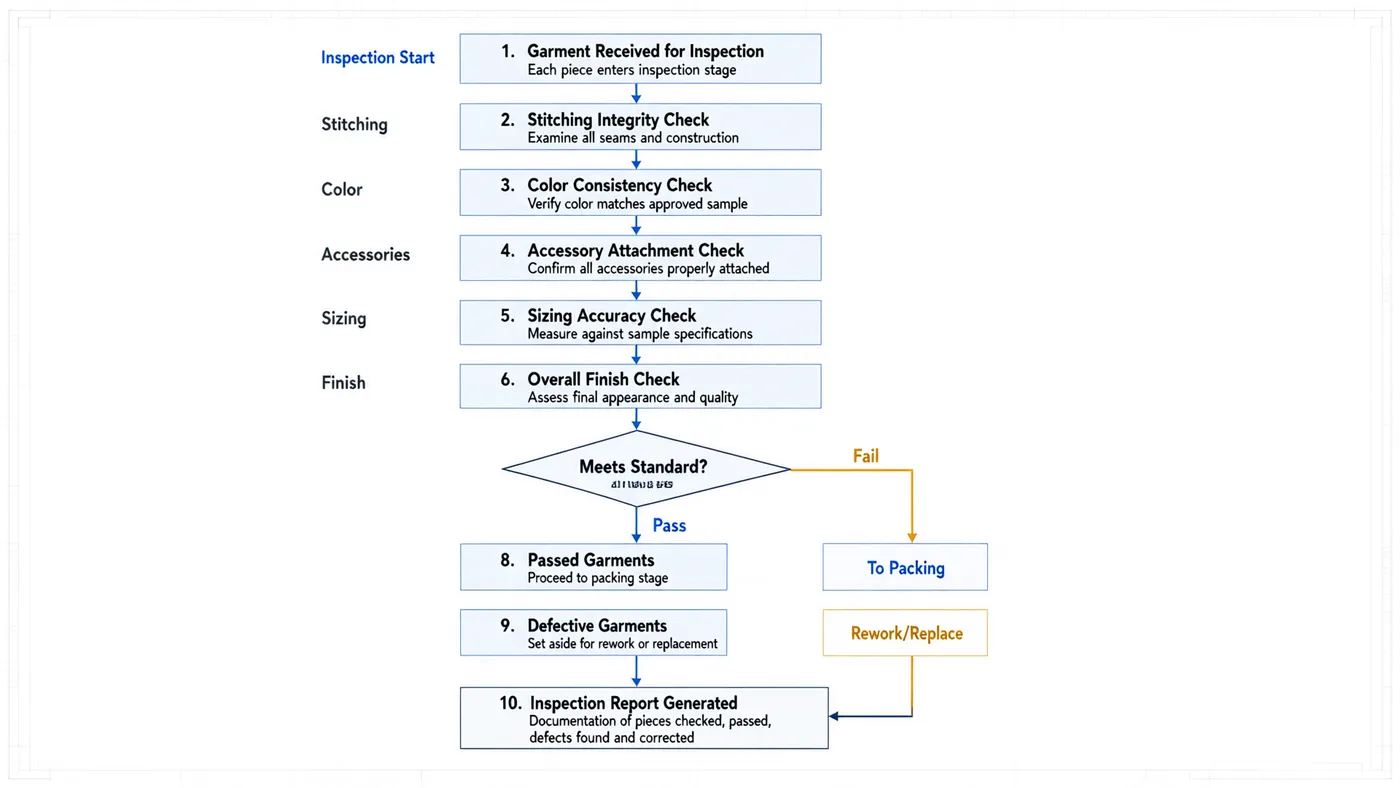
The purpose of this inspection is to prevent defects from reaching the wholesaler's warehouse. A defective garment discovered after it has been shipped to an overseas buyer creates a far more costly problem than one caught at the production stage. The inspection process also generates documentation. We provide inspection reports that detail the number of pieces checked, the number passed, and the nature of any defects found and corrected.
This transparency allows wholesalers to verify that quality control was performed before shipment. It also creates a record that can be referenced if any post-delivery issues arise. The inspection report becomes part of the transaction history, not just an internal quality metric.
Branded Packaging with Your Labels
The final phase is packaging. Wholesalers who sell under their own brand require packaging that reflects their brand identity, not ours. We support custom labeling, hangtags, polybag printing, and carton marking according to the wholesaler's specifications. The packaging materials are sourced and prepared based on the wholesaler's design files or physical samples.
This phase requires coordination between the garment production timeline and the packaging material lead time. Labels and hangtags must be ready before packing begins. We manage this sequence to ensure that garments are not held in storage waiting for packaging materials, which would delay shipment.
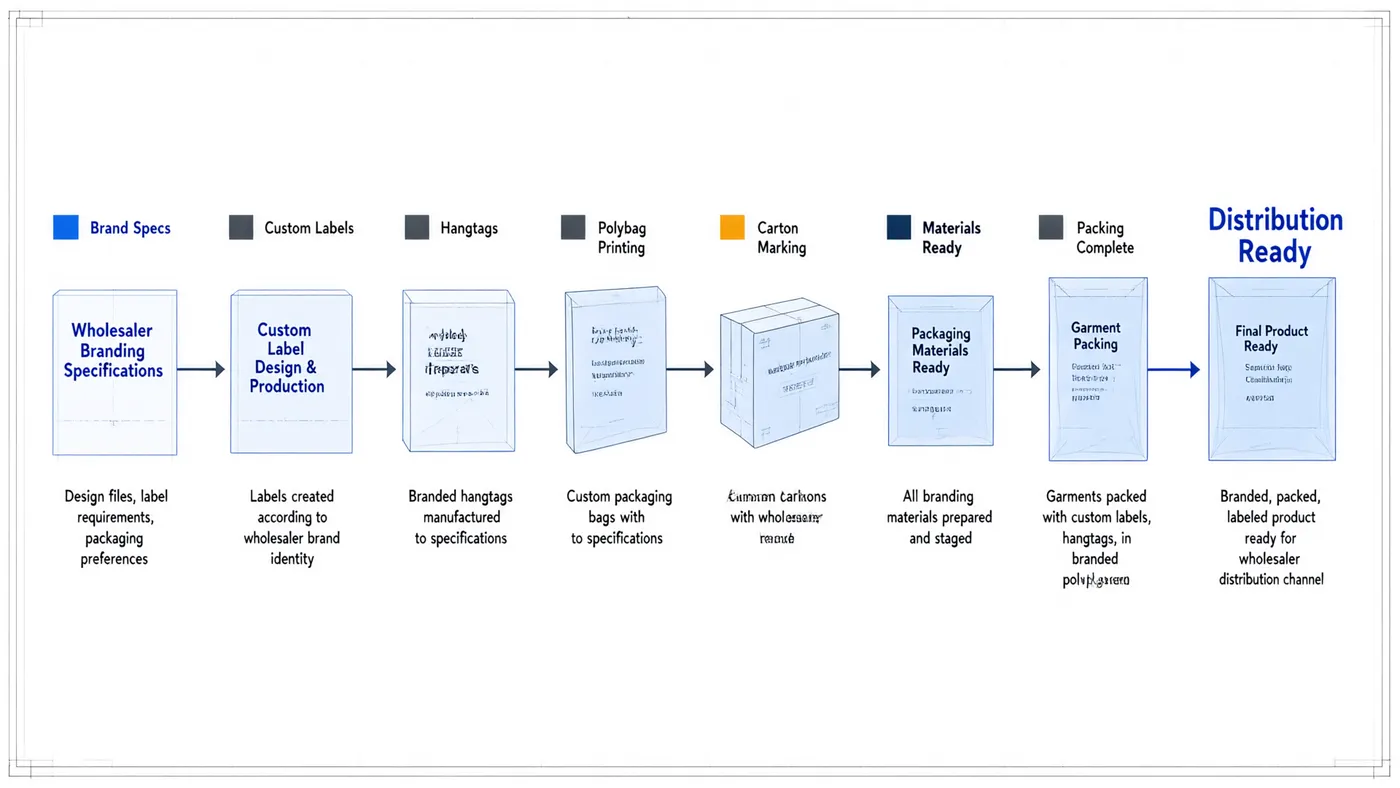
The result is a finished product that is ready for the wholesaler's distribution channel. When the carton arrives at the wholesaler's warehouse, the garments inside are already branded, packed, and labeled according to the wholesaler's requirements. No additional repacking or relabeling is needed.
A Collaboration Model Built on Verification
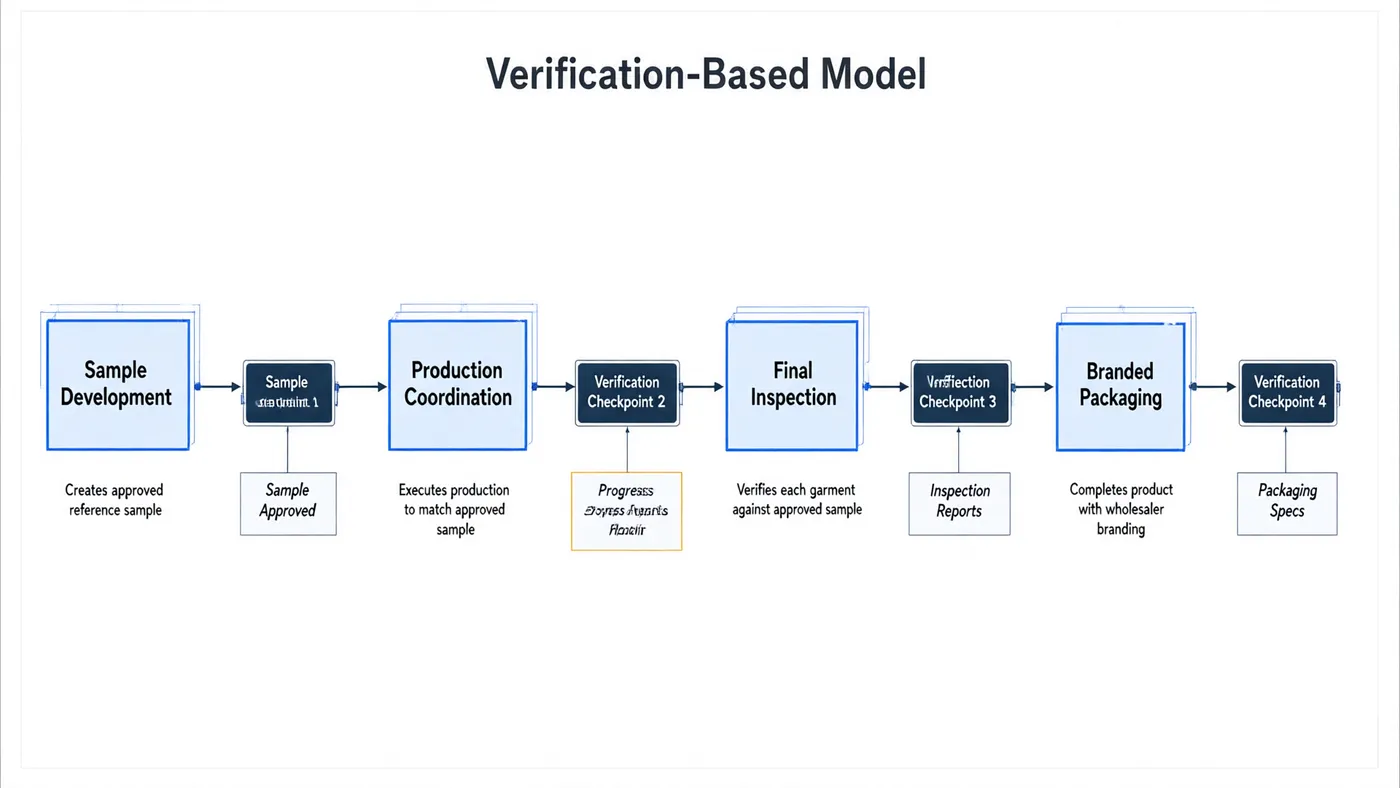
The four phases described above form a continuous workflow. Each phase produces a tangible output that the wholesaler can review and approve before the next phase begins. The approved sample sets the standard. Production coordination ensures that standard is met at scale. Final inspection verifies compliance. Branded packaging completes the product for market.
This model does not rely on abstract quality promises. It relies on documented checkpoints, physical samples, and inspection reports. For overseas wholesalers who cannot visit the production site regularly, this structure provides a way to maintain oversight without being present at every stage.
Shanghai Haitailu Clothing Co., Ltd currently offers this OEM and ODM service across 42 series of Party & Character Costumes, covering more than 2,000 product variations. The collaboration model remains the same regardless of order size or product category. The difference lies in the complexity of the sample development and the production coordination required, not in the rigor of the process.
Wholesalers interested in exploring this collaboration model can begin by submitting a reference sample or design inquiry. The first step is always a conversation about the product requirements and the timeline. From there, the process follows the structure outlined above, with each phase building on the verified output of the previous one.