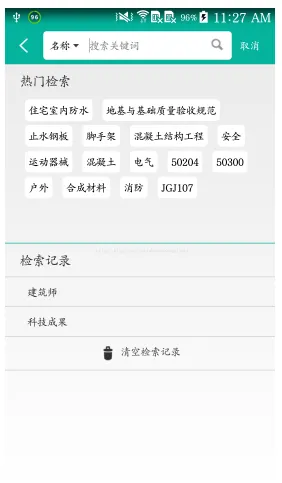
我想大家在开发过程中都碰到过这样的需求,类似标签展示,要展示如上图效果,这里面的数据不确定每项字数,有的非常长,有的很短,数据动态填充。
这种情况用listView和gridView展示效果都没有上图的效果。
这时我们其实是要自己写一个控件来填充上图的数据,也就是我们今天要说的自定义view,流式布局。
方法还是重写onMeasure和onLayout
话不多说 ,代码贴上
一.自定义view
package com.jky.mobilebzt.view;
import java.util.ArrayList;
import java.util.List;
import android.content.Context;
import android.util.AttributeSet;
import android.view.View;
import android.view.ViewGroup;
public class XCFlowLayout extends ViewGroup {
  // 存储所有子View
  private List<List<View>> mAllChildViews = new ArrayList<List<View>>();
  // 每一行的高度
  private List<Integer> mLineHeight = new ArrayList<Integer>();
  public XCFlowLayout(Context context, AttributeSet attrs, int defStyleAttr) {
    super(context, attrs, defStyleAttr);
  }
  public XCFlowLayout(Context context, AttributeSet attrs) {
    this(context, attrs, 0);
  }
  public XCFlowLayout(Context context) {
    this(context, null);
  }
  @Override
  protected void onMeasure(int widthMeasureSpec, int heightMeasureSpec) {
    // TODO Auto-generated method stub
    // 父控件传进来的宽度和高度以及对应的测量模式
    int sizeWidth = MeasureSpec.getSize(widthMeasureSpec);
    int modeWidth = MeasureSpec.getMode(widthMeasureSpec);
    int sizeHeight = MeasureSpec.getSize(heightMeasureSpec);
    int modeHeight = MeasureSpec.getMode(heightMeasureSpec);
    // 如果当前ViewGroup的宽高为wrap_content的情况
    int width = 0; // 自己测量的宽度
    int height = 0; // 自己测量的高度
    int lineWidth = 0;// 每一行的宽度
    int lineHeight = 0; // 每一行的高度
    int childCount = getChildCount();// 获取子view的个数
    for (int i = 0; i < childCount; i++) {
      View child = getChildAt(i);
      // 测量子View的宽和高
      measureChild(child, widthMeasureSpec, heightMeasureSpec);
      // 得到LayoutParams
      MarginLayoutParams lp = (MarginLayoutParams) getLayoutParams();
      // 得到子View占据的宽度
      int childWidth = child.getMeasuredWidth() + lp.leftMargin
          + lp.rightMargin;
      // 得到子View占据的高度
      int childHeight = child.getMeasuredHeight() + lp.topMargin
          + lp.bottomMargin;
      if (lineWidth + childWidth > sizeWidth) {// 需要进行换行
        width = Math.max(width, lineWidth); // 得到最大宽度
        lineWidth = childWidth; // 重置lineWidth
        height += lineHeight; // 得到高度
        lineHeight = childHeight;// 重置LineHeight
      } else {// 不需要进行换行
        lineWidth += childWidth;// 叠加行宽
        lineHeight = Math.max(lineHeight, childHeight);
      }
      if (i == childCount - 1) {// 处理最后一个子View的情况
        width = Math.max(width, lineWidth);
        height += lineHeight;
      }
    }
    // wrapcontent
    setMeasuredDimension(modeWidth == MeasureSpec.EXACTLY ? sizeWidth
        : width, modeHeight == MeasureSpec.EXACTLY ? sizeHeight
        : height);
//    super.onMeasure(widthMeasureSpec, heightMeasureSpec);
  }
  @Override
  protected void onLayout(boolean changed, int l, int t, int r, int b) {
    // TODO Auto-generated method stub
    mAllChildViews.clear();
    mLineHeight.clear();
    int width = getWidth();// 获取当前ViewGroup宽度
    int lineWidth = 0;
    int lineHeight = 0;
    List<View> lineViews = new ArrayList<View>();// 记录当前行的View
    int childCount = getChildCount();
    for (int i = 0; i < childCount; i++) {
      View child = getChildAt(i);
      MarginLayoutParams lp = (MarginLayoutParams) child
          .getLayoutParams();
      int childWidth = child.getMeasuredWidth();
      int childHeight = child.getMeasuredHeight();
      // 需要换行
      if (lineWidth + childWidth + lp.leftMargin + lp.rightMargin > width) {
        mLineHeight.add(lineHeight); // 记录lineHeight
        mAllChildViews.add(lineViews); // 记录当前行的Views
        // 重置 行的宽高
        lineWidth = 0;
        lineHeight = childHeight + lp.topMargin + lp.bottomMargin;
        // 重置当前行的View集合;
        lineViews = new ArrayList<View>();
      }
      lineWidth += childWidth + lp.leftMargin + lp.rightMargin;
      lineHeight = Math.max(lineHeight, childHeight + lp.topMargin
          + lp.bottomMargin);
      lineViews.add(child);
    }
    // 处理最后一行
    mLineHeight.add(lineHeight);
    mAllChildViews.add(lineViews);
    // 设置子View的位置
    int left = 0;
    int top = 0;
    // 获取行数
    int lineCount = mAllChildViews.size();
    for (int i = 0; i < lineCount; i++) {
      // 当前行的views和高度
      lineViews = mAllChildViews.get(i);
      lineHeight = mLineHeight.get(i);
      for (int j = 0; j < lineViews.size(); j++) {
        View child = lineViews.get(j);
        // 判断是否显示
        if (child.getVisibility() == View.GONE) {
          continue;
        }
        MarginLayoutParams lp = (MarginLayoutParams) child
            .getLayoutParams();
        int cLeft = left + lp.leftMargin;
        int cTop = top + lp.topMargin;
        int cRight = cLeft + child.getMeasuredWidth();
        int cBottom = cTop + child.getMeasuredHeight();
        // 进行子View进行布局
        child.layout(cLeft, cTop, cRight, cBottom);
        left += child.getMeasuredWidth() + lp.leftMargin
            + lp.rightMargin;
      }
      left = 0;
      top += lineHeight;
    }
  }
  /**
   * 与当前ViewGroup对应的LayoutParams
   */
  @Override
  public LayoutParams generateLayoutParams(AttributeSet attrs) {
    return new MarginLayoutParams(getContext(), attrs);
  }
}
二.xml部分
xml布局中加上这个
  <com.jky.mobilebzt.view.XCFlowLayout
                android:id="@+id/xcf_hot_words"
                android:layout_width="match_parent"
                android:layout_height="wrap_content"
                android:layout_marginLeft="@dimen/margin_lsmall"
                android:layout_marginBottom="@dimen/margin_normal"
                android:layout_marginRight="@dimen/margin_normal" />
三.初始化数据部分
  @SuppressLint("NewApi")
  private void initHotWordViews() {
    MarginLayoutParams lp = new MarginLayoutParams(
        LayoutParams.WRAP_CONTENT, LayoutParams.WRAP_CONTENT);
    lp.leftMargin = 20;
    lp.rightMargin = 20;
    lp.topMargin = 8;
    lp.bottomMargin = 8;
    for (int i = 0; i < hotWords.size(); i++) {
      final String hotWord = hotWords.get(i);
      TextView view = new TextView(this);
      view.setGravity(Gravity.CENTER);
      view.setText(hotWords.get(i));
      view.setTextColor(Color.BLACK);
      view.setBackground(getResources().getDrawable(R.drawable.hot_word_selector));
      mFlowLayout.addView(view, lp);
      view.setOnClickListener(new OnClickListener() {
        @Override
        public void onClick(View v) {
        }
      });
    }
  }