List介绍
Lists将元素按顺序储存在链表中。与 向量(vectors)相比, 它允许快速的插入和删除,但是随机访问却比较慢。
assign()                    // 给list赋值
back()                      // 返回最后一个元素
begin()             // 返回指向第一个元素的迭代器
clear()             // 删除所有元素
empty()              // 如果list是空的则返回true
end()               // 返回末尾的迭代器
erase()               // 删除一个元素
front()             // 返回第一个元素
insert()              // 插入一个元素到list中

max_size()               // 返回list能容纳的最大元素数量
merge()                 // 合并两个list
pop_back()               // 删除最后一个元素
pop_front()              // 删除第一个元素
push_back()              // 在list的末尾添加一个元素
push_front()             // 在list的头部添加一个元素

rbegin()                // 返回指向第一个元素的逆向迭代器
remove()                // 从list删除元素
remove_if()              // 按指定条件删除元素
rend()                  // 指向list末尾的逆向迭代器
resize()                 // 改变list的大小
reverse()                // 把list的元素倒转
size()                  // 返回list中的元素个数
sort()                   // 给list排序
splice()                // 合并两个list
swap()                  // 交换两个list
unique()                 // 删除list中重复的元素
get_allocator()           // 返回list的配置器
实例分析1:
#include <iostream>
#include <list>
#include <numeric>
#include <algorithm>
using namespace std;

//创建一个list容器的实例LISTINT
typedef list<int> LISTINT;
//创建一个list容器的实例LISTCHAR
typedef list<int> LISTCHAR;

void main()
{
    //用list容器处理整型数据
    //用LISTINT创建一个名为listOne的list对象
    LISTINT listOne;
    //声明i为迭代器
    LISTINT::iterator i;

    //从前面向listOne容器中添加数据
    listOne.push_front(2);
    listOne.push_front(1);

    //从后面向listOne容器中添加数据
    listOne.push_back(3);
    listOne.push_back(4);

    //从前向后显示listOne中的数据
    cout << "listOne.begin()--- listOne.end():" << endl;
    for (i = listOne.begin(); i != listOne.end(); ++i)
        cout << *i << " ";
    cout << endl;

    //从后向后显示listOne中的数据
    LISTINT::reverse_iterator ir;
    cout << "listOne.rbegin()---listOne.rend():" << endl;
    for (ir = listOne.rbegin(); ir != listOne.rend(); ir++) {
        cout << *ir << " ";
    }
    cout << endl;

    //使用STL的accumulate(累加)算法
    int result = accumulate(listOne.begin(), listOne.end(), 0);
    cout << "Sum=" << result << endl;
    cout << "------------------" << endl;

    //--------------------------
    //用list容器处理字符型数据
    //--------------------------

    //用LISTCHAR创建一个名为listOne的list对象
    LISTCHAR listTwo;
    //声明i为迭代器
    LISTCHAR::iterator j;

    //从前面向listTwo容器中添加数据
    listTwo.push_front('A');
    listTwo.push_front('B');

    //从后面向listTwo容器中添加数据
    listTwo.push_back('x');
    listTwo.push_back('y');

    //从前向后显示listTwo中的数据
    cout << "listTwo.begin()---listTwo.end():" << endl;
    for (j = listTwo.begin(); j != listTwo.end(); ++j)
        cout << char(*j) << " ";
    cout << endl;

    //使用STL的max_element算法求listTwo中的最大元素并显示
    j = max_element(listTwo.begin(), listTwo.end());
    cout << "The maximum element in listTwo is: " << char(*j) << endl;
}
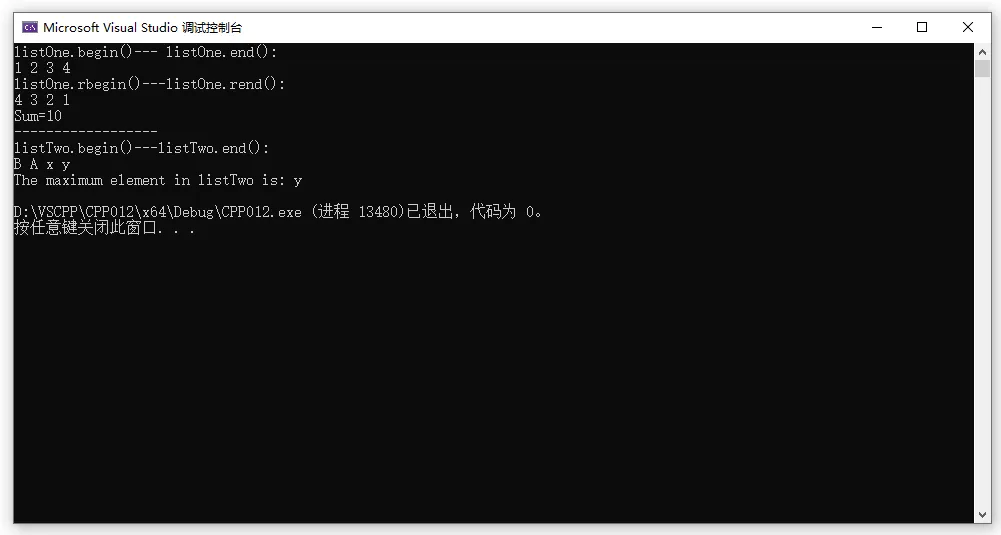
运行结果:
实例分析2:
#include <iostream>
#include <list>

using namespace std;
typedef list<int> INTLIST;

//从前向后显示list队列的全部元素
void put_list(INTLIST list, char* name)
{
    INTLIST::iterator plist;

    cout << "The contents of " << name << " : ";
    for (plist = list.begin(); plist != list.end(); plist++)
        cout << *plist << " ";
    cout << endl;
}

//测试list容器的功能
void main(void)
{
    //list1对象初始为空
    INTLIST list1;
    //list2对象最初有10个值为6的元素
    INTLIST list2(10, 6);
    //list3对象最初有3个值为6的元素
    INTLIST list3(list2.begin(), --list2.end());

    //声明一个名为i的双向迭代器
    INTLIST::iterator i;

    //从前向后显示各list对象的元素
    put_list(list1, (char*)("list1"));
    put_list(list2, (char*)("list2"));
    put_list(list3, (char*)("list3"));

    //从list1序列后面添加两个元素
    list1.push_back(2);
    list1.push_back(4);
    cout << "list1.push_back(2) and list1.push_back(4):" << endl;
    put_list(list1, (char*)("list1"));

    //从list1序列前面添加两个元素
    list1.push_front(5);
    list1.push_front(7);
    cout << "list1.push_front(5) and list1.push_front(7):" << endl;
    put_list(list1, (char*)("list1"));

    //在list1序列中间插入数据
    list1.insert(++list1.begin(), 3, 9);
    cout << "list1.insert(list1.begin()+1,3,9):" << endl;
    put_list(list1, (char*)("list1"));

    //测试引用类函数
    cout << "list1.front()=" << list1.front() << endl;
    cout << "list1.back()=" << list1.back() << endl;

    //从list1序列的前后各移去一个元素
    list1.pop_front();
    list1.pop_back();
    cout << "list1.pop_front() and list1.pop_back():" << endl;
    put_list(list1, (char*)("list1"));

    //清除list1中的第2个元素
    list1.erase(++list1.begin());
    cout << "list1.erase(++list1.begin()):" << endl;
    put_list(list1, (char*)("list1"));

    //对list2赋值并显示
    list2.assign(8, 1);
    cout << "list2.assign(8,1):" << endl;
    put_list(list2, (char*)("list2"));

    //显示序列的状态信息
    cout << "list1.max_size(): " << list1.max_size() << endl;
    cout << "list1.size(): " << list1.size() << endl;
    cout << "list1.empty(): " << list1.empty() << endl;

    //list序列容器的运算
    put_list(list1, (char*)("list1"));
    put_list(list3, (char*)("list3"));
    cout << "list1>list3: " << (list1 > list3) << endl;
    cout << "list1<list3: " << (list1 < list3) << endl;

    //对list1容器排序
    list1.sort();
    put_list(list1, (char*)("list1"));

    //结合处理
    list1.splice(++list1.begin(), list3);
    put_list(list1, (char*)("list1"));
    put_list(list3, (char*)("list3"));
}
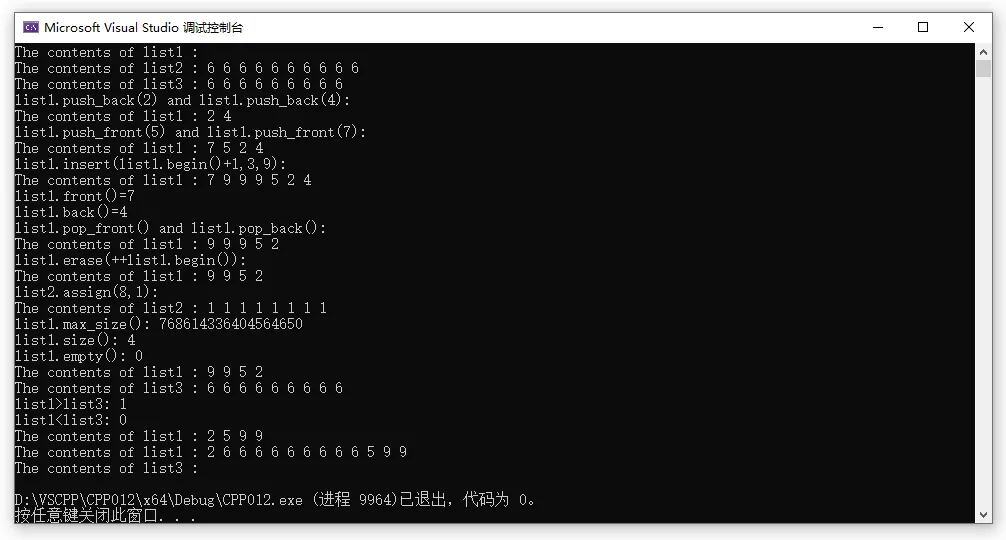
运行结果: