需要全部代码请点赞关注收藏后评论区留言私信~~~
一、系统简介
分布式优惠券后台应用系统服务于两类用户群体,一类是商户,商户可以根据自己的实际情况即进行优惠券投放,另一类是平台消费用户,用户可以去领取商户发放的优惠券
二、整体架构
分布式优惠券后台应用系统采用SpringBoot作为主体开发框架,使用Kafka消息队列实现优惠券从商户到用户的传递,Mysql存储商户信息,HBase存储用户信息,优惠券信息等,Redis保存优惠券的缓存信息 系统整体架构如下
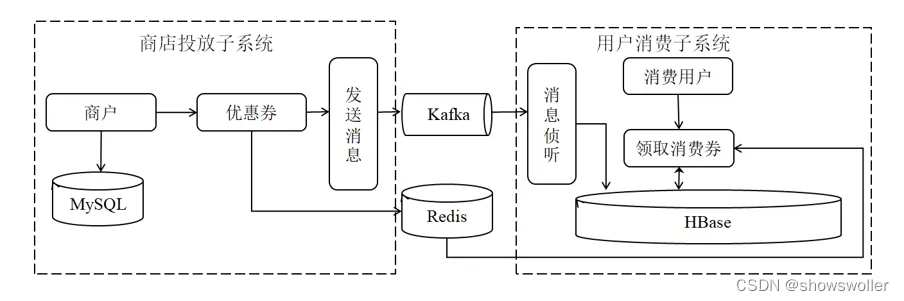
对于商户投放子系统,商户注册生成对应的商户实体信息,并保存到Mysql数据库,商户可以投放自己商家的优惠券,且优惠券有自己的Token存放于Redis中,投放的优惠券信息将由Kafka向用户消费子系统发送,而商户投放的优惠券并不在Mysql中进行存储,而是在商户投放子系统中放送消息给Kafka,用户消费子系统通过侦听Kafka消息获得Kafka分布式信息并存储到HBase中,用户通过读取Redis中的优惠券信息领取消费券,并将自己领取到的优惠券信息存放在HBase中
三、表结构设计
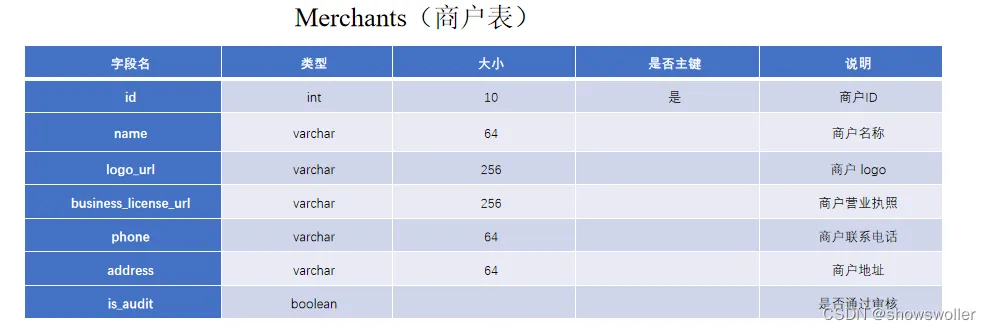
mysql表结果设计如何 存放商户基本信息
HBase表结构设计
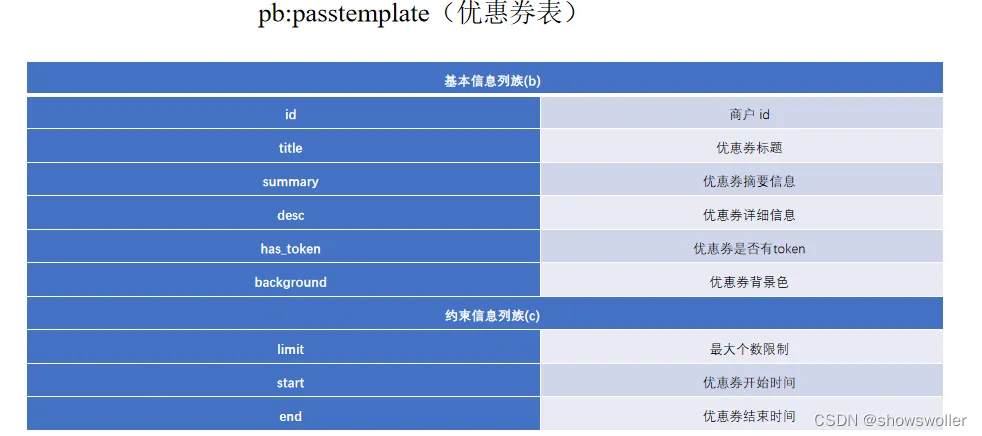
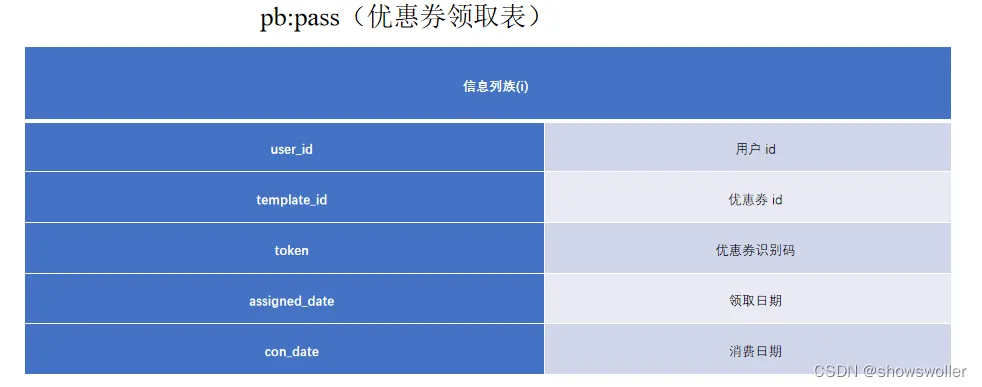
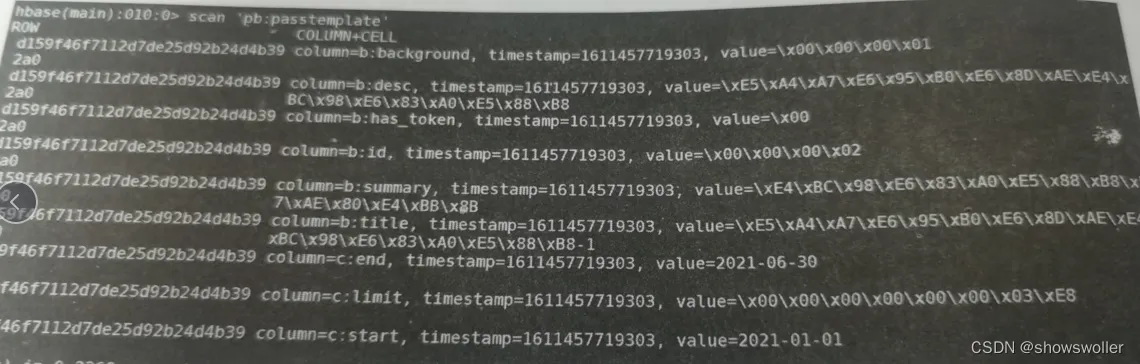
在HBase中建立三个表,分别是消费用户表,优惠券表和优惠券领取表

四、系统实现
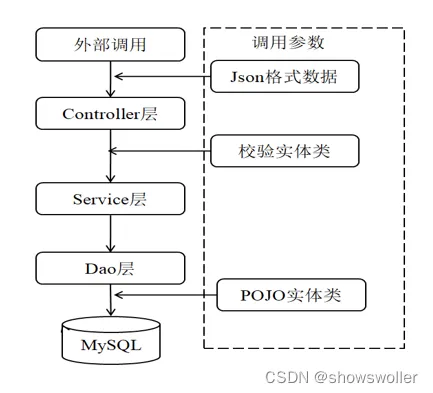
1:新建MAVEN工程 引入相关依赖包
2:修改applicaiton.yml文件 包括mysql和kafka的连接相关配置
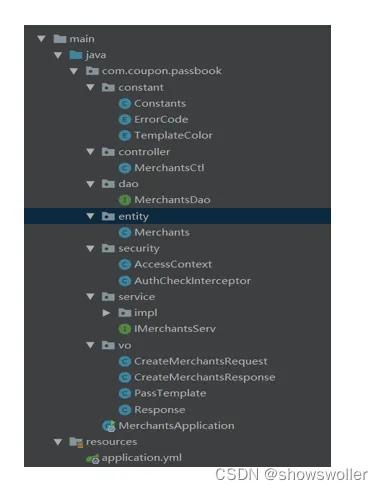
3:建立各个类包存放路径
4:核心代码实现
五、效果展示
商户投放子系统成功启动效果如下
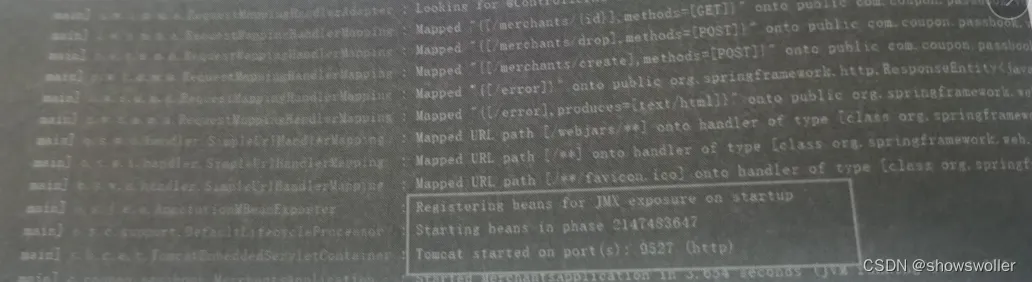
用户子系统成功启动效果如下

发放优惠券界面如下

数据库表插入情况如下
六、部分代码
部分代码如下 需要全部代码请点赞关注收藏后评论区留言私信~~~
package com.coupon.passbook.controller;
import com.coupon.passbook.log.LogConstants;
import com.coupon.passbook.log.LogGenerator;
import com.coupon.passbook.service.IUserService;
import com.coupon.passbook.vo.Response;
import com.coupon.passbook.vo.User;
import lombok.extern.slf4j.Slf4j;
import org.springframework.beans.factory.annotation.Autowired;
import org.springframework.web.bind.annotation.PostMapping;
import org.springframework.web.bind.annotation.RequestBody;
import org.springframework.web.bind.annotation.RequestMapping;
import org.springframework.web.bind.annotation.ResponseBody;
import org.springframework.web.bind.annotation.RestController;
import javax.servlet.http.HttpServletRequest;
/**
 * <h1>创建用户服务</h1>
 * Created by Qinyi.
 */
@Slf4j
@RestController
@RequestMapping("/passbook")
public class CreateUserController {
    /** 创建用户服务 */
    private final IUserService userService;
    /** HttpServletRequest */
    private final HttpServletRequest httpServletRequest;
    @Autowired
    public CreateUserController(IUserService userService,
                                HttpServletRequest httpServletRequest) {
        this.userService = userService;
        this.httpServletRequest = httpServletRequest;
    }
    /**
     * <h2>创建用户</h2>
     * @param user {@link User}
     * @return {@link Response}
     * */
    @ResponseBody
    @PostMapping("/createuser")
    Response createUser(@RequestBody User user) throws Exception {
        LogGenerator.genLog(
                httpServletRequest,
                user.getId(),
                LogConstants.ActionName.CREATE_USER,
                user
        );
        return userService.createUser(user);
    }
}
控制器2
package com.coupon.passbook.controller;
import com.coupon.passbook.log.LogConstants;
import com.coupon.passbook.log.LogGenerator;
import com.coupon.passbook.service.IFeedbackService;
import com.coupon.passbook.service.IGainPassTemplateService;
import com.coupon.passbook.service.IInventoryService;
import com.coupon.passbook.service.IUserPassService;
import com.coupon.passbook.vo.Feedback;
import com.coupon.passbook.vo.GainPassTemplateRequest;
import com.coupon.passbook.vo.Pass;
import com.coupon.passbook.vo.Response;
import lombok.extern.slf4j.Slf4j;
import org.springframework.beans.factory.annotation.Autowired;
import org.springframework.web.bind.annotation.GetMapping;
import org.springframework.web.bind.annotation.PostMapping;
import org.springframework.web.bind.annotation.RequestBody;
import org.springframework.web.bind.annotation.RequestMapping;
import org.springframework.web.bind.annotation.ResponseBody;
import org.springframework.web.bind.annotation.RestController;
import javax.servlet.http.HttpServletRequest;
/**
 * <h1>Passbook Rest Controller</h1>
 * Created by Qinyi.
 */
@Slf4j
@RestController
@RequestMapping("/passbook")
public class PassbookController {
    /** 用户优惠券服务 */
    private final IUserPassService userPassService;
    /** 优惠券库存服务 */
    private final IInventoryService inventoryService;
    /** 领取优惠券服务 */
    private final IGainPassTemplateService gainPassTemplateService;
    /** 反馈服务 */
    private final IFeedbackService feedbackService;
    /** HttpServletRequest */
    private final HttpServletRequest httpServletRequest;
    @Autowired
    public PassbookController(IUserPassService userPassService,
                              IInventoryService inventoryService,
                              IGainPassTemplateService gainPassTemplateService,
                              IFeedbackService feedbackService,
                              HttpServletRequest httpServletRequest) {
        this.userPassService = userPassService;
        this.inventoryService = inventoryService;
        this.gainPassTemplateService = gainPassTemplateService;
        this.feedbackService = feedbackService;
        this.httpServletRequest = httpServletRequest;
    }
    /**
     * <h2>获取用户个人的优惠券信息</h2>
     * @param userId 用户 id
     * @return {@link Response}
     * */
    @ResponseBody
    @GetMapping("/userpassinfo")
    Response userPassInfo(Long userId) throws Exception {
        LogGenerator.genLog(
                httpServletRequest,
                userId,
                LogConstants.ActionName.USER_PASS_INFO,
                null
        );
        return userPassService.getUserPassInfo(userId);
    }
    /**
     * <h2>获取用户使用了的优惠券信息</h2>
     * @param userId 用户 id
     * @return {@link Response}
     * */
    @ResponseBody
    @GetMapping("userusedpassinfo")
    Response userUsedPassInfo(Long userId) throws Exception {
        LogGenerator.genLog(
                httpServletRequest,
                userId, LogConstants.ActionName.USER_USED_PASS_INFO,
                null
        );
        return userPassService.getUserUsedPassInfo(userId);
    }
    /**
     * <h2>用户使用优惠券</h2>
     * @param pass {@link Pass}
     * @return {@link Response}
     * */
    @ResponseBody
    @PostMapping("/userusepass")
    Response userUsePass(@RequestBody Pass pass) {
        LogGenerator.genLog(
                httpServletRequest,
                pass.getUserId(),
                LogConstants.ActionName.USER_USE_PASS,
                pass
        );
        return userPassService.userUsePass(pass);
    }
    /**
     * <h2>获取库存信息</h2>
     * @param userId 用户 id
     * @return {@link Response}
     * */
    @ResponseBody
    @GetMapping("/inventoryinfo")
    Response inventoryInfo(Long userId) throws Exception {
        LogGenerator.genLog(
                httpServletRequest,
                userId,
                LogConstants.ActionName.INVENTORY_INFO,
                null
        );
        return inventoryService.getInventoryInfo(userId);
    }
    /**
     * <h2>用户领取优惠券</h2>
     * @param request {@link GainPassTemplateRequest}
     * @return {@link Response}
     * */
    @ResponseBody
    @PostMapping("/gainpasstemplate")
    Response gainPassTemplate(@RequestBody GainPassTemplateRequest request)
            throws Exception {
        LogGenerator.genLog(
                httpServletRequest,
                request.getUserId(),
                LogConstants.ActionName.GAIN_PASS_TEMPLATE,
                request
        );
        return gainPassTemplateService.gainPassTemplate(request);
    }
    /**
     * <h2>用户创建评论</h2>
     * @param feedback {@link Feedback}
     * @return {@link Response}
     * */
    @ResponseBody
    @PostMapping("/createfeedback")
    Response createFeedback(@RequestBody Feedback feedback) {
        LogGenerator.genLog(
                httpServletRequest,
                feedback.getUserId(),
                LogConstants.ActionName.CREATE_FEEDBACK,
                feedback
        );
        return feedbackService.createFeedback(feedback);
    }
    /**
     * <h2>用户获取评论信息</h2>
     * @param userId 用户 id
     * @return {@link Response}
     * */
    @ResponseBody
    @GetMapping("/getfeedback")
    Response getFeedback(Long userId) {
        LogGenerator.genLog(
                httpServletRequest,
                userId,
                LogConstants.ActionName.GET_FEEDBACK,
                null
        );
        return feedbackService.getFeedback(userId);
    }
    /**
     * <h2>异常演示接口</h2>
     * @return {@link Response}
     * */
    @ResponseBody
    @GetMapping("/exception")
    Response exception() throws Exception {
        throw new Exception("Welcome To IMOOC");
    }
}
创作不易 觉得有帮助请点赞关注收藏~~~