一、ApplicationContext的xml解析工作是通过ClassPathXmlApplicationContext来实现的,其实看过ClassPathXmlApplicationContext的xml源码解析过程的其实都应该知道,xml的解析过程基本上就是用原来的XmlBeanFactory的解析过程完成的。
二、为什么要拿出来单独说一下呢,其目的就是,了解怎么用同样的方式来实现xml解析过程。
三、xml解析过程是通过refresh下的obtainFreshBeanFactory函数实现,所以这里重点讲解obtainFreshBeanFactory的实现过程。
四、xml源码解析:obtainFreshBeanFactory
1)开端
    protected ConfigurableListableBeanFactory obtainFreshBeanFactory() {
        //解析过程
        this.refreshBeanFactory();
        //这里的beanFactory就是DefaultListableBeanFactory(后续会讲到)
        ConfigurableListableBeanFactory beanFactory = this.getBeanFactory();
        if (this.logger.isDebugEnabled()) {
            this.logger.debug("Bean factory for " + this.getDisplayName() + ": " + beanFactory);
        }
        return beanFactory;
    }
2)refreshBeanFactory
    protected final void refreshBeanFactory() throws BeansException {
        if (this.hasBeanFactory()) {
            this.destroyBeans();
            this.closeBeanFactory();
        }

        try {
            //是不是很熟悉,这里也是通过DefaultListableBeanFactory的方式来实现的
            DefaultListableBeanFactory beanFactory = this.createBeanFactory();
            beanFactory.setSerializationId(this.getId());
            //自定义beanFactory,处理循环依赖
            //主要作用设置@Autowired和@Qualifier解析器QualifierAnnotationAutowireCandidateResolver
            this.customizeBeanFactory(beanFactory);
            //xml解析过程
            this.loadBeanDefinitions(beanFactory);
            Object var2 = this.beanFactoryMonitor;
            synchronized(this.beanFactoryMonitor) {
                this.beanFactory = beanFactory;
            }
        } catch (IOException var4) {
            throw new ApplicationContextException("I/O error parsing bean definition source for " + this.getDisplayName(), var4);
        }
    }
a、DefaultListableBeanFactory继承关系
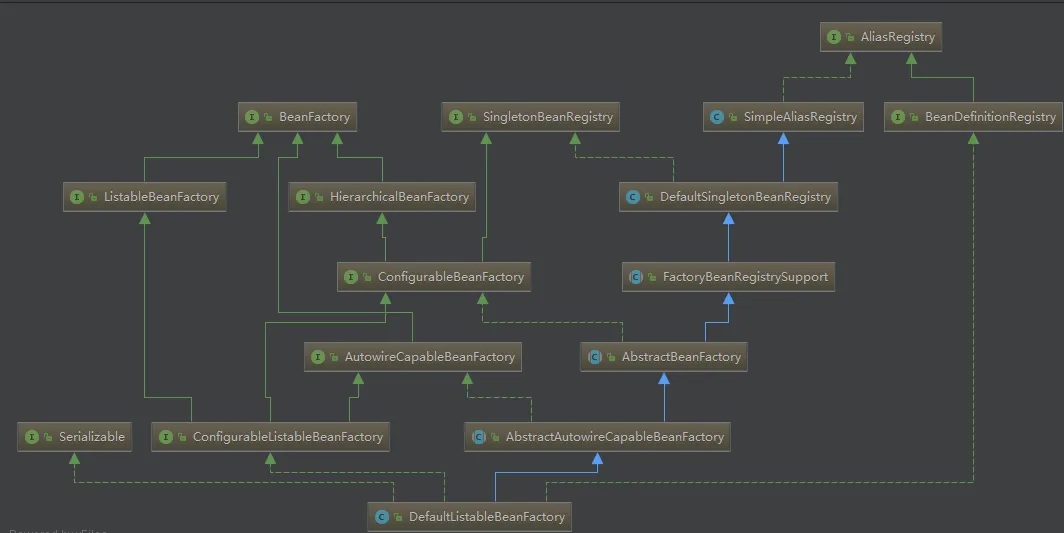
这里其实就可以看出ConfigurableListableBeanFactory就是这里的DefaultListableBeanFactory
b、customizeBeanFactory(这里不详细介绍注解的解析过程)
    protected void customizeBeanFactory(DefaultListableBeanFactory beanFactory) {
        if (this.allowBeanDefinitionOverriding != null) {
            beanFactory.setAllowBeanDefinitionOverriding(this.allowBeanDefinitionOverriding.booleanValue());
        }

        if (this.allowCircularReferences != null) {
            beanFactory.setAllowCircularReferences(this.allowCircularReferences.booleanValue());
        }

        beanFactory.setParameterNameDiscoverer(new LocalVariableTableParameterNameDiscoverer());
        beanFactory.setAutowireCandidateResolver(new QualifierAnnotationAutowireCandidateResolver());
    }
c、loadBeanDefinitions
    protected void loadBeanDefinitions(DefaultListableBeanFactory beanFactory) throws BeansException, IOException {
        //是不是又很熟悉,还是基于XmlBeanDefinitionReader来进行解析了
        XmlBeanDefinitionReader beanDefinitionReader = new XmlBeanDefinitionReader(beanFactory);
        beanDefinitionReader.setResourceLoader(this);
        beanDefinitionReader.setEntityResolver(new ResourceEntityResolver(this));
        //解析xml
        this.initBeanDefinitionReader(beanDefinitionReader);
        this.loadBeanDefinitions(beanDefinitionReader);
    }
    protected void loadBeanDefinitions(XmlBeanDefinitionReader reader) throws BeansException, IOException {
        Resource[] configResources = this.getConfigResources();
        if (configResources != null) {
            reader.loadBeanDefinitions(configResources);
        }
        //这里是配置方式不一样,我们是通过configLocations进行配置
        String[] configLocations = this.getConfigLocations();
        if (configLocations != null) {
            //解析文件
            reader.loadBeanDefinitions(configLocations);
        }

    }
    public int loadBeanDefinitions(String... locations) throws BeanDefinitionStoreException {
        Assert.notNull(locations, "Location array must not be null");
        int counter = 0;
        String[] var6 = locations;
        int var5 = locations.length;

        for(int var4 = 0; var4 < var5; ++var4) {
            String location = var6[var4];
       //主要目的计数
            counter += this.loadBeanDefinitions(location);
        }

        return counter;
    }
  public int loadBeanDefinitions(String location) throws BeanDefinitionStoreException {
        return this.loadBeanDefinitions(location, (Set)null);
    }

    public int loadBeanDefinitions(String location, Set<Resource> actualResources) throws BeanDefinitionStoreException {
        ResourceLoader resourceLoader = this.getResourceLoader();
        if (resourceLoader == null) {
            throw new BeanDefinitionStoreException("Cannot import bean definitions from location [" + location + "]: no ResourceLoader available");
        } else {
            int loadCount;
            if (!(resourceLoader instanceof ResourcePatternResolver)) {
                Resource resource = resourceLoader.getResource(location);
                loadCount = this.loadBeanDefinitions((Resource)resource);
                if (actualResources != null) {
                    actualResources.add(resource);
                }

                if (this.logger.isDebugEnabled()) {
                    this.logger.debug("Loaded " + loadCount + " bean definitions from location [" + location + "]");
                }

                return loadCount;
            } else {
                try {
                    Resource[] resources = ((ResourcePatternResolver)resourceLoader).getResources(location);
                    //包装成Resource,进行解析
                    loadCount = this.loadBeanDefinitions(resources);
                    if (actualResources != null) {
                        Resource[] var9 = resources;
                        int var8 = resources.length;

                        for(int var7 = 0; var7 < var8; ++var7) {
                            Resource resource = var9[var7];
                            actualResources.add(resource);
                        }
                    }

                    if (this.logger.isDebugEnabled()) {
                        this.logger.debug("Loaded " + loadCount + " bean definitions from location pattern [" + location + "]");
                    }

                    return loadCount;
                } catch (IOException var10) {
                    throw new BeanDefinitionStoreException("Could not resolve bean definition resource pattern [" + location + "]", var10);
                }
            }
        }
    }
    public int loadBeanDefinitions(Resource... resources) throws BeanDefinitionStoreException {
        Assert.notNull(resources, "Resource array must not be null");
        int counter = 0;
        Resource[] var6 = resources;
        int var5 = resources.length;

        for(int var4 = 0; var4 < var5; ++var4) {
            Resource resource = var6[var4];
            //单独解析没一个resource
            counter += this.loadBeanDefinitions((Resource)resource);
        }

        return counter;
    }
d、loadBeanDefinitions(这里是不是很熟悉,这里的解析过程就是XmlBeanFactory里面的xml的核心解析过程)
public int loadBeanDefinitions(Resource resource) throws BeanDefinitionStoreException {
        return this.loadBeanDefinitions(new EncodedResource(resource));
    }

    public int loadBeanDefinitions(EncodedResource encodedResource) throws BeanDefinitionStoreException {
        Assert.notNull(encodedResource, "EncodedResource must not be null");
        if (this.logger.isInfoEnabled()) {
            this.logger.info("Loading XML bean definitions from " + encodedResource.getResource());
        }

        Set<EncodedResource> currentResources = (Set)this.resourcesCurrentlyBeingLoaded.get();
        if (currentResources == null) {
            currentResources = new HashSet(4);
            this.resourcesCurrentlyBeingLoaded.set(currentResources);
        }

        if (!((Set)currentResources).add(encodedResource)) {
            throw new BeanDefinitionStoreException("Detected cyclic loading of " + encodedResource + " - check your import definitions!");
        } else {
            int var6;
            try {
                InputStream inputStream = encodedResource.getResource().getInputStream();

                try {
                    InputSource inputSource = new InputSource(inputStream);
                    if (encodedResource.getEncoding() != null) {
                        inputSource.setEncoding(encodedResource.getEncoding());
                    }

                    var6 = this.doLoadBeanDefinitions(inputSource, encodedResource.getResource());
                } finally {
                    inputStream.close();
                }
            } catch (IOException var15) {
                throw new BeanDefinitionStoreException("IOException parsing XML document from " + encodedResource.getResource(), var15);
            } finally {
                ((Set)currentResources).remove(encodedResource);
                if (((Set)currentResources).isEmpty()) {
                    this.resourcesCurrentlyBeingLoaded.remove();
                }

            }

            return var6;
        }
    }
e、剩下的部分参考:https://www.cnblogs.com/ll409546297/p/9451784.html的源码解析部分第4)点
五、分析一下流程
1)通过ClassPathXmlApplicationContext来进行xml的解析工作
2)首先进行赋值到configLocations的属性上面
3)xml解析过程还是通过XmlBeanDefinitionReader来实现解析
4)xml解析不同的地方:
a、新增解析增加计数
b、返回类型使用接口ConfigurableListableBeanFactory
c、增加string的配置方式,代码编写感觉更好。
d、解析之前和之后,都做了很多其他工作。相比之下拓展了很多其他功能。