业务挑战
跨境电商数据平台在规模化阶段普遍面临同一架构瓶颈:同步采集的吞吐量上限与日益增长的数据需求之间的矛盾。亚马逊商品数据的采集,从单一验证查询扩展到持续性监控时,架构选型的差异会被数据量级放大成量级差异的运营影响。
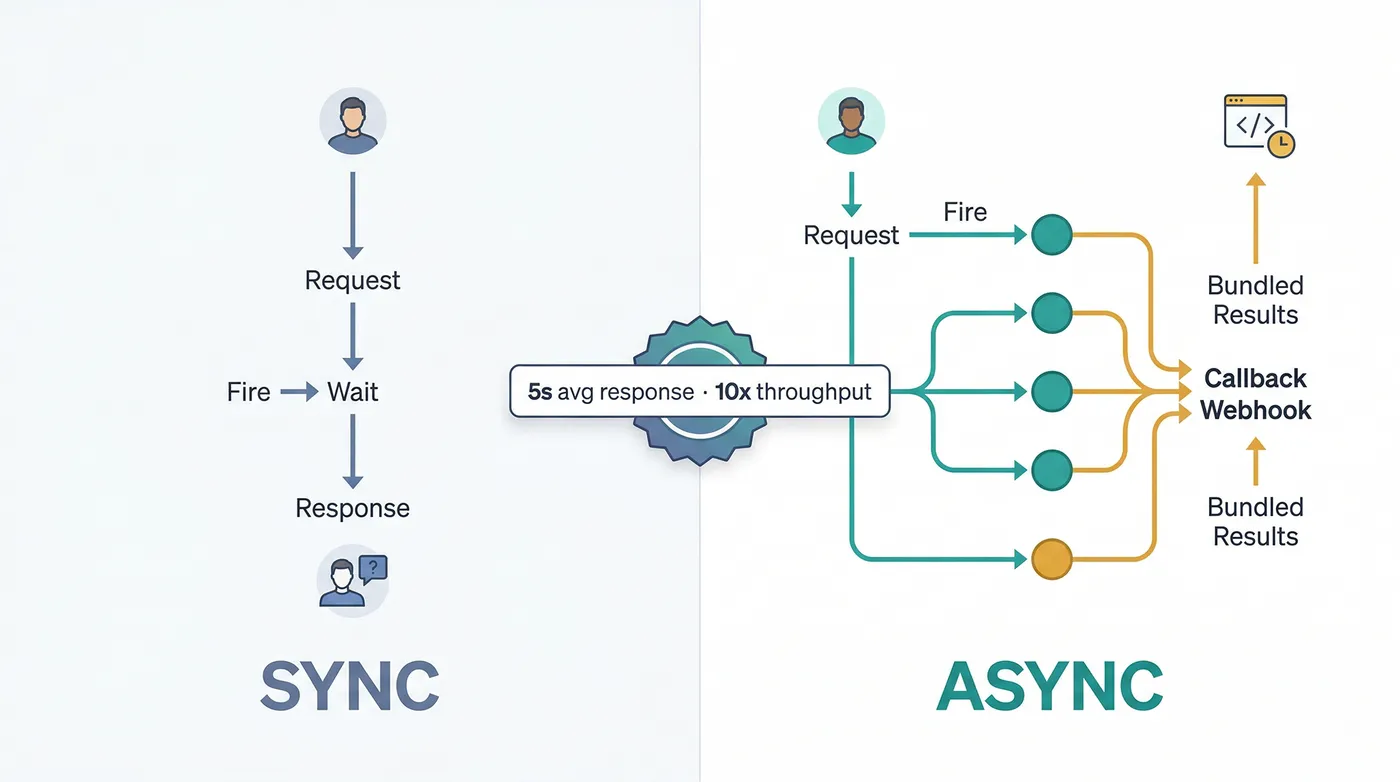
核心矛盾:Amazon Scrape API 平均响应时间约 5 秒,同步串行采集 1 万个 ASIN 需要近 14 小时,远超大多数业务对数据时效性的容忍边界。异步亚马逊数据采集架构通过任务提交与结果接收的解耦,将此时间压缩至 30~60 分钟级别。
技术选型矩阵
| 维度 | 同步模式 | 异步模式 |
|---|---|---|
| 响应时延 | ~5s/次 | 提交 <200ms,结果回调 |
| 吞吐量 | 受客户端限制(10~50 QPS) | 服务端并行扩展 |
| 积点成本 | JSON: 1点/次 | JSON: 1点/次(持平) |
| 部署复杂度 | 无额外要求 | 需回调接收服务 |
| 适合任务量 | <100/天 | ≥100/天 |
| 数据完整性保障 | 内联,自然保证 | 需幂等+补偿机制 |
系统架构设计
┌──────────────────────────────────────────────────────────┐
│                      调度层                               │
│   APScheduler / AWS EventBridge 定时触发                  │
└──────────────────────────┬───────────────────────────────┘
                           │
                           ▼
┌──────────────────────────────────────────────────────────┐
│                     任务提交层                             │
│   POST /api/v1/scrape/async (批量提交)                    │
│   callbackUrl → 你的回调服务端点                           │
│   写入任务注册表(Redis / PostgreSQL)                     │
└──────────────────────────┬───────────────────────────────┘
                           │ Pangolinfo 后台并行处理
                           ▼
┌──────────────────────────────────────────────────────────┐
│                     回调接收层                             │
│   FastAPI / Express 回调服务                              │
│   → taskId 幂等校验                                       │
│   → 数据清洗 → 写入 ClickHouse / PostgreSQL               │
└──────────────────────────┬───────────────────────────────┘
                           │
                           ▼
┌──────────────────────────────────────────────────────────┐
│                   监控与补偿层                              │
│   超时任务检测 → 同步 API 补偿查询                          │
│   Prometheus + Grafana 采集成功率监控                      │
└──────────────────────────────────────────────────────────┘
接口参数对比
同步接口
POST https://scrapeapi.pangolinfo.com/api/v1/scrape
Authorization: Bearer <token>

{

  "url": "https://www.amazon.com/dp/B0DYTF8L2W",
  "parserName": "amzProductDetail",
  "format": "json",
  "bizContext": {
   "zipcode": "10041"}
}
# 约 5 秒后返回完整结构化数据
异步接口
POST https://scrapeapi.pangolinfo.com/api/v1/scrape/async
Authorization: Bearer <token>

{

  "url": "https://www.amazon.com/dp/B0DYTF8L2W",
  "callbackUrl": "https://your-server.com/api/callback",
  "zipcode": "10041",
  "format": "json",
  "parserName": "amzProductDetail"
}
# 约 200ms 返回 taskId,结果通过回调推送
完整代码实现(Python + FastAPI)
"""
企业级异步亚马逊数据采集系统 - 完整实现
技术栈:Python / httpx(异步 HTTP) / FastAPI(回调服务)/ Redis(幂等控制)
"""

import asyncio
import hashlib
import httpx
import redis.asyncio as aioredis
from fastapi import FastAPI, Request, HTTPException
from pydantic import BaseModel
from typing import Optional
import logging

logging.basicConfig(level=logging.INFO)
logger = logging.getLogger(__name__)

# ─── 配置 ─────────────────────────────────────────────────
PANGOLIN_TOKEN = "your_api_token"
ASYNC_API_URL = "https://scrapeapi.pangolinfo.com/api/v1/scrape/async"
SYNC_API_URL  = "https://scrapeapi.pangolinfo.com/api/v1/scrape"
CALLBACK_URL  = "https://your-domain.com/api/callback"
REDIS_URL     = "redis://localhost:6379"

# ─── 任务提交 ──────────────────────────────────────────────
async def submit_async_task(asin: str, parser_name: str = "amzProductDetail") -> Optional[str]:
    """提交单个异步采集任务,返回 taskId"""
    async with httpx.AsyncClient() as client:
        try:
            resp = await client.post(
                ASYNC_API_URL,
                headers={
   "Authorization": f"Bearer {PANGOLIN_TOKEN}", "Content-Type": "application/json"},
                json={

                    "url": f"https://www.amazon.com/dp/{asin}",
                    "callbackUrl": CALLBACK_URL,
                    "zipcode": "10041",
                    "format": "json",
                    "parserName": parser_name
                },
                timeout=10
            )
            data = resp.json()
            if data.get("code") == 0:
                task_id = data["data"]["data"]
                logger.info(f"[SUBMITTED] ASIN={asin} TaskID={task_id}")
                return task_id
            else:
                logger.warning(f"[API ERROR] ASIN={asin}: {data}")
                return None
        except httpx.RequestError as e:
            logger.error(f"[REQUEST ERROR] ASIN={asin}: {e}")
            return None


async def bulk_submit(asins: list[str], rate_limit_delay: float = 0.1) -> dict[str, str]:
    """批量提交异步任务,带速率控制"""
    task_map = {
   }
    for i, asin in enumerate(asins):
        task_id = await submit_async_task(asin)
        if task_id:
            task_map[asin] = task_id
        if (i + 1) % 100 == 0:
            logger.info(f"Progress: {i+1}/{len(asins)}")
        await asyncio.sleep(rate_limit_delay)
    logger.info(f"Submitted {len(task_map)}/{len(asins)} tasks")
    return task_map


# ─── 回调接收服务(FastAPI)─────────────────────────────────
app = FastAPI()
redis_client: Optional[aioredis.Redis] = None

@app.on_event("startup")
async def startup():
    global redis_client
    redis_client = await aioredis.from_url(REDIS_URL)


@app.post("/api/callback")
async def receive_callback(request: Request):
    """接收 Pangolinfo 异步采集回调"""
    # 鉴权
    auth = request.headers.get("Authorization", "")
    if not auth.startswith("Bearer "):
        raise HTTPException(status_code=401, detail="Unauthorized")

    payload = await request.json()
    task_id = payload.get("taskId") or payload.get("data", {
   }).get("taskId")

    if not task_id:
        raise HTTPException(status_code=400, detail="Missing taskId")

    # 幂等校验(Redis SET NX)
    key = f"task:processed:{task_id}"
    is_new = await redis_client.set(key, "1", nx=True, ex=86400)  # 24h 过期
    if not is_new:
        logger.info(f"[DUPLICATE] TaskID={task_id}")
        return {
   "code": 0, "message": "duplicate, skipped"}

    # 提取结果数据
    results = (
        payload.get("data", {
   })
               .get("json", [{
   }])[0]
               .get("data", {
   })
               .get("results", [])
    )
    if results:
        product = results[0]
        # 生成数据指纹(用于变更检测)
        data_hash = hashlib.md5(str(product.get("price", "") + str(product.get("star", ""))).encode()).hexdigest()
        logger.info(f"[RECEIVED] TaskID={task_id} Title={product.get('title','N/A')[:40]}... Hash={data_hash}")
        # write_to_database(task_id, product, data_hash)  # 写库逻辑

    return {
   "code": 0, "message": "ok"}


# ─── 补偿机制 ──────────────────────────────────────────────
async def compensate_timeout_tasks(task_map: dict[str, str], timeout_seconds: int = 60):
    """对超时未回调的任务,通过同步 API 进行补偿查询"""
    async with httpx.AsyncClient() as client:
        for asin, task_id in task_map.items():
            # 检查是否已处理(生产环境从数据库查询 status)
            key = f"task:processed:{task_id}"
            already_done = await redis_client.exists(key)
            if already_done:
                continue

            logger.warning(f"[COMPENSATING] ASIN={asin} TaskID={task_id}")
            resp = await client.post(
                SYNC_API_URL,
                headers={
   "Authorization": f"Bearer {PANGOLIN_TOKEN}", "Content-Type": "application/json"},
                json={

                    "url": f"https://www.amazon.com/dp/{asin}",
                    "parserName": "amzProductDetail",
                    "site": "", "content": "",
                    "format": "json",
                    "bizContext": {
   "zipcode": "10041"}
                },
                timeout=30
            )
            data = resp.json()
            if data.get("code") == 0:
                logger.info(f"[COMPENSATED] ASIN={asin}")
                await redis_client.set(f"task:processed:{task_id}", "1", ex=86400)
成本效益分析
以日均 5000 个 ASIN 价格监控为例:
| 方案 | 完成时间 | 服务器 CPU | 工程成本(一次性) |
|---|---|---|---|
| 同步单线程 | ~7 小时 | 低 | 0(极简) |
| 同步多线程(20并发) | ~21 分钟 | 高 | 低 |
| 异步回调 | ~5~10 分钟 | 低 | 中(回调服务) |
| AMZ Data Tracker | 自动调度 | 无 | 无(SaaS) |
三种 API 模式积点消耗完全相同(JSON: 1点/次),差异仅在时效与工程复杂度。
实施建议
- 任务量 < 100/天:直接使用同步 API,开发成本最低,无需额外基础设施
- 任务量 100~1000/天:同步多线程或异步 API 均可,优先评估团队能否维护回调服务
- 任务量 > 1000/天:异步 API 是唯一可持续的选择,工程投入一次性,长期收益