下载地址:http://pan38.cn/ib4d14019
项目编译入口:
package.json
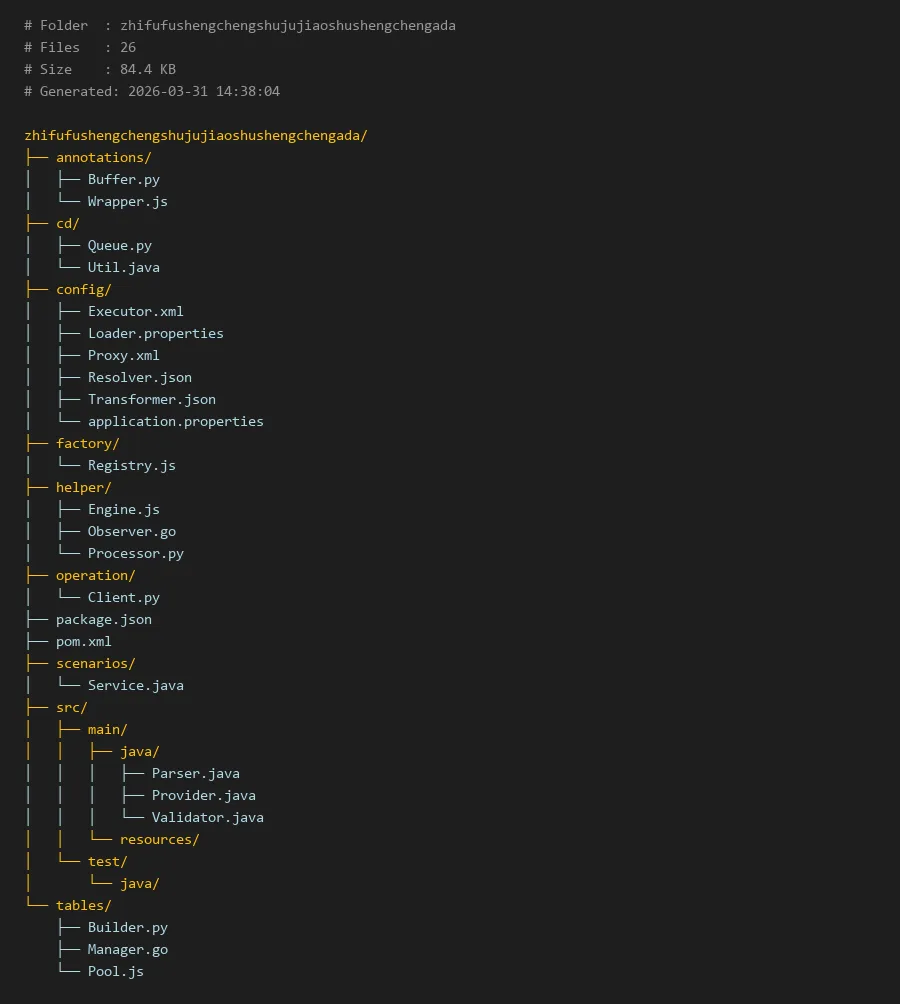
# Folder  : zhifufushengchengshujujiaoshushengchengada
# Files   : 26
# Size    : 84.4 KB
# Generated: 2026-03-31 14:38:04

zhifufushengchengshujujiaoshushengchengada/
├── annotations/
│   ├── Buffer.py
│   └── Wrapper.js
├── cd/
│   ├── Queue.py
│   └── Util.java
├── config/
│   ├── Executor.xml
│   ├── Loader.properties
│   ├── Proxy.xml
│   ├── Resolver.json
│   ├── Transformer.json
│   └── application.properties
├── factory/
│   └── Registry.js
├── helper/
│   ├── Engine.js
│   ├── Observer.go
│   └── Processor.py
├── operation/
│   └── Client.py
├── package.json
├── pom.xml
├── scenarios/
│   └── Service.java
├── src/
│   ├── main/
│   │   ├── java/
│   │   │   ├── Parser.java
│   │   │   ├── Provider.java
│   │   │   └── Validator.java
│   │   └── resources/
│   └── test/
│       └── java/
└── tables/
    ├── Builder.py
    ├── Manager.go
    └── Pool.js
支付宝付款生成数据交互生成方案
简介
在现代支付系统开发中,支付宝付款生成功能是电商平台的核心模块之一。本文介绍一个名为"zhifufushengchengshujujiaoshushengchengada"的项目,该项目专注于实现支付宝付款生成过程中的数据交互生成方案。项目采用多语言混合架构,包含Python、Java、JavaScript和Go等多种语言实现,通过模块化设计确保支付流程的稳定性和可扩展性。
项目核心目标是为开发者提供一套完整的支付宝付款生成解决方案,包括订单创建、支付参数生成、异步通知处理和数据验证等关键环节。通过合理的文件结构组织,项目将不同功能模块分离,便于团队协作和后期维护。
核心模块说明
配置管理模块 (config/)
配置模块是整个项目的基石,包含多种格式的配置文件:
application.properties: 应用基础配置,如数据库连接、密钥信息Executor.xml: 线程池和任务执行器配置Proxy.xml: 代理服务器配置,用于支付请求转发Resolver.json: 数据解析规则定义Transformer.json: 数据转换规则配置
业务处理模块 (helper/)
该模块包含核心业务逻辑的实现:
Processor.py: 支付数据处理主逻辑Engine.js: 支付引擎,驱动整个支付流程Observer.go: 观察者模式实现,监控支付状态变化
数据操作模块 (operation/)
Client.py: 支付客户端,负责与支付宝API交互
注解支持模块 (annotations/)
Buffer.py: 缓冲注解,用于数据缓存处理Wrapper.js: 包装器注解,用于数据封装
并发处理模块 (cd/)
Queue.py: 消息队列实现Util.java: 并发工具类
工厂模式模块 (factory/)
Registry.js: 注册工厂,管理支付组件实例
代码示例
支付处理器核心实现
# helper/Processor.py
import json
import hashlib
import time
from typing import Dict, Optional

class PaymentProcessor:
    def __init__(self, config_path: str = "config/application.properties"):
        """初始化支付处理器"""
        self.config = self._load_config(config_path)
        self.app_id = self.config.get("alipay.app_id")
        self.private_key = self.config.get("alipay.private_key")

    def _load_config(self, config_path: str) -> Dict:
        """加载配置文件"""
        config = {
   }
        try:
            with open(config_path, 'r', encoding='utf-8') as f:
                for line in f:
                    if '=' in line and not line.startswith('#'):
                        key, value = line.strip().split('=', 1)
                        config[key] = value
        except FileNotFoundError:
            print(f"配置文件 {config_path} 不存在")
        return config

    def generate_payment_data(self, order_info: Dict) -> Dict:
        """生成支付宝付款生成所需数据"""
        # 基础参数
        payment_data = {

            "app_id": self.app_id,
            "method": "alipay.trade.page.pay",
            "charset": "utf-8",
            "sign_type": "RSA2",
            "timestamp": time.strftime("%Y-%m-%d %H:%M:%S"),
            "version": "1.0",
            "biz_content": json.dumps({

                "out_trade_no": order_info["order_id"],
                "total_amount": str(order_info["amount"]),
                "subject": order_info["subject"],
                "product_code": "FAST_INSTANT_TRADE_PAY"
            }, ensure_ascii=False)
        }

        # 生成签名
        payment_data["sign"] = self._generate_signature(payment_data)
        return payment_data

    def _generate_signature(self, data: Dict) -> str:
        """生成RSA2签名"""
        # 按字典序排序参数
        sorted_items = sorted(data.items())
        sign_string = "&".join([f"{k}={v}" for k, v in sorted_items])

        # 这里简化了签名过程,实际应使用RSA2算法
        return hashlib.sha256(sign_string.encode()).hexdigest()

    def validate_payment_callback(self, callback_data: Dict) -> bool:
        """验证支付宝回调数据"""
        # 提取签名
        sign = callback_data.pop("sign", "")
        sign_type = callback_data.get("sign_type", "RSA2")

        # 验证签名
        expected_sign = self._generate_signature(callback_data)
        return sign == expected_sign
支付客户端实现
```python
operation/Client.py
import requests
import urllib.parse
from typing import Dict, Any
class AlipayClient:
def init(self, gateway: str = "https://openapi.alipay.com/gateway.do"):
self.gateway = gateway
self.session = requests.Session()
def create_payment(self, payment_data: Dict) -> str:
    """创建支付请求"""
    # 构建请求参数
    query_params = urllib.parse.urlencode(payment_data)

    # 发送请求
    response = self.session.get(f"{self.gateway}?{query_params}")

    if response.status_code == 200:
        return response.text
    else:
        raise Exception(f"支付请求失败: {response.status_code}")

def query