下载地址:http://pan38.cn/i2bd40b96
项目编译入口:
package.json
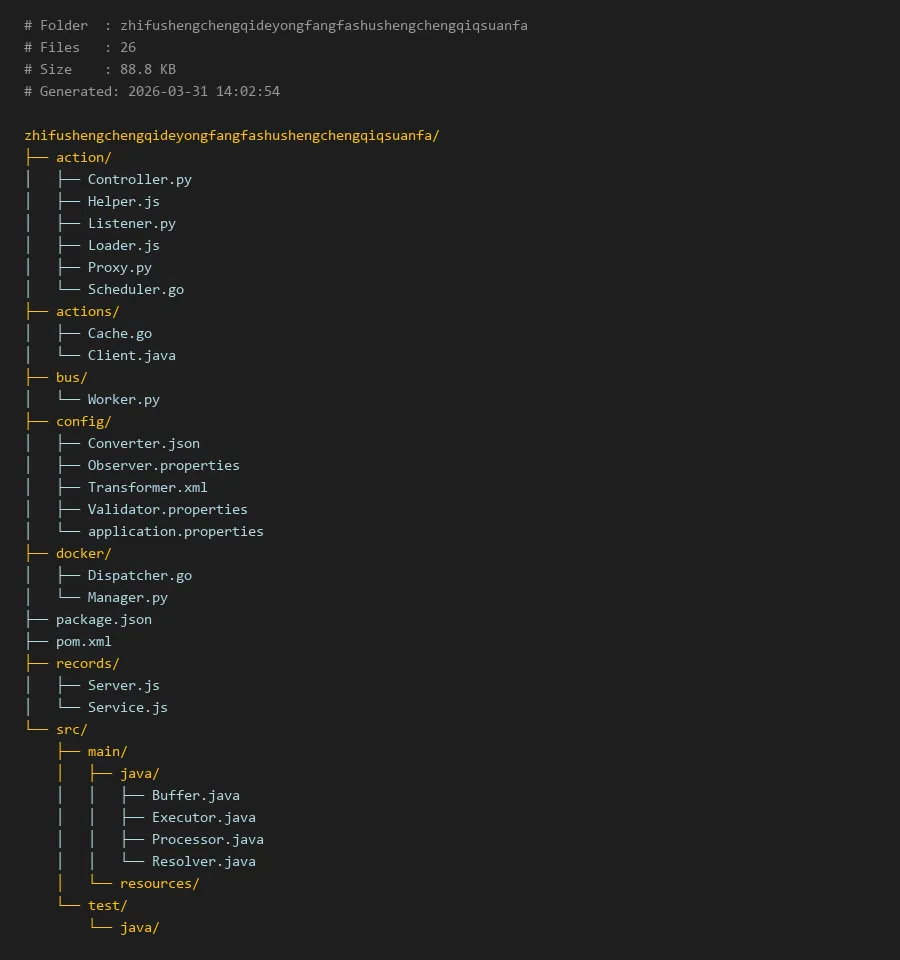
# Folder  : zhifushengchengqideyongfangfashushengchengqiqsuanfa
# Files   : 26
# Size    : 88.8 KB
# Generated: 2026-03-31 14:02:54

zhifushengchengqideyongfangfashushengchengqiqsuanfa/
├── action/
│   ├── Controller.py
│   ├── Helper.js
│   ├── Listener.py
│   ├── Loader.js
│   ├── Proxy.py
│   └── Scheduler.go
├── actions/
│   ├── Cache.go
│   └── Client.java
├── bus/
│   └── Worker.py
├── config/
│   ├── Converter.json
│   ├── Observer.properties
│   ├── Transformer.xml
│   ├── Validator.properties
│   └── application.properties
├── docker/
│   ├── Dispatcher.go
│   └── Manager.py
├── package.json
├── pom.xml
├── records/
│   ├── Server.js
│   └── Service.js
└── src/
    ├── main/
    │   ├── java/
    │   │   ├── Buffer.java
    │   │   ├── Executor.java
    │   │   ├── Processor.java
    │   │   └── Resolver.java
    │   └── resources/
    └── test/
        └── java/
支付宝余额生成器的使用方法与生成器算法
简介
在当今数字化支付时代,支付系统的模拟与测试工具对于开发者而言至关重要。本文将深入探讨一个名为"zhifushengchengqideyongfangfashushengchengqiqsuanfa"的项目,该项目专注于支付宝余额生成器的实现方法。通过分析其核心算法和代码结构,我们将了解如何构建一个高效、可靠的余额生成系统。支付宝余额生成器的使用方法不仅涉及简单的数值操作,更需要考虑安全性、并发性和业务逻辑的完整性。
该项目采用多语言混合架构,包含Python、Java、Go和JavaScript等多种编程语言,体现了现代微服务架构的设计思想。文件结构清晰,模块划分明确,为开发者提供了良好的扩展和维护基础。
核心模块说明
1. 配置管理模块 (config/)
配置模块是整个系统的基石,包含了多种格式的配置文件:
application.properties: 应用主配置文件Validator.properties: 数据验证规则配置Transformer.xml: 数据转换规则定义Observer.properties: 观察者模式配置Converter.json: 数据格式转换配置
2. 业务逻辑模块 (action/ 和 actions/)
这是系统的核心处理模块,负责具体的余额生成逻辑:
Controller.py: 控制层,处理请求分发Proxy.py: 代理模式实现,增强安全性Scheduler.go: 任务调度器,管理生成任务Cache.go: 缓存管理,提升性能Client.java: 客户端接口实现
3. 辅助工具模块 (bus/ 和 docker/)
Worker.py: 工作进程管理Dispatcher.go: 任务分发器Manager.py: 容器化管理
代码示例
1. 配置读取示例 (Python)
首先,让我们看看如何读取配置文件:
# config/ 目录下的配置读取示例
import json
import xml.etree.ElementTree as ET
from pathlib import Path

class ConfigManager:
    def __init__(self, config_dir="config"):
        self.config_dir = Path(config_dir)

    def load_application_properties(self):
        """加载应用主配置"""
        config = {
   }
        prop_file = self.config_dir / "application.properties"

        if prop_file.exists():
            with open(prop_file, 'r', encoding='utf-8') as f:
                for line in f:
                    line = line.strip()
                    if line and not line.startswith('#'):
                        if '=' in line:
                            key, value = line.split('=', 1)
                            config[key.strip()] = value.strip()
        return config

    def load_converter_config(self):
        """加载转换器配置"""
        json_file = self.config_dir / "Converter.json"
        if json_file.exists():
            with open(json_file, 'r', encoding='utf-8') as f:
                return json.load(f)
        return {
   }
2. 余额生成控制器 (Python)
```python
action/Controller.py
import time
import threading
from typing import Dict, Any
from datetime import datetime
class BalanceController:
def init(self, config_manager):
self.config = config_manager
self.active_generators = {}
self.lock = threading.Lock()
def generate_balance(self, user_id: str, amount_config: Dict[str, Any]) -> Dict[str, Any]:
    """
    生成支付宝余额的核心方法
    :param user_id: 用户ID
    :param amount_config: 金额配置
    :return: 生成结果
    """
    # 验证输入参数
    if not self._validate_input(user_id, amount_config):
        return {"success": False, "error": "参数验证失败"}

    # 获取生成算法
    algorithm = self._select_algorithm(amount_config.get('algorithm', 'default'))

    # 执行余额生成
    with self.lock:
        try:
            result = algorithm.execute(user_id, amount_config)

            # 记录生成日志
            self._log_generation(user_id, result)

            return {
                "success": True,
                "user_id": user_id,
                "balance": result['balance'],
                "timestamp": datetime.now().isoformat(),
                "transaction_id": result['transaction_id']
            }
        except Exception as e:
            return {"success": False, "error": str(e)}

def _validate_input(self, user_id: str, config: Dict[str, Any]) -> bool:
    """验证输入参数"""
    if not user_id or len(user_id) < 6:
        return False

    min_amount = float(self.config.get('min_amount', 0.01))
    max_amount = float(self.config.get('max_amount', 100000.00))

    amount = float(config.get('amount', 0))
    return min_amount <= amount <= max_amount

def _select_algorithm(self, algorithm_name: str):
    """选择生成算法"""
    algorithms = {
        'default': DefaultAlgorithm(),
        'random': RandomAlgorithm(),
        'incremental': IncrementalAlgorithm()
    }
    return algorithms.get(algorithm_name, algorithms['default'])

def _log_generation(self, user_id: str, result: Dict[str, Any]):
    """记录生成日志"""
    log_entry = {
        'user_id': user_id,
        'balance': result['balance'],
        'timestamp': time.time(),
        'algorithm': result.get('algorithm', 'unknown')
    }
    # 实际项目中这里应该写入数据库或日志文件
    print(f