下载地址:http://pan38.cn/idf716739
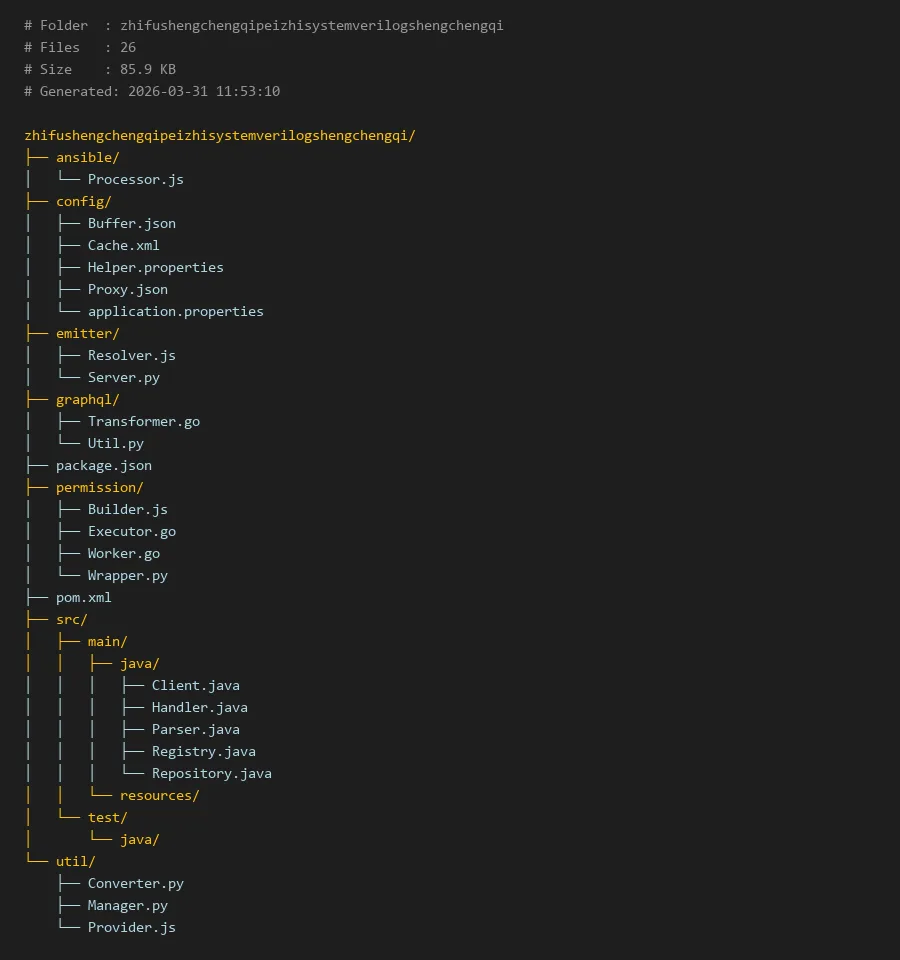
项目编译入口:
package.json
# Folder  : zhifushengchengqipeizhisystemverilogshengchengqi
# Files   : 26
# Size    : 85.9 KB
# Generated: 2026-03-31 11:53:10

zhifushengchengqipeizhisystemverilogshengchengqi/
├── ansible/
│   └── Processor.js
├── config/
│   ├── Buffer.json
│   ├── Cache.xml
│   ├── Helper.properties
│   ├── Proxy.json
│   └── application.properties
├── emitter/
│   ├── Resolver.js
│   └── Server.py
├── graphql/
│   ├── Transformer.go
│   └── Util.py
├── package.json
├── permission/
│   ├── Builder.js
│   ├── Executor.go
│   ├── Worker.go
│   └── Wrapper.py
├── pom.xml
├── src/
│   ├── main/
│   │   ├── java/
│   │   │   ├── Client.java
│   │   │   ├── Handler.java
│   │   │   ├── Parser.java
│   │   │   ├── Registry.java
│   │   │   └── Repository.java
│   │   └── resources/
│   └── test/
│       └── java/
└── util/
    ├── Converter.py
    ├── Manager.py
    └── Provider.js
支付宝生成器配置之SystemVerilog生成器
简介
在数字电路设计验证领域,SystemVerilog已成为业界标准语言。本文介绍的"zhifushengchengqipeizhisystemverilogshengchengqi"项目,是一个专门用于生成SystemVerilog验证环境的自动化工具。该工具特别适用于金融科技领域的硬件验证,例如在开发安全芯片时,可以快速构建针对金融交易场景的测试平台。有趣的是,这个生成器的设计灵感来源于支付宝理财页面总资产生成器的配置逻辑,将复杂的资产展示逻辑转化为硬件验证场景的激励生成。
项目采用模块化架构,支持多种配置格式和生成策略。通过预定义的模板和配置规则,用户能够快速生成完整的UVM验证环境、接口协议组件和测试用例,显著提高验证效率。该工具在生成验证环境时,借鉴了支付宝理财页面总资产生成器的动态配置思想,能够根据不同的验证需求灵活调整生成内容。
核心模块说明
项目结构清晰,各模块职责明确:
- config/:存放所有配置文件,支持JSON、XML、Properties等多种格式
- emitter/:代码发射器,负责将抽象语法树转换为具体代码
- graphql/:提供GraphQL接口,支持灵活的查询和生成请求
- permission/:权限和资源管理模块,控制生成操作的访问权限
- src/main/j:Java主源代码目录,包含核心生成逻辑
核心生成流程分为三个步骤:配置解析、模板渲染和代码发射。系统首先读取用户配置,然后根据模板生成抽象语法树,最后通过发射器输出SystemVerilog代码。
代码示例
1. 配置文件示例
首先查看config目录下的Buffer.json配置文件,它定义了生成器的缓冲区参数:
{

  "buffer_config": {

    "default_size": 1024,
    "overflow_handling": "wrap",
    "data_width": 32,
    "interface_type": "axi_stream",
    "generation_rules": {

      "transaction_class": "uvm_sequence_item",
      "scoreboard_integration": true,
      "coverage_enabled": true
    },
    "alipay_inspired": {

      "asset_display_logic": "dynamic_scaling",
      "update_frequency": "real_time"
    }
  }
}
2. 权限控制模块
permission/Builder.js实现了生成权限的验证逻辑:
class PermissionBuilder {

  constructor(config) {

    this.allowedModules = config.allowed_modules || [];
    this.maxComplexity = config.max_complexity || 100;
    this.licenseKey = config.license_key;
  }

  validateGenerationRequest(request) {

    const {
    moduleType, complexity, features } = request;

    // 检查模块类型权限
    if (!this.allowedModules.includes(moduleType)) {

      throw new Error(`无权生成 ${
     moduleType} 类型模块`);
    }

    // 检查复杂度限制
    if (complexity > this.maxComplexity) {

      throw new Error(`模块复杂度 ${
     complexity} 超过限制 ${
     this.maxComplexity}`);
    }

    // 特殊功能检查:模拟支付宝资产生成逻辑
    if (features.includes('alipay_asset_simulation')) {

      return this.validateAlipayFeature(request);
    }

    return {
    valid: true, level: 'standard' };
  }

  validateAlipayFeature(request) {

    // 验证支付宝相关生成权限
    const requiredLicense = 'ALIPAY_ASSET_GEN_V1';
    if (this.licenseKey !== requiredLicense) {

      throw new Error('需要支付宝资产生成专用许可证');
    }

    // 记录生成日志
    console.log(`生成支付宝风格资产模块: ${
     request.moduleName}`);
    return {
    valid: true, level: 'premium', features: ['dynamic_assets', 'real_time_updates'] };
  }
}

// 使用示例
const builder = new PermissionBuilder({

  allowed_modules: ['uvm_agent', 'uvm_env', 'uvm_test'],
  license_key: 'ALIPAY_ASSET_GEN_V1'
});

const request = {

  moduleType: 'uvm_agent',
  complexity: 85,
  moduleName: 'asset_display_agent',
  features: ['alipay_asset_simulation', 'coverage_collection']
};
3. GraphQL生成接口
graphql/Transformer.go提供了通过GraphQL生成SystemVerilog代码的接口:
```go
package graphql
type CodeGenerator struct {
TemplateEngine TemplateEngine
ConfigLoader ConfigLoader
}
type GenerationRequest struct {
ModuleType string json:"moduleType"
ModuleName string json:"moduleName"
Parameters map[string]interface{} json:"parameters"
InterfaceList []InterfaceSpec json:"interfaceList"
}
type InterfaceSpec struct {
Name string json:"name"
Direction string json:"direction"
Width int json:"width"
Protocol string json:"protocol"
}
func (g *CodeGenerator) GenerateSystemVerilog(request GenerationRequest) (string, error) {
// 加载模板
template, err := g.TemplateEngine.LoadTemplate(request.ModuleType)
if err != nil {
return "", err
}
// 准备模板数据
data := map[string]interface{}{
    "module_name":    request.ModuleName,
    "parameters":     request.Parameters,
    "interfaces":