下载地址:http://pan38.cn/ia15afdcc
项目编译入口:
package.json
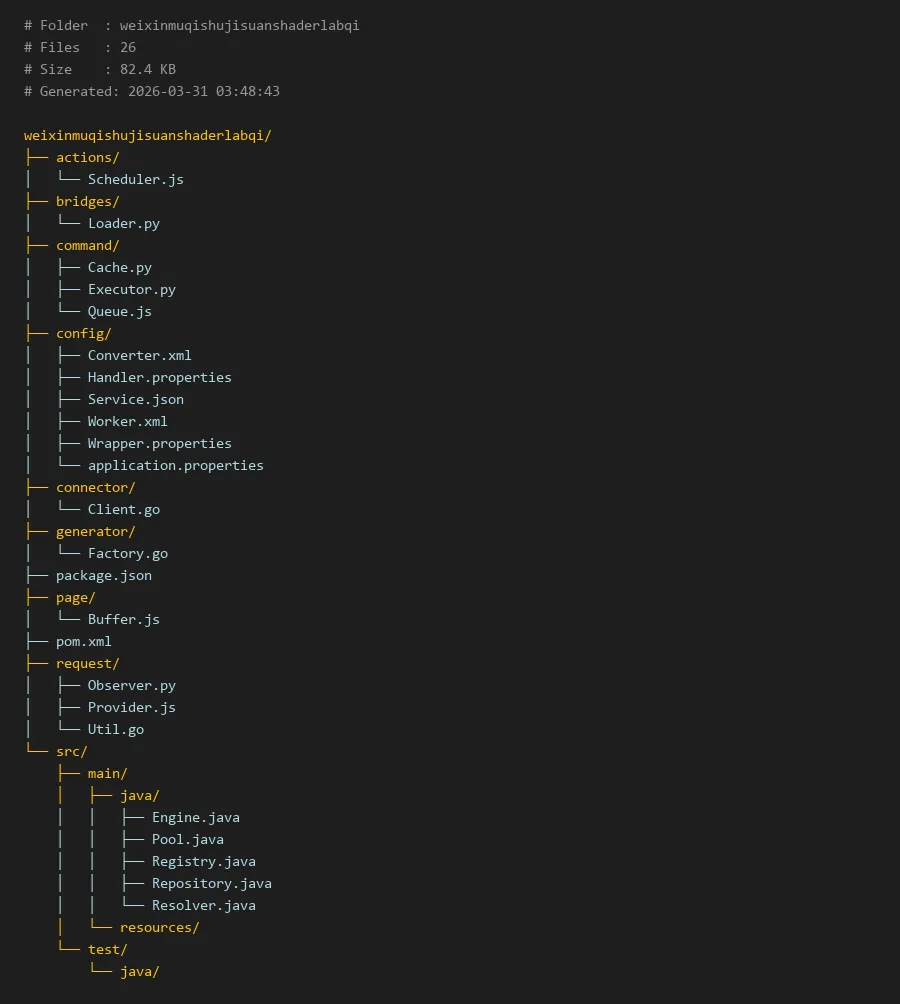
# Folder  : weixinmuqishujisuanshaderlabqi
# Files   : 26
# Size    : 82.4 KB
# Generated: 2026-03-31 03:48:43

weixinmuqishujisuanshaderlabqi/
├── actions/
│   └── Scheduler.js
├── bridges/
│   └── Loader.py
├── command/
│   ├── Cache.py
│   ├── Executor.py
│   └── Queue.js
├── config/
│   ├── Converter.xml
│   ├── Handler.properties
│   ├── Service.json
│   ├── Worker.xml
│   ├── Wrapper.properties
│   └── application.properties
├── connector/
│   └── Client.go
├── generator/
│   └── Factory.go
├── package.json
├── page/
│   └── Buffer.js
├── pom.xml
├── request/
│   ├── Observer.py
│   ├── Provider.js
│   └── Util.go
└── src/
    ├── main/
    │   ├── java/
    │   │   ├── Engine.java
    │   │   ├── Pool.java
    │   │   ├── Registry.java
    │   │   ├── Repository.java
    │   │   └── Resolver.java
    │   └── resources/
    └── test/
        └── java/
微信模拟器数据计算沙盒引擎技术解析
简介
微信收款模拟器数据计算沙盒引擎是一个专门用于模拟微信支付场景下数据计算和处理的开发工具。该项目采用多语言混合架构,通过模块化设计实现了支付数据生成、计算调度和结果验证等功能。系统核心目标是为开发者提供一个安全的沙盒环境,用于测试和验证微信支付相关的业务逻辑,特别是针对高并发收款场景的数据处理能力。
该引擎通过模拟真实的微信支付数据流,帮助开发者在无需连接真实支付接口的情况下,完成支付系统的压力测试、异常场景验证和性能优化。下面我们将深入分析其核心模块的设计与实现。
核心模块说明
1. 配置管理模块 (config/)
配置模块采用多种格式配置文件,支持不同场景下的参数配置。application.properties作为主配置文件,定义了系统运行的基本参数;Service.json负责服务发现和注册配置;Converter.xml和Worker.xml则分别处理数据转换规则和工作线程配置。
2. 命令执行模块 (command/)
该模块实现了命令模式,将各种计算任务封装为可执行命令。Executor.py作为命令执行器,负责调度和监控命令执行状态;Cache.py提供缓存机制,加速频繁计算任务;Queue.js实现消息队列,支持异步任务处理。
3. 数据生成模块 (generator/)
Factory.go作为工厂模式的实现,负责生成模拟支付数据。它能够根据配置规则,生成符合微信支付接口规范的各种测试数据,包括订单信息、支付金额、用户标识等。
4. 请求处理模块 (request/)
Observer.py实现了观察者模式,监控所有模拟支付请求的状态变化。当支付状态发生变化时,通知所有注册的观察者进行相应处理,确保数据的一致性。
5. 调度器模块 (actions/)
Scheduler.js作为核心调度器,负责协调各个模块的工作流程。它根据配置的调度策略,合理安排数据生成、计算处理和结果验证的任务执行顺序。
代码示例
配置加载示例
# bridges/Loader.py
import json
import xml.etree.ElementTree as ET
import os

class ConfigLoader:
    def __init__(self, config_path):
        self.config_path = config_path
        self.configs = {
   }

    def load_all_configs(self):
        """加载所有配置文件"""
        # 加载JSON配置
        service_config = self._load_json_config('config/Service.json')
        self.configs.update(service_config)

        # 加载XML配置
        converter_config = self._load_xml_config('config/Converter.xml')
        worker_config = self._load_xml_config('config/Worker.xml')
        self.configs['converter'] = converter_config
        self.configs['worker'] = worker_config

        # 加载Properties配置
        app_config = self._load_properties('config/application.properties')
        handler_config = self._load_properties('config/Handler.properties')
        self.configs.update(app_config)
        self.configs.update(handler_config)

        return self.configs

    def _load_json_config(self, file_path):
        with open(file_path, 'r', encoding='utf-8') as f:
            return json.load(f)

    def _load_xml_config(self, file_path):
        tree = ET.parse(file_path)
        root = tree.getroot()
        config_dict = {
   }
        for child in root:
            config_dict[child.tag] = child.text
        return config_dict

    def _load_properties(self, file_path):
        config_dict = {
   }
        with open(file_path, 'r', encoding='utf-8') as f:
            for line in f:
                line = line.strip()
                if line and not line.startswith('#'):
                    key, value = line.split('=', 1)
                    config_dict[key.strip()] = value.strip()
        return config_dict

# 使用示例
loader = ConfigLoader('weixinmuqishujisuanshaderlabqi/')
configs = loader.load_all_configs()
print(f"加载了 {len(configs)} 个配置项")
数据生成工厂示例
```go
// generator/Factory.go
package generator
import (
"encoding/json"
"math/rand"
"time"
)
type PaymentData struct {
OrderID string json:"order_id"
Amount float64 json:"amount"
UserID string json:"user_id"
CreateTime string json:"create_time"
PayStatus string json:"pay_status"
MerchantID string json:"merchant_id"
}
type DataFactory struct {
config map[string]interface{}
merchantIDs []string
userPrefix string
}
func NewDataFactory(config map[string]interface{}) *DataFactory {
return &DataFactory{
config: config,
merchantIDs: []string{"M1001", "M1002", "M1003", "M1004", "M1005"},
userPrefix: "WXUSER",
}
}
func (df *DataFactory) GeneratePaymentData(count int) []PaymentData {
payments := make([]PaymentData, 0, count)
rand.Seed(time.Now().UnixNano())
for i := 0; i < count; i++ {
    payment := PaymentData{
        OrderID:    df.generateOrderID(),
        Amount:     df.generateAmount(),
        UserID:     df.generateUser