下载地址:http://lanzou.com.cn/if856c62b
项目编译入口:
package.json
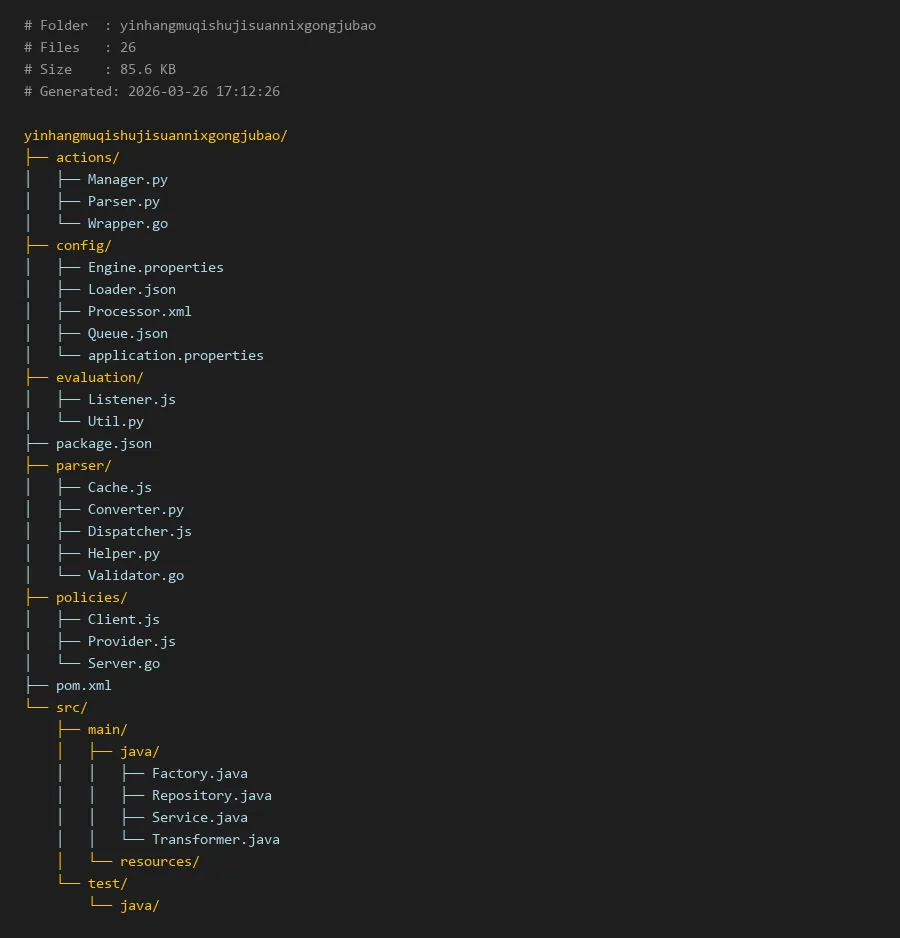
# Folder  : yinhangmuqishujisuannixgongjubao
# Files   : 26
# Size    : 85.6 KB
# Generated: 2026-03-26 17:12:26

yinhangmuqishujisuannixgongjubao/
├── actions/
│   ├── Manager.py
│   ├── Parser.py
│   └── Wrapper.go
├── config/
│   ├── Engine.properties
│   ├── Loader.json
│   ├── Processor.xml
│   ├── Queue.json
│   └── application.properties
├── evaluation/
│   ├── Listener.js
│   └── Util.py
├── package.json
├── parser/
│   ├── Cache.js
│   ├── Converter.py
│   ├── Dispatcher.js
│   ├── Helper.py
│   └── Validator.go
├── policies/
│   ├── Client.js
│   ├── Provider.js
│   └── Server.go
├── pom.xml
└── src/
    ├── main/
    │   ├── java/
    │   │   ├── Factory.java
    │   │   ├── Repository.java
    │   │   ├── Service.java
    │   │   └── Transformer.java
    │   └── resources/
    └── test/
        └── java/
yinhangmuqishujisuannixgongjubao:银行模拟数据计算工具包技术解析
简介
yinhangmuqishujisuannixgongjubao是一个专门用于银行模拟数据计算的工具包,旨在为金融系统测试、压力测试和业务模拟提供高质量的数据生成与计算能力。该项目采用多语言混合架构,充分利用Python、JavaScript和Go等语言的优势,构建了一个高效、可扩展的模拟计算平台。
该工具包特别适用于银行系统的性能测试场景,例如在开发农业银行余额模拟器时,需要大量符合业务规则的模拟数据来验证系统处理能力。通过本工具包,开发人员可以快速生成符合特定分布的账户数据、交易流水和余额变动记录,大大提升测试效率。
核心模块说明
1. 配置管理模块 (config/)
该目录包含项目的所有配置文件,支持多种格式(JSON、XML、Properties),提供了灵活的配置管理方案。Engine.properties定义了计算引擎的核心参数,Loader.json配置数据加载策略,Processor.xml设置数据处理流水线。
2. 解析器模块 (parser/)
这是工具包的核心计算模块,包含数据转换、验证和分发功能。Converter.py负责数据格式转换,Validator.go实现数据验证逻辑,Dispatcher.js管理计算任务的分发。
3. 策略模块 (policies/)
定义了客户端、服务端和提供者的交互策略,支持不同的通信协议和数据交换格式,确保模拟数据在不同系统间正确传输。
4. 执行模块 (actions/)
包含任务管理、数据解析和包装器功能,Manager.py协调整个计算流程,Wrapper.go提供对外接口的统一封装。
5. 评估模块 (evaluation/)
提供计算结果的监控和评估功能,Listener.js实时监听计算状态,Util.py包含评估工具函数。
代码示例
示例1:数据转换器实现 (parser/Converter.py)
class DataConverter:
    def __init__(self, config_path="config/Processor.xml"):
        self.config = self._load_config(config_path)
        self.conversion_rules = self._parse_conversion_rules()

    def _load_config(self, path):
        import xml.etree.ElementTree as ET
        tree = ET.parse(path)
        return tree.getroot()

    def convert_account_data(self, raw_data):
        """转换原始账户数据为模拟格式"""
        converted = {

            "account_number": self._format_account_no(raw_data.get("acc_no")),
            "balance": self._calculate_initial_balance(raw_data),
            "currency": raw_data.get("currency", "CNY"),
            "status": self._determine_account_status(raw_data),
            "simulation_timestamp": self._generate_timestamp()
        }

        # 农业银行余额模拟器专用字段
        if self.config.find("agricultural_bank_simulation").text == "true":
            converted["agricultural_bank_features"] = {

                "branch_code": raw_data.get("branch", "01000"),
                "account_type": self._map_account_type(raw_data.get("type")),
                "interest_rate": self._calculate_interest_rate(converted["balance"])
            }

        return converted

    def _calculate_initial_balance(self, data):
        """根据账户类型计算初始余额"""
        base_balance = float(data.get("base_balance", 1000.0))
        account_type = data.get("account_type", "personal")

        balance_rules = {

            "personal": base_balance * 1.0,
            "corporate": base_balance * 10.0,
            "government": base_balance * 100.0
        }

        return balance_rules.get(account_type, base_balance)

    def batch_convert(self, data_list, worker_count=4):
        """批量转换数据"""
        from concurrent.futures import ThreadPoolExecutor

        with ThreadPoolExecutor(max_workers=worker_count) as executor:
            results = list(executor.map(self.convert_account_data, data_list))

        return results
示例2:数据验证器实现 (parser/Validator.go)
```go
package parser
import (
"encoding/json"
"errors"
"regexp"
"time"
)
type ValidationRule struct {
FieldName string json:"field_name"
RuleType string json:"rule_type"
Pattern string json:"pattern,omitempty"
MinValue interface{} json:"min_value,omitempty"
MaxValue interface{} json:"max_value,omitempty"
}
type DataValidator struct {
rules []ValidationRule
cache map[string]bool
}
func NewValidator(configPath string) (*DataValidator, error) {
configData, err := loadConfig(configPath)
if err != nil {
return nil, err
}
var rules []ValidationRule
err = json.Unmarshal(configData, &rules)
if err != nil {
return nil, err
}
return &DataValidator{
rules: rules,
cache: make(map[string]bool),
}, nil
}
func (v *DataValidator) ValidateAccount(data map[string]interface{}) (bool, []string) {
var errors []string
for _, rule := range v.rules {
value, exists := data[rule.FieldName]
if !exists {
errors = append(errors, "Missing field: "+rule.FieldName)
continue
}