下载地址:http://lanzou.com.cn/i5741b5ab
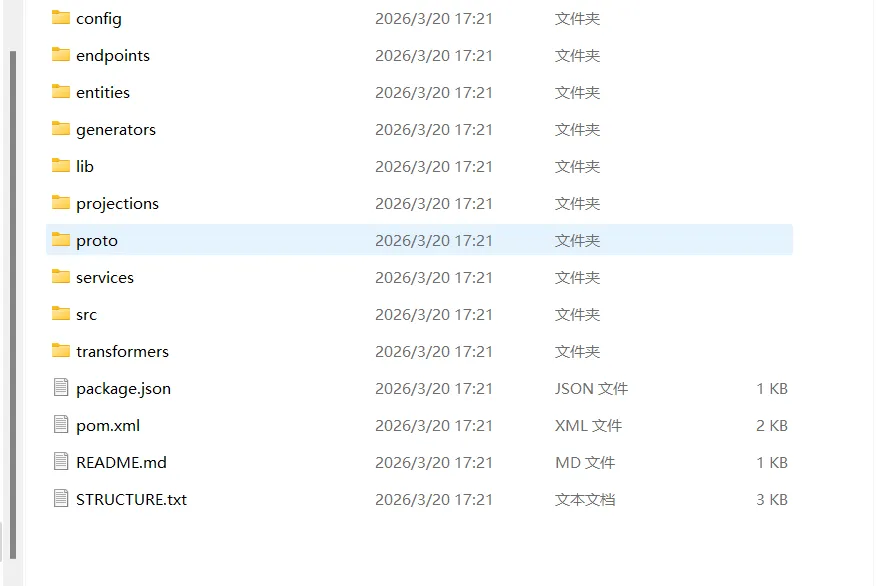
源码结构:
Project Structure
Folder : gongjijinjisuan
Files : 51
Size : 158.9 KB
Generated: 2026-03-20 17:21:09
gongjijinjisuan/
├── README.md [178 B]
├── config/
│ ├── Converter.xml [1.7 KB]
│ ├── Engine.properties [597 B]
│ ├── Loader.json [684 B]
│ ├── Scheduler.properties [596 B]
│ ├── Server.json [684 B]
│ ├── Validator.xml [1.6 KB]
│ └── application.properties [595 B]
├── endpoints/
│ ├── Adapter.php [3.2 KB]
│ ├── Helper.php [3 KB]
│ ├── Manager.py [6.1 KB]
│ ├── Queue.py [5.6 KB]
│ └── Resolver.go [2.4 KB]
├── entities/
│ ├── Client.sql [2.3 KB]
│ ├── Observer.js [3.4 KB]
│ ├── Observer.py [4.5 KB]
│ ├── Scheduler.sql [3 KB]
│ └── Service.java [3.8 KB]
├── generators/
│ ├── Adapter.java [5.1 KB]
│ └── Util.go [2.5 KB]
├── lib/
│ ├── Cache.jar [638 B]
│ └── Listener.jar [638 B]
├── package.json [684 B]
├── pom.xml [1.5 KB]
├── projections/
│ ├── Converter.php [3.7 KB]
│ ├── Factory.java [6.7 KB]
│ └── Processor.py [6.2 KB]
├── proto/
│ ├── Builder.cpp [1.5 KB]
│ ├── Parser.cpp [1.5 KB]
│ ├── Proxy.go [2.4 KB]
│ └── Transformer.js [3.7 KB]
├── services/
│ ├── Controller.java [4.6 KB]
│ ├── Dispatcher.js [4.4 KB]
│ ├── Listener.ts [2.3 KB]
│ ├── Pool.js [3 KB]
│ ├── Registry.php [4.2 KB]
│ └── Util.py [5 KB]
├── src/
│ ├── main/
│ │ ├── java/
│ │ │ ├── Buffer.java [6 KB]
│ │ │ ├── Executor.java [6.3 KB]
│ │ │ ├── Handler.java [7.4 KB]
│ │ │ └── Provider.java [7.1 KB]
│ │ └── resources/
│ └── test/
│ └── java/
└── transformers/
├── Executor.cpp [1.4 KB]
├── Provider.go [2.9 KB]
├── Repository.ts [3.7 KB]
├── Server.js [4 KB]
├── Service.ts [3.4 KB]
├── Transformer.cpp [1.7 KB]
├── Worker.ts [2.6 KB]
└── Wrapper.js [4.2 KB]
配置驱动:政策变化只需更新配置,无需发版
多租户隔离:支持集团多子公司独立计算
高精度计算:使用Decimal避免浮点误差
可观测性:全链路日志与计算过程追溯
python
架构分层示意
┌─────────────────────────────────────────┐
│ API Gateway │
├─────────────────────────────────────────┤
│ Calculation Service │
│ ┌─────────────────────────────────┐ │
│ │ Policy Engine (配置驱动) │ │
│ ├─────────────────────────────────┤ │
│ │ Calculator Core (计算核心) │ │
│ ├─────────────────────────────────┤ │
│ │ Tax Integration (税务联动) │ │
│ └─────────────────────────────────┘ │
├─────────────────────────────────────────┤
│ Data Layer │
│ (Redis缓存 / 配置中心 / 审计DB) │
└─────────────────────────────────────────┘
二、核心数据结构设计
2.1 基础数据模型
python
from dataclasses import dataclass, field
from decimal import Decimal
from typing import Optional, List
from enum import Enum
import json
class FundType(Enum):
"""公积金类型"""
MANDATORY = "mandatory" # 强制公积金
SUPPLEMENTARY = "supplementary" # 补充公积金
@dataclass
class FundPolicy:
"""公积金政策配置"""
city_code: str # 城市代码
year: int # 政策年份
base_lower_limit: Decimal # 基数下限
base_upper_limit: Decimal # 基数上限
employee_rate: Decimal # 个人缴存比例
employer_rate: Decimal # 单位缴存比例
supplementary_rate: Optional[Decimal] = None # 补充公积金比例
supplementary_cap: Optional[Decimal] = None # 补充公积金上限
def to_cache_key(self) -> str:
    """生成缓存Key"""
    return f"fund:policy:{self.city_code}:{self.year}"
@dataclass
class EmployeeInfo:
"""员工信息"""
employee_id: str
name: str
city_code: str
base_salary: Decimal # 月基本工资
previous_month_total: Decimal # 上月总收入
has_supplementary: bool = False # 是否缴纳补充公积金
special_adjustment: Optional[Decimal] = None # 特殊调整金额
2.2 计算结果模型
python
@dataclass
class CalculationDetail:
"""计算明细,支持审计追溯"""
step: str
input_value: Decimal
output_value: Decimal
rule_applied: str
def to_dict(self):
    return {
        'step': self.step,
        'input': str(self.input_value),
        'output': str(self.output_value),
        'rule': self.rule_applied
    }
@dataclass
class FundCalculationResult:
"""公积金计算结果"""
employee_id: str
period: str # 计算期间 YYYYMM
calculation_base: Decimal # 计算基数
employee_amount: Decimal # 个人缴存额
employer_amount: Decimal # 单位缴存额
supplementary_employee: Decimal = Decimal('0') # 补充公积金个人部分
supplementary_employer: Decimal = Decimal('0') # 补充公积金单位部分
total_amount: Decimal = Decimal('0') # 合计缴存额
details: List[CalculationDetail] = field(default_factory=list)
def __post_init__(self):
    self.total_amount = (
        self.employee_amount +
        self.employer_amount +
        self.supplementary_employee +
        self.supplementary_employer
    )

def to_audit_log(self) -> str:
    """生成审计日志"""
    return json.dumps({
        'employee_id': self.employee_id,
        'period': self.period,
        'calculation_base': str(self.calculation_base),
        'employee_amount': str(self.employee_amount),
        'employer_amount': str(self.employer_amount),
        'details': [d.to_dict() for d in self.details]
    }, ensure_ascii=False)
三、计算核心引擎实现
3.1 基数计算模块
公积金计算的第一步是确定缴存基数,涉及多种业务场景:
python
from abc import ABC, abstractmethod
class BaseCalculator(ABC):
"""基数计算策略抽象类"""
@abstractmethod
def calculate_base(self, employee: EmployeeInfo, policy: FundPolicy) -> Decimal:
    pass
class StandardBaseCalculator(BaseCalculator):
"""标准基数计算:取上月总收入与基数上下限比较"""
def calculate_base(self, employee: EmployeeInfo, policy: FundPolicy) -> Decimal:
    raw_base = employee.previous_month_total

    # 应用上下限
    base = min(max(raw_base, policy.base_lower_limit), policy.base_upper_limit)

    return base.quantize(Decimal('0.01'))
class NewHireBaseCalculator(BaseCalculator):
"""新入职员工:使用当月基本工资"""
def calculate_base(self, employee: EmployeeInfo, policy: FundPolicy) -> Decimal:
    raw_base = employee.base_salary

    base = min(max(raw_base, policy.base_lower_limit), policy.base_upper_limit)

    return base.quantize(Decimal('0.01'))
class HighIncomeBaseCalculator(BaseCalculator):
"""高收入员工:特殊封顶策略"""
def __init__(self, multiplier: Decimal = Decimal('3')):
    self.multiplier = multiplier  # 社平工资倍数

def calculate_base(self, employee: EmployeeInfo, policy: FundPolicy) -> Decimal:
    # 高收入员工按3倍社平工资封顶,而非普通上限
    social_avg = self._get_social_avg_salary(policy.city_code, policy.year)
    custom_upper = social_avg * self.multiplier

    raw_base = employee.previous_month_total
    base = min(raw_base, custom_upper)

    return base.quantize(Decimal('0.01'))

def _get_social_avg_salary(self, city_code: str, year: int) -> Decimal:
    # 实际项目中从配置中心获取
    return Decimal('10000')
3.2 缴存额计算引擎
python
class FundCalculator:
"""公积金计算核心引擎"""
def __init__(self, base_calculator: BaseCalculator = None):
    self.base_calculator = base_calculator or StandardBaseCalculator()
    self._calculation_context = {}

def calculate(self, employee: EmployeeInfo, policy: FundPolicy) -> FundCalculationResult:
    """执行完整公积金计算"""
    result = FundCalculationResult(
        employee_id=employee.employee_id,
        period=self._get_current_period(),
        calculation_base=Decimal('0'),
        employee_amount=Decimal('0'),
        employer_amount=Decimal('0')
    )

    # Step 1: 计算缴存基数
    calculation_base = self._calculate_base_with_trace(
        employee, policy, result
    )
    result.calculation_base = calculation_base

    # Step 2: 计算强制公积金
    employee_mandatory, employer_mandatory = self._calculate_mandatory_fund(
        calculation_base, policy, result
    )
    result.employee_amount = employee_mandatory
    result.employer_amount = employer_mandatory

    # Step 3: 计算补充公积金
    if employee.has_supplementary and policy.supplementary_rate:
        supplementary_emp, supplementary_emp_er = self._calculate_supplementary_fund(
            calculation_base, policy, result
        )
        result.supplementary_employee = supplementary_emp
        result.supplementary_employer = supplementary_emp_er

    return result

def _calculate_base_with_trace(self, employee: EmployeeInfo,
                                policy: FundPolicy,
                                result: FundCalculationResult) -> Decimal:
    """带追踪的基数计算"""
    raw_base = self.base_calculator.calculate_base(employee, policy)

    result.details.append(CalculationDetail(
        step="基数计算",
        input_value=employee.previous_month_total,
        output_value=raw_base,
        rule_applied=f"上下限约束 [{policy.base_lower_limit}, {policy.base_upper_limit}]"
    ))

    return raw_base

def _calculate_mandatory_fund(self, base: Decimal,
                               policy: FundPolicy,
                               result: FundCalculationResult) -> tuple:
    """计算强制公积金"""
    employee_amount = (base * policy.employee_rate).quantize(Decimal('0.01'))
    employer_amount = (base * policy.employer_rate).quantize(Decimal('0.01'))

    result.details.append(CalculationDetail(
        step="强制公积金",
        input_value=base,
        output_value=employee_amount,
        rule_applied=f"个人比例: {policy.employee_rate}"
    ))

    return employee_amount, employer_amount

def _calculate_supplementary_fund(self, base: Decimal,
                                   policy: FundPolicy,
                                   result: FundCalculationResult) -> tuple:
    """计算补充公积金"""
    # 补充公积金可能有独立上限
    effective_base = base
    if policy.supplementary_cap:
        effective_base = min(base, policy.supplementary_cap)

    employee_amount = (effective_base * policy.supplementary_rate).quantize(Decimal('0.01'))
    employer_amount = employee_amount  # 补充公积金通常个人单位比例相同

    result.details.append(CalculationDetail(
        step="补充公积金",
        input_value=base,
        output_value=employee_amount,
        rule_applied=f"比例: {policy.supplementary_rate}, 上限: {policy.supplementary_cap}"
    ))

    return employee_amount, employer_amount

def _get_current_period(self) -> str:
    """获取当前计算期间 YYYYMM"""
    from datetime import datetime
    return datetime.now().strftime('%Y%m')
四、配置中心与多城市适配
4.1 政策配置管理器
python
import redis
from typing import Dict
import json
from decimal import Decimal
class PolicyConfigManager:
"""政策配置管理器,支持热更新"""
def __init__(self, redis_client: redis.Redis, cache_ttl: int = 3600):
    self.redis = redis_client
    self.cache_ttl = cache_ttl
    self._local_cache: Dict[str, FundPolicy] = {}

def get_policy(self, city_code: str, year: int) -> FundPolicy:
    """获取公积金政策,三级缓存"""
    cache_key = f"fund:policy:{city_code}:{year}"

    # L1: 本地缓存
    if cache_key in self._local_cache:
        return self._local_cache[cache_key]

    # L2: Redis缓存
    cached = self.redis.get(cache_key)
    if cached:
        policy = self._deserialize_policy(cached)
        self._local_cache[cache_key] = policy
        return policy

    # L3: 从配置中心加载(实际项目中从数据库/配置中心读取)
    policy = self._load_from_config_center(city_code, year)

    # 写入缓存
    self.redis.setex(
        cache_key,
        self.cache_ttl,
        self._serialize_policy(policy)
    )
    self._local_cache[cache_key] = policy

    return policy

def refresh_policy(self, city_code: str, year: int):
    """手动刷新政策配置"""
    cache_key = f"fund:policy:{city_code}:{year}"
    self.redis.delete(cache_key)
    if cache_key in self._local_cache:
        del self._local_cache[cache_key]

def _load_from_config_center(self, city_code: str, year: int) -> FundPolicy:
    """
    实际项目中从配置中心或数据库加载
    此处模拟2024年主要城市政策
    """
    policies = {
        ('Beijing', 2024): FundPolicy(
            city_code='Beijing',
            year=2024,
            base_lower_limit=Decimal('2420'),
            base_upper_limit=Decimal('33891'),
            employee_rate=Decimal('0.12'),
            employer_rate=Decimal('0.12'),
            supplementary_rate=Decimal('0.05'),
            supplementary_cap=Decimal('33891')
        ),
        ('Shanghai', 2024): FundPolicy(
            city_code='Shanghai',
            year=2024,
            base_lower_limit=Decimal('2690'),
            base_upper_limit=Decimal('34188'),
            employee_rate=Decimal('0.07'),
            employer_rate=Decimal('0.07'),
            supplementary_rate=Decimal('0.05'),
            supplementary_cap=Decimal('31014')
        ),
        ('Shenzhen', 2024): FundPolicy(
            city_code='Shenzhen',
            year=2024,
            base_lower_limit=Decimal('2360'),
            base_upper_limit=Decimal('41190'),
            employee_rate=Decimal('0.05'),
            employer_rate=Decimal('0.05')
        ),
    }

    key = (city_code, year)
    if key not in policies:
        raise ValueError(f"未找到城市 {city_code} 在 {year} 年的公积金政策")

    return policies[key]

def _serialize_policy(self, policy: FundPolicy) -> str:
    """序列化政策配置"""
    return json.dumps({
        'city_code': policy.city_code,
        'year': policy.year,
        'base_lower_limit': str(policy.base_lower_limit),
        'base_upper_limit': str(policy.base_upper_limit),
        'employee_rate': str(policy.employee_rate),
        'employer_rate': str(policy.employer_rate),
        'supplementary_rate': str(policy.supplementary_rate) if policy.supplementary_rate else None,
        'supplementary_cap': str(policy.supplementary_cap) if policy.supplementary_cap else None,
    })

def _deserialize_policy(self, data: str) -> FundPolicy:
    """反序列化政策配置"""
    d = json.loads(data)
    return FundPolicy(
        city_code=d['city_code'],
        year=d['year'],
        base_lower_limit=Decimal(d['base_lower_limit']),
        base_upper_limit=Decimal(d['base_upper_limit']),
        employee_rate=Decimal(d['employee_rate']),
        employer_rate=Decimal(d['employer_rate']),
        supplementary_rate=Decimal(d['supplementary_rate']) if d.get('supplementary_rate') else None,
        supplementary_cap=Decimal(d['supplementary_cap']) if d.get('supplementary_cap') else None,
    )
4.2 批量计算与并发优化
python
from concurrent.futures import ThreadPoolExecutor, as_completed
from typing import List
import logging
logger = logging.getLogger(name)
class BatchFundCalculator:
"""批量公积金计算器,支持并发处理"""
def __init__(self, policy_manager: PolicyConfigManager, max_workers: int = 10):
    self.policy_manager = policy_manager
    self.max_workers = max_workers
    self.executor = ThreadPoolExecutor(max_workers=max_workers)

def calculate_batch(self, employees: List[EmployeeInfo],
                     year: int) -> List[FundCalculationResult]:
    """批量计算公积金"""
    results = []
    futures = {}

    for employee in employees:
        future = self.executor.submit(
            self._calculate_single,
            employee,
            year
        )
        futures[future] = employee.employee_id

    for future in as_completed(futures):
        emp_id = futures[future]
        try:
            result = future.result()
            results.append(result)
            logger.info(f"员工 {emp_id} 计算完成")
        except Exception as e:
            logger.error(f"员工 {emp_id} 计算失败: {e}")
            # 记录失败,继续处理其他员工
            results.append(None)

    return results

def _calculate_single(self, employee: EmployeeInfo, year: int) -> FundCalculationResult:
    """单个员工计算"""
    policy = self.policy_manager.get_policy(employee.city_code, year)

    # 根据员工类型选择基数计算策略
    # 这里简化处理,实际可根据入职日期等动态选择
    calculator = FundCalculator(StandardBaseCalculator())

    return calculator.calculate(employee, policy)

def calculate_batch_with_progress(self, employees: List[EmployeeInfo],
                                   year: int,
                                   callback=None) -> List[FundCalculationResult]:
    """带进度回调的批量计算"""
    total = len(employees)
    results = []

    for i, employee in enumerate(employees):
        try:
            result = self._calculate_single(employee, year)
            results.append(result)
        except Exception as e:
            logger.error(f"员工 {employee.employee_id} 计算失败: {e}")
            results.append(None)

        if callback:
            callback(i + 1, total)

    return results
五、与个税系统联动
在实际业务中,公积金与个税紧密相关。以下是联动计算示例:
python
@dataclass
class TaxCalculationContext:
"""个税计算上下文"""
employee_id: str
period: str
taxable_income: Decimal # 应纳税所得额
fund_deduction: Decimal # 公积金税前扣除
special_deductions: Decimal # 专项附加扣除
class IntegratedCalculator:
"""公积金与个税联动计算器"""
def calculate_with_tax(self, employee: EmployeeInfo,
                       policy: FundPolicy,
                       special_deductions: Decimal = Decimal('0')) -> dict:
    """
    联动计算公积金和个税
    返回公积金结果和税后影响
    """
    # Step 1: 计算公积金
    fund_calc = FundCalculator()
    fund_result = fund_calc.calculate(employee, policy)

    # Step 2: 计算税前扣除总额
    total_deduction = (
        fund_result.employee_amount +
        fund_result.supplementary_employee
    )

    # Step 3: 计算应纳税所得额
    taxable_base = employee.base_salary - total_deduction - special_deductions

    # Step 4: 计算个税
    tax_amount = self._calculate_individual_tax(taxable_base)

    # Step 5: 计算税后实发
    net_salary = employee.base_salary - total_deduction - tax_amount

    return {
        'fund_result': fund_result,
        'taxable_income': taxable_base,
        'tax_amount': tax_amount,
        'net_salary': net_salary,
        'total_deduction': total_deduction
    }

def _calculate_individual_tax(self, taxable_income: Decimal) -> Decimal:
    """
    计算个人所得税(累计预扣法简化版)
    实际项目中需要完整的累计预扣逻辑
    """
    if taxable_income <= Decimal('5000'):
        return Decimal('0')

    taxable_part = taxable_income - Decimal('5000')

    # 简化税率表
    if taxable_part <= Decimal('3000'):
        return (taxable_part * Decimal('0.03')).quantize(Decimal('0.01'))
    elif taxable_part <= Decimal('12000'):
        return (taxable_part * Decimal('0.10') - Decimal('210')).quantize(Decimal('0.01'))
    elif taxable_part <= Decimal('25000'):
        return (taxable_part * Decimal('0.20') - Decimal('1410')).quantize(Decimal('0.01'))
    else:
        return (taxable_part * Decimal('0.25') - Decimal('2660')).quantize(Decimal('0.01'))
六、可观测性设计
6.1 计算链路追踪
python
import traceback
from contextvars import ContextVar
import uuid
请求追踪上下文
request_id_var: ContextVar[str] = ContextVar('request_id', default='')
class CalculationTracer:
"""计算链路追踪器"""
@staticmethod
def trace_calculation(func):
    """装饰器:自动记录计算过程"""
    def wrapper(*args, **kwargs):
        trace_id = str(uuid.uuid4())[:8]
        request_id_var.set(trace_id)

        logger.info(f"[TraceID: {trace_id}] 开始计算: {func.__name__}")

        try:
            result = func(*args, **kwargs)
            logger.info(f"[TraceID: {trace_id}] 计算完成: {func.__name__}")
            return result
        except Exception as e:
            logger.error(
                f"[TraceID: {trace_id}] 计算失败: {func.__name__}, "
                f"错误: {e}, 堆栈: {traceback.format_exc()}"
            )
            raise

    return wrapper
6.2 监控指标埋点
python
from dataclasses import dataclass
from datetime import datetime
import threading
import time
@dataclass
class CalculationMetrics:
"""计算指标"""
total_requests: int = 0
success_count: int = 0
failure_count: int = 0
total_duration_ms: float = 0
avg_duration_ms: float = 0
def record_success(self, duration_ms: float):
    self.total_requests += 1
    self.success_count += 1
    self.total_duration_ms += duration_ms
    self.avg_duration_ms = self.total_duration_ms / self.success_count

def record_failure(self, duration_ms: float):
    self.total_requests += 1
    self.failure_count += 1
class MetricsCollector:
"""指标收集器"""
_instance = None
_lock = threading.Lock()

def __new__(cls):
    if cls._instance is None:
        with cls._lock:
            if cls._instance is None:
                cls._instance = super().__new__(cls)
                cls._instance.metrics = CalculationMetrics()
    return cls._instance

def record_calculation(self, func):
    """装饰器:记录计算耗时和成功率"""
    def wrapper(*args, **kwargs):
        start = time.time()
        try:
            result = func(*args, **kwargs)
            duration = (time.time() - start) * 1000
            self.metrics.record_success(duration)
            return result
        except Exception as e:
            duration = (time.time() - start) * 1000
            self.metrics.record_failure(duration)
            raise
    return wrapper

def get_metrics(self) -> dict:
    """获取当前指标"""
    return {
        'total_requests': self.metrics.total_requests,
        'success_count': self.metrics.success_count,
        'failure_count': self.metrics.failure_count,
        'success_rate': self.metrics.success_count / max(1, self.metrics.total_requests),
        'avg_duration_ms': round(self.metrics.avg_duration_ms, 2)
    }
七、使用示例
python
初始化组件
redis_client = redis.Redis(host='localhost', port=6379, decode_responses=True)
policy_manager = PolicyConfigManager(redis_client)
batch_calculator = BatchFundCalculator(policy_manager, max_workers=5)
准备员工数据
employees = [
EmployeeInfo(
employee_id='EMP001',
name='张三',
city_code='Beijing',
base_salary=Decimal('25000'),
previous_month_total=Decimal('24500'),
has_supplementary=True
),
EmployeeInfo(
employee_id='EMP002',
name='李四',
city_code='Shanghai',
base_salary=Decimal('18000'),
previous_month_total=Decimal('17500'),
has_supplementary=False
),
]
批量计算
results = batch_calculator.calculate_batch(employees, year=2024)
输出结果
for result in results:
if result:
print(f"员工 {result.employee_id}:")
print(f" 计算基数: {result.calculation_base}")
print(f" 个人缴存: {result.employee_amount}")
print(f" 单位缴存: {result.employer_amount}")
print(f" 合计: {result.total_amount}")
print(f" 审计日志: {result.to_audit_log()}\n")
查看监控指标
metrics = MetricsCollector().get_metrics()
print(f"计算指标: {metrics}")
八、生产环境最佳实践
8.1 高可用部署建议
yaml
Kubernetes部署配置示例
apiVersion: apps/v1
kind: Deployment
metadata:
name: fund-calculator
spec:
replicas: 3
strategy:
rollingUpdate:
maxSurge: 1
maxUnavailable: 0
template:
spec:
containers:
  - name: calculator
    image: fund-calculator:latest
    resources:
      requests:
        memory: "512Mi"
        cpu: "500m"
      limits:
        memory: "2Gi"
        cpu: "2000m"
    env:
    - name: REDIS_SENTINEL_HOSTS
      value: "redis-sentinel:26379"
    - name: CONFIG_CENTER_URL
      value: "http://config-center:8080"