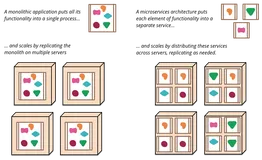
1. 引言:从单体架构到微服务架构的演进
在传统的单体应用架构中,所有功能模块都被打包在一个大型应用程序中,部署在一个运行时环境中。这种架构虽然开发简单,但随着业务复杂度的增长,暴露出诸多问题:应用臃肿难以维护、技术栈升级困难、扩展性差、持续交付周期长等。
微服务架构应运而生,它将一个大型应用拆分为一组小型、自治的服务,每个服务运行在自己的进程中,通过轻量级机制(通常是HTTP RESTful API)进行通信。这种架构带来了更好的可维护性、技术多样性、弹性扩展和独立部署等优势。
然而,微服务架构也引入了新的挑战:
- 服务治理:如何动态发现和调用服务实例?
- 配置管理:如何统一管理所有服务的配置?
- 容错处理:如何防止服务故障的级联蔓延?
- 分布式事务:如何保证跨服务的数据一致性?
Spring Cloud正是为了解决这些分布式系统问题而生的工具集。它基于Spring Boot提供了一套完整的微服务解决方案,可以看作是微服务世界的"Spring全家桶"。
比喻:如果微服务是一个个独立的商铺,那么Spring Cloud就是提供统一水电、物流、安防和管理的商业综合体运营系统。
2. Spring Cloud核心组件概述
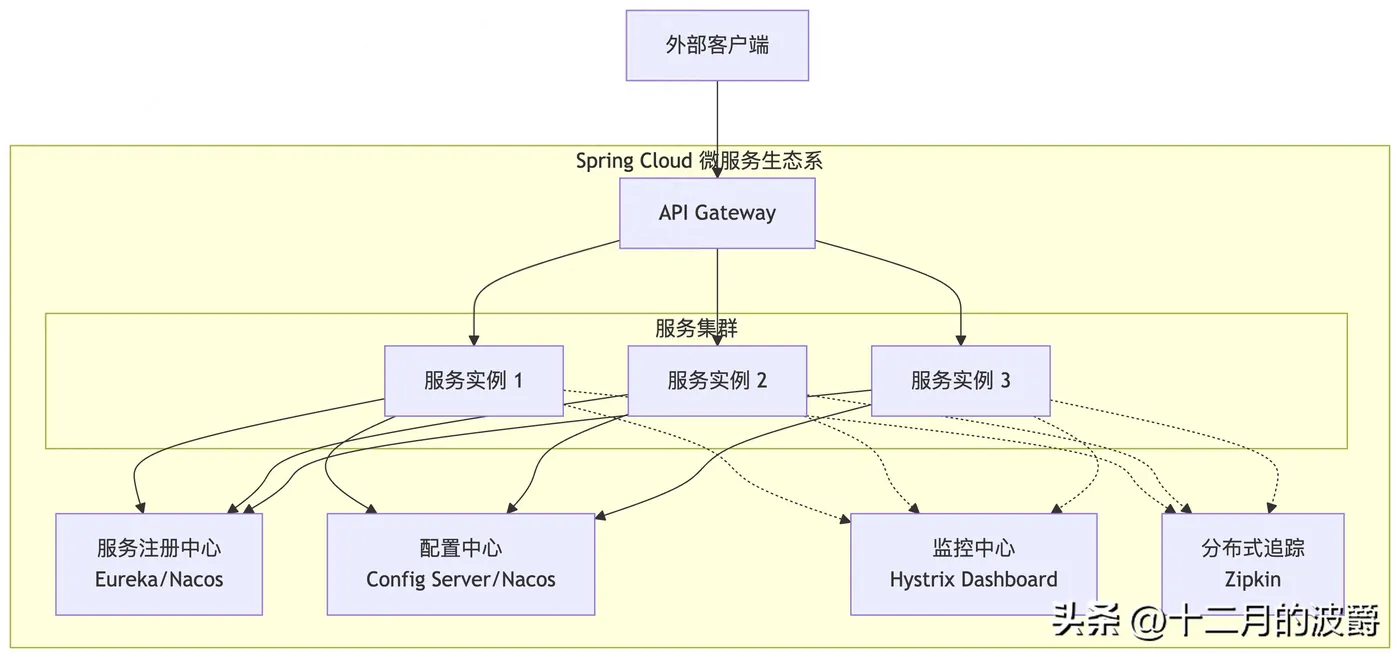
Spring Cloud由多个相互协作的子项目组成,每个项目负责解决微服务架构中的特定问题。以下是核心组件及其功能的概览:
组件 |
功能描述 |
类似角色 |
服务注册与发现 (Eureka/Nacos) |
服务提供者注册自身,消费者发现服务 |
电话簿 |
配置中心 (Config Server/Nacos) |
集中管理所有环境的配置信息 |
中央档案库 |
服务网关 (Gateway) |
统一入口、路由转发、权限验证 |
大楼前台 |
负载均衡 (LoadBalancer) |
将请求分发到多个服务实例 |
交通调度员 |
熔断器 (Circuit Breaker) |
防止故障服务导致雪崩效应 |
电路保险丝 |
分布式追踪 (Sleuth/Zipkin) |
追踪请求在微服务间的流转 |
快递跟踪系统 |
下面是Spring Cloud生态系统的组件协作示意图:
3. 实战演练:构建一个简单的微服务系统
让我们通过一个实际示例来演示如何使用Spring Cloud构建一个简单的微服务系统。该系统包含:
- 服务注册中心 (Eureka Server)
- 配置中心 (Config Server)
- API网关 (Spring Cloud Gateway)
- 两个微服务:用户服务(user-service)和订单服务(order-service)
3.1 搭建服务注册中心:Eureka Server
首先创建Eureka服务器项目,在pom.xml中添加依赖:
<dependencies>
    <dependency>
        <groupId>org.springframework.cloud</groupId>
        <artifactId>spring-cloud-starter-netflix-eureka-server</artifactId>
    </dependency>
</dependencies>
创建主应用类:
@SpringBootApplication
@EnableEurekaServer
public class EurekaServerApplication {
    public static void main(String[] args) {
        SpringApplication.run(EurekaServerApplication.class, args);
    }
}
配置application.yml:
server:
  port: 8761
eureka:
  client:
    register-with-eureka: false  # 不向自己注册
    fetch-registry: false        # 不从自己获取注册信息
    service-url:
      defaultZone: http://localhost:8761/eureka/
spring:
  application:
    name: eureka-server
启动后访问http://localhost:8761,可以看到Eureka的管理界面。
3.2 创建微服务并提供注册功能
创建用户服务(user-service),在pom.xml中添加依赖:
<dependencies>
    <dependency>
        <groupId>org.springframework.boot</groupId>
        <artifactId>spring-boot-starter-web</artifactId>
    </dependency>
    <dependency>
        <groupId>org.springframework.cloud</groupId>
        <artifactId>spring-cloud-starter-netflix-eureka-client</artifactId>
    </dependency>
</dependencies>
创建主应用类和REST控制器:
// 主应用类
@SpringBootApplication
@EnableEurekaClient
public class UserServiceApplication {
    public static void main(String[] args) {
        SpringApplication.run(UserServiceApplication.class, args);
    }
}
// 用户控制器
@RestController
@RequestMapping("/users")
public class UserController {

    @GetMapping("/{id}")
    public User getUser(@PathVariable Long id) {
        // 模拟从数据库获取用户信息
        return new User(id, "用户" + id, "user" + id + "@example.com");
    }

    // 简单的用户模型
    public record User(Long id, String name, String email) {}
}
配置application.yml:
server:
  port: 0  # 随机端口,便于多个实例并行运行
spring:
  application:
    name: user-service  # 服务名称,用于注册和发现
eureka:
  client:
    service-url:
      defaultZone: http://localhost:8761/eureka/
按照类似的方式创建订单服务(order-service),它将会调用用户服务。
3.3 实现服务间通信与负载均衡
在订单服务中,我们需要调用用户服务。Spring Cloud提供了多种方式实现服务间调用:
使用RestTemplate与负载均衡:
@Configuration
public class AppConfig {
    @Bean
    @LoadBalanced  // 启用负载均衡
    public RestTemplate restTemplate() {
        return new RestTemplate();
    }
}
@Service
public class OrderService {

    private final RestTemplate restTemplate;

    public OrderService(RestTemplate restTemplate) {
        this.restTemplate = restTemplate;
    }

    public Order getOrderWithUser(Long orderId, Long userId) {
        // 使用服务名称而不是具体URL调用用户服务
        User user = restTemplate.getForObject(
            "http://user-service/users/{id}",  // 服务名称+路径
            User.class,
            userId
        );

        return new Order(orderId, "订单描述", user);
    }

    public record Order(Long id, String description, User user) {}
}
使用OpenFeign声明式客户端(推荐):
首先添加Feign依赖:
<dependency>
    <groupId>org.springframework.cloud</groupId>
    <artifactId>spring-cloud-starter-openfeign</artifactId>
</dependency>
启用Feign客户端并创建声明式接口:
@SpringBootApplication
@EnableEurekaClient
@EnableFeignClients  // 启用Feign客户端
public class OrderServiceApplication {
    public static void main(String[] args) {
        SpringApplication.run(OrderServiceApplication.class, args);
    }
}
// 声明式Feign客户端
@FeignClient(name = "user-service")  // 指定服务名称
public interface UserServiceClient {

    @GetMapping("/users/{id}")
    User getUser(@PathVariable Long id);
}
// 在订单服务中使用Feign客户端
@Service
public class OrderService {

    private final UserServiceClient userServiceClient;

    public OrderService(UserServiceClient userServiceClient) {
        this.userServiceClient = userServiceClient;
    }

    public Order getOrderWithUser(Long orderId, Long userId) {
        User user = userServiceClient.getUser(userId);  // 像调用本地方法一样
        return new Order(orderId, "订单描述", user);
    }
}
3.4 配置API网关:Spring Cloud Gateway
创建API网关项目,添加依赖:
<dependencies>
    <dependency>
        <groupId>org.springframework.cloud</groupId>
        <artifactId>spring-cloud-starter-gateway</artifactId>
    </dependency>
    <dependency>
        <groupId>org.springframework.cloud</groupId>
        <artifactId>spring-cloud-starter-netflix-eureka-client</artifactId>
    </dependency>
</dependencies>
配置网关路由规则:
server:
  port: 8080
spring:
  application:
    name: api-gateway
  cloud:
    gateway:
      routes:
        - id: user-service
          uri: lb://user-service  # lb://表示负载均衡到服务
          predicates:
            - Path=/api/users/**
          filters:
            - StripPrefix=1  # 移除路径中的第一段(api)

        - id: order-service
          uri: lb://order-service
          predicates:
            - Path=/api/orders/**
          filters:
            - StripPrefix=1
eureka:
  client:
    service-url:
      defaultZone: http://localhost:8761/eureka/
现在,所有请求都通过网关(8080端口)进行路由:
- http://localhost:8080/api/users/1 → 路由到用户服务
- http://localhost:8080/api/orders/1 → 路由到订单服务
3.5 实现容错保护:Spring Cloud Circuit Breaker
在分布式环境中,服务故障是不可避免的。我们需要使用熔断器防止故障蔓延。
添加熔断器依赖:
<dependency>
    <groupId>org.springframework.cloud</groupId>
    <artifactId>spring-cloud-starter-circuitbreaker-resilience4j</artifactId>
</dependency>
在Feign客户端中启用熔断:
feign:
  circuitbreaker:
    enabled: true
为Feign客户端指定fallback类:
@FeignClient(name = "user-service", fallback = UserServiceFallback.class)
public interface UserServiceClient {
    @GetMapping("/users/{id}")
    User getUser(@PathVariable Long id);
}
// Fallback实现
@Component
public class UserServiceFallback implements UserServiceClient {
    @Override
    public User getUser(Long id) {
        // 返回降级数据
        return new User(id, "默认用户", "default@example.com");
    }
}
4. 高级特性与最佳实践
4.1 分布式配置中心:Spring Cloud Config
创建配置服务器,统一管理所有微服务的配置:
@SpringBootApplication
@EnableConfigServer
public class ConfigServerApplication {
    public static void main(String[] args) {
        SpringApplication.run(ConfigServerApplication.class, args);
    }
}
配置application.yml:
server:
  port: 8888
spring:
  application:
    name: config-server
  cloud:
    config:
      server:
        git:
          uri: https://github.com/your-repo/config-repo
          search-paths: '{application}'  # 按应用名称查找配置
在微服务中客户端配置:
spring:
  cloud:
    config:
      uri: http://localhost:8888
      name: user-service  # 对应配置文件名称
      profile: dev        # 环境配置
4.2 分布式链路追踪:Spring Cloud Sleuth + Zipkin
添加依赖:
<dependency>
    <groupId>org.springframework.cloud</groupId>
    <artifactId>spring-cloud-starter-sleuth</artifactId>
</dependency>
<dependency>
    <groupId>org.springframework.cloud</groupId>
    <artifactId>spring-cloud-sleuth-zipkin</artifactId>
</dependency>
配置Zipkin:
spring:
  zipkin:
    base-url: http://localhost:9411
  sleuth:
    sampler:
      probability: 1.0  # 采样率,1.0表示100%采样
5. 总结:Spring Cloud的价值与未来
Spring Cloud为微服务架构提供了一站式的解决方案,大大降低了分布式系统开发的复杂性。通过本章介绍的组件,我们可以:
- 使用Eureka实现服务注册与发现
- 使用Ribbon/LoadBalancer实现客户端负载均衡
- 使用Feign实现声明式服务调用
- 使用Gateway构建API网关
- 使用Resilience4j实现熔断和容错
- 使用Config实现分布式配置管理
- 使用Sleuth实现分布式链路追踪
随着云原生技术的发展,Spring Cloud也在不断演进。新版本中,Spring Cloud逐步淘汰了Netflix系列组件,转向更加云原生友好的技术栈,如:
- Spring Cloud Kubernetes:在K8s环境中无缝集成
- Spring Cloud Function:函数式编程模型
- RSocket:新一代高性能通信协议
对于Java开发者而言,掌握Spring Cloud是迈向架构师之路的重要一步。它不仅提供了解决分布式问题的工具集,更重要的是培养了一种面向微服务的架构思维模式。
最佳实践建议:
服务划分遵循单一职责原则
保持服务无状态,便于水平扩展
设计容错机制,避免单点故障
实施API版本管理,保证兼容性
建立完善的监控和日志系统